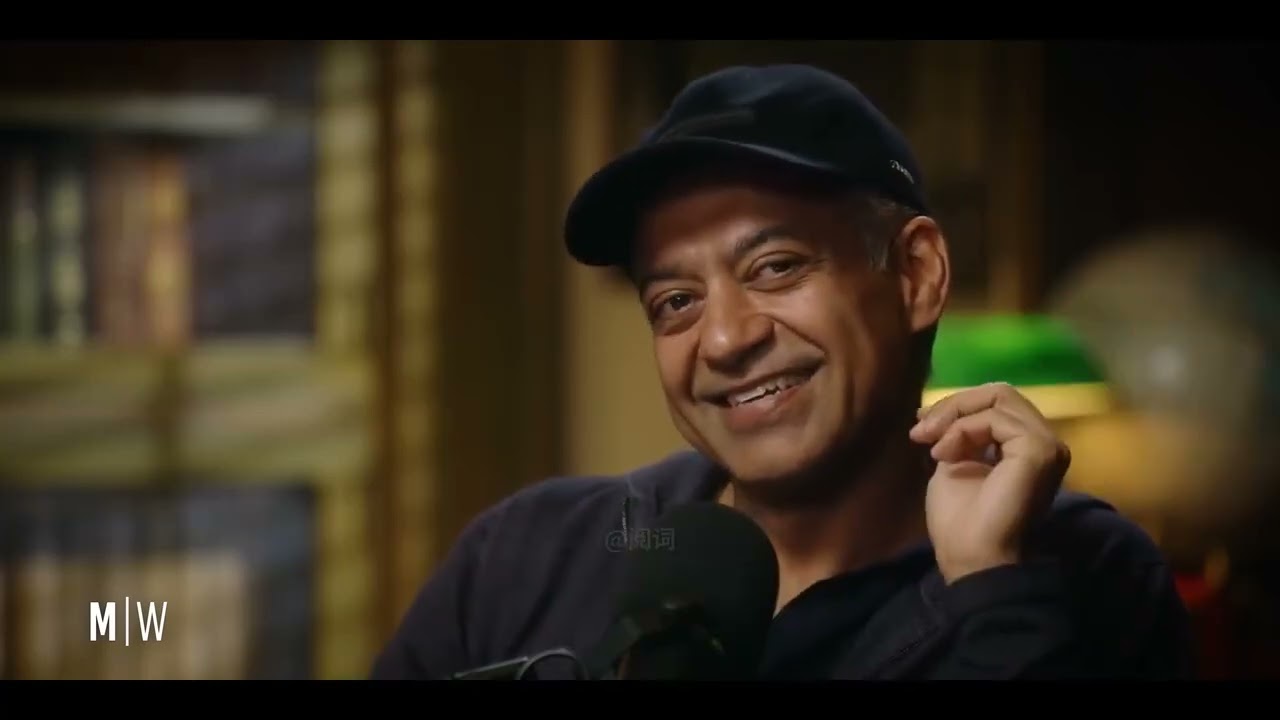
📺 Today’s recommended deep-dive video: https://www.youtube.com/watch?v=BwwDTAvcfoc
The Pursuit of Presence: Naval Ravikant on Wealth, Wisdom, and Waking Up
Naval Ravikant returns to dismantle the conventional myths surrounding success, happiness, and the “game” of life. He argues that true freedom isn’t found in a bank balance, but in the total elimination of a schedule and the ability to act on inspiration the moment it strikes.
Core Question: How can an individual achieve peak material success without sacrificing internal peace and presence?
Highlights
- The “Internal Golden Rule”: Treat yourself like you want others to have treated you.
- Why winning the game of wealth is the only reliable way to be free from its grip.
- The difference between zero-sum status games and positive-sum wealth creation.
- Why modern medicine is still in the “Dark Ages” and the revolutionary impact of GLP-1s.
⏱️ Reading time: approx. 12 minutes · Saves you about 184 minutes vs. watching.
Want to take notes while watching? Click the image below and let AI Notebook capture the key points for you 👇

The Alchemy of Success and Satisfaction
Winning the Game to Be Free of It
Happiness is often defined as being satisfied with what you have, whereas success stems from a fundamental dissatisfaction that drives action and acquisition.
Naval suggests that for most people, the path to peace actually leads through material success rather than total renunciation, as it is far easier to satisfy your desires than it is to effectively ignore or renounce them. By playing the game and winning, you eventually reach a state where you are no longer a hostage to your needs, allowing you to either play a new game for the sheer joy of it or simply exist without the constant pressure of “more.”
This realization doesn’t come for everyone until they’ve accumulated enough wealth to realize it doesn’t solve internal problems. Money solves money problems, but it doesn’t address the underlying mental anguish that many mistake for a necessary byproduct of progress; if you are fine doing the task at hand, you aren’t suffering.

💡 Digging Deeper
Q: Is being happy a barrier to being successful?
A: Conventional wisdom says yes, but Naval argues that a peaceful person is more effective because they lack unnecessary emotional turmoil.
Q: What is the “Internal Golden Rule”?
A: It is the practice of treating yourself with the same care and respect you wish others had provided you, especially if you lacked unconditional love as a child.
Q: Why is “suffering” usually optional?
A: Most suffering is mental anguish—a narrative that we don’t want to be doing what we are currently doing—rather than unavoidable physical pain.
The Freedom of Holistic Selfishness
Designing a Life Without Schedules
Living unapologetically on your own terms is what Naval calls “holistic selfishness,” a state where you refuse to compromise your time or energy for social obligations that lack genuine meaning.
This lifestyle includes deleting your calendar, ignoring emails, and refusing to attend weddings or tedious dinners, not out of malice, but out of a deep respect for the fact that life consists of roughly 4,000 weeks. You cannot find your unique path if you are constantly being marionetted by the expectations and social scripts of others who don’t truly care about your well-being.
Inspiration is a perishable resource that must be acted upon immediately, whether it involves writing a blog post, solving a complex coding problem, or reading a specific book that sparks curiosity.
When you force yourself into a rigid schedule, you are fighting your natural biological rhythms and crushing the spontaneity required for deep creativity. A life without an alarm clock isn’t just a luxury of the rich; it’s a fundamental return to the natural order of human existence where the first few hours of the day are reserved for solving the hardest problems.

💡 Digging Deeper
Q: How does Naval handle invitations and meetings?
A: He uses a hostile email autoresponder and refuses to commit to future events, preferring to text people in the moment when he is actually in the mood to talk.
Q: What does it mean to “Productize Yourself”?
A: It means finding the intersection of your unique talents—the things that feel like play to you but look like work to others—and scaling that through leverage.
Q: Is fame worth the cost?
A: Earned respect for a contribution is valuable, but hollow fame is a “straightjacket” that forces you to perform according to your past proclamations.
Evolution, Biology, and the Future
Navigating Modern Mimetic Viruses
Our brains evolved for a jungle environment where pessimism was a survival trait, yet we now inhabit a world where the upside of a single successful venture can be non-linearly massive.
This mismatch causes us to loop on global problems we cannot solve, such as climate change or distant wars, while our own personal lives remain in disarray. These “mimetic viruses” are delivered by the news to infect our minds and steal our attention, which is the most fundamental and precious resource we possess.
Naval views modern medicine as being in its infancy, relying on crude “Dark Age” methods like cutting out organs instead of understanding the deep explanatory theories of biology.
He predicts that GLP-1 drugs will be recognized as the most significant breakthrough since antibiotics, not just for weight loss, but as metabolic addiction-breakers that could fundamentally alter the cost of global healthcare. These drugs act as a tool to navigate an era of calorie abundance that our ancestors never had to face, effectively bending the healthspan curve.

💡 Digging Deeper
Q: What is the only true test of intelligence?
A: Getting what you want out of life, which involves both knowing how to get things and knowing what is actually worth wanting.
Q: Why are “Great Men” becoming more powerful in history?
A: Modern leverage—capital, code, and media—allows a single individual to project the power of tens of thousands of people, making the individual more potent than ever before.
Q: What is “IYI” science?
A: “Intellectual Yet Idiot” science refers to overeducated people who deny common sense, such as modern child-rearing advice that ignores thousands of years of human instinct.
Key Takeaways
The ultimate currency of life is not money or even time, but attention; how you choose to allocate your focus determines the quality of your reality. Most people spend their lives in a state of “distraction,” reacting to narratives in their heads or mimetic desires picked up from others, rather than being present for the only thing that is real: the current moment. By cultivating a “mindfulness gap” through observation, you can start to see your own mental loops objectively and stop the unnecessary suffering of your ego.
True success is “productizing” your own authenticity so that you escape competition altogether, as no one can beat you at being you. This requires a willingness to start over at zero—to climb back down the mountain and find a new peak—rather than being trapped in a “local maximum” by your own pride or status. Whether it is adopting new medical breakthroughs like GLP-1s or deleting your calendar to reclaim your mornings, the goal is always the same: to gain enough leverage to win the game and be done with it.
Q&A
Q1: Why does Naval think pride is the most “expensive” trait?
A1: Pride prevents you from admitting you were wrong, which keeps you stuck in suboptimal jobs, relationships, or investments far longer than necessary.
Q2: What is the “Internal Golden Rule”?
A2: It is the practice of treating yourself as you wish you had been treated, essentially providing yourself with the unconditional love you might have lacked as a child to build self-esteem.
Q3: Is there a path to happiness that doesn’t involve money?
A3: Yes, the path of Diogenes (not wanting things in the first place), but Naval argues it is realistically easier for most to “win the game” and fulfill material needs first.
Q4: How should a person handle “Self-Doubt”?
A4: By realizing that you are the only arbiter of what you want and trusting your “gut”—which is actually just refined, aggregated judgment over time.
Q5: Why does Naval dislike schedules?
A5: Because “inspiration is perishable,” and a schedule forces you to do things when you aren’t in the mood, which is the opposite of efficient, high-leverage work.
Q6: What is the most important trait to preserve in children?
A6: Agency. Children are born with a natural will, and a parent’s job is to avoid “domesticating” them into well-trained dogs, keeping them as “wild wolves” instead.
Q7: How do you know when you’ve achieved “Understanding” vs “Memorization”?
A7: If you understand a concept from first principles, you can re-derive it at any time without needing to memorize specific facts or jargon.