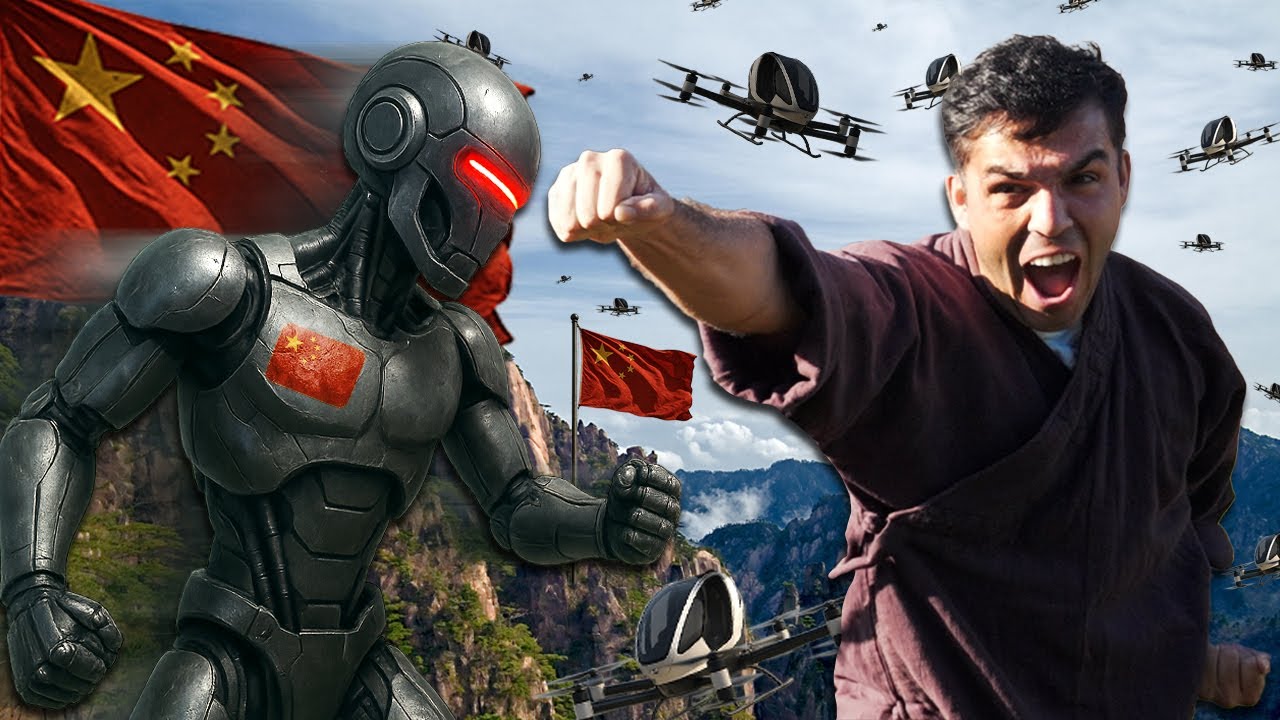
📺 Today’s recommended deep-dive video: https://www.youtube.com/watch?v=RW7frdWD2kg
Robots, Drones, and the Great Wall: The Nelk Boys’ High-Tech China Odyssey
From autonomous flying taxis to drone-delivered beers in the park, the Nelk Boys leave North America behind to explore the hyper-futuristic landscape of modern China. What begins as a wild party trip quickly evolves into a deep dive into massive innovation, ancient traditions, and an unexpected emotional bond with their local guide.
Core Question: How does the reality of China’s technological advancements and social culture challenge common Western myths?
Highlights
- Autonomous Aviation: Testing the E-Hang AAV, a pilotless flying taxi that represents the cutting edge of urban mobility.
- The WeChat Ecosystem: Discovering how a single “super-app” controls everything from dating and payments to summoning beer-delivery drones.
- Physical Augmentation: Testing exoskeleton “robot legs” designed to boost walking endurance and reduce physical fatigue.
- Cultural Immersion: Balancing high-tech cities with ancient tea ceremonies, the Great Wall, and brutal Kung Fu training at a Buddhist temple.
⏱️ Reading time: approx. 6 minutes · Saves you about 51 minutes vs. watching.
Want to take notes while watching? Click the image below and let AI Notebook capture the key points for you 👇

Digital Frontiers and Cultural First Impressions
Debunking the Digital Wall
China isn’t the isolated, low-tech relic many Westerners imagine; it is a high-speed, hyper-connected digital fortress that often feels more advanced than the United States.
Landing in Kunming, the crew immediately realized that common myths about social media blackouts were largely exaggerated for tourists, as their apps worked seamlessly with local speeds. They were greeted by a network of local hosts, including OJ and Five, who introduced them to a universe where ancient traditions and futuristic nightlife collide in massive, high-production clubs. The “aura” of the country remains palpable, blending a sense of strict regulation with an undeniable energy of rapid growth and societal transformation.
The WeChat Lifestyle
The squad quickly learned that WeChat is the absolute lifeblood of Chinese society, serving as a singular portal for payments, messaging, and ordering transportation.
Without this app, you are effectively a ghost in the machine, unable to participate in the basic commerce that drives cities like Chengdu. It isn’t just a WhatsApp clone; it is an all-in-one operating system for physical life that facilitates everything from meeting locals to paying for a 3,000-year-old tea ceremony. The efficiency is staggering, yet it highlights a level of centralized integration that feels both convenient and slightly intimidating to an outsider.

💡 Digging Deeper
Q: Is the internet actually restricted for visitors?
A: While many sites are technically blocked, the crew found that roaming with international SIMs allowed them to access Instagram and Snap without issue.
Q: How does the club scene differ from the West?
A: The production value is significantly higher, featuring moving stages, elaborate lighting rigs, and a culture centered around massive bottle service displays.
The Rise of the Machines
Exoskeletons and Robot Dogs
While nursing hangovers, the boys discovered that they didn’t need to rely solely on their own muscles to navigate the sprawling Chinese metropolises.
By strapping into motorized exoskeleton suits, or “robot legs,” the crew experienced a significant boost in walking efficiency and uphill climbing power. This technology is designed to assist elderly populations and manual laborers, but for the Nelk Boys, it became a futuristic toy that turned a simple walk into an AI-assisted hike. Kyle was so impressed by the proactive assistance of the suit that he immediate inquired about purchasing units to take back to the United States.
Pilotless Flight and Drone Delivery
This level of automation extends to human transport, as Kyle braved a solo flight in an autonomous aerial vehicle (AAV) with absolutely no pilot on board.
The E-Hang platform uses a network of sensors and pre-programmed flight paths to move passengers through the sky, removing human error from the equation entirely. Even for leisure, the technology is pervasive; the group successfully ordered a round of beers that were delivered to a public park via a GPS-coordinated drone. It signaled a shift where the “last mile” of delivery and transport is no longer handled by people, but by a fleet of autonomous machines.

💡 Digging Deeper
Q: How safe is the pilotless flying taxi?
A: The company emphasizes redundant systems and autonomous flight paths, claiming the technology is more reliable than human pilots who are prone to distraction.
Q: Can anyone order drone delivery in the park?
A: It requires specific apps and designated landing zones, but in high-tech zones like Shenzhen, it is becoming a standard service.
Scaling the Wall and Finding “Leo”
The Great Wall and Kung Fu
Standing atop the Great Wall at Beijing during sunset, the group took a rare moment of silence to appreciate the sheer scale of human history beneath their feet.
The journey continued to a remote temple where monks demonstrated the brutal reality of Kung Fu through intense physical conditioning and choreographed combat. These performers blended the grace of dancing with the raw power of martial arts, leaving the visitors both impressed and slightly terrified. Jesse took the ultimate test of faith by allowing a monk to break a thick wooden staff across his midsection, a feat that left him with literal bruises and a newfound respect for Eastern discipline.
The Emotional Core: Leo the Translator
The most unexpected part of the journey wasn’t the tech, but the bond formed with their translator, Leo, who had never traveled across his own country before.
Leo’s genuine excitement and eventual tears at the trip’s conclusion highlighted the human connection that persists despite geopolitical tensions or language barriers. The crew was so moved by his dedication that they provided a significant financial bonus and promised to help him secure a visa to join their future global adventures. It transformed a “prank” style travel video into a sincere story about friendship and the shared experience of discovery.

Key Takeaways
The trip to China served as a massive wake-up call regarding the speed of global innovation. While the West often views China through a lens of manufacturing, the Nelk Boys experienced a society that is arguably leading the world in consumer robotics, autonomous transport, and digital integration. From the “super-app” lifestyle to the ease of drone commerce, the infrastructure is designed for a level of convenience that makes North American systems feel dated.
Beyond the gadgets, the journey emphasized that personal travel is the best way to dismantle stereotypes. The hospitality of local hosts like OJ and Mike, combined with the emotional evolution of their guide Leo, proved that the people are far more welcoming than the “on-edge” aura might suggest. The crew left not just with footage of robots, but with a new perspective on the importance of global friendship and the reality of a world that is moving much faster than many realize.
Q&A
Q1: Why was Steiny denied entry into China?
A1: Immigration officials denied his entry because his passport was physically damaged, forcing him to fly back to Los Angeles immediately upon arrival.
Q2: What is “Baiju” and how strong is it?
A2: Baiju is a traditional Chinese grain liquor; it is one of the strongest spirits in the world, often compared to high-proof vodka or tequila with a unique, pungent aroma.
Q3: How expensive was the tea they drank in Chengdu?
A3: Some of the tea sourced from 3,000-year-old trees can cost over $1 million, making it more valuable than gold by weight.
Q4: Did the “robot legs” actually work for the crew?
A4: Yes, Gabe noted that his heart rate stayed lower and the suit physically moved his legs for him, though it requires constant battery charging to remain effective.
Q5: What is the significance of the Unitree robot dog?
A5: It represents a shift toward affordable, consumer-grade robotics that can perform complex tasks like backflips, dancing, and following commands via AI.
Q6: How did the crew feel about Hong Kong compared to mainland China?
A6: They found Hong Kong to be a “Hangover movie” experience with a more international, wild party vibe, though they struggled with the logistics of crossing back into the mainland.
Q7: What is the plan for Leo the translator?
A7: The Nelk Boys intend to hire him as their permanent travel assistant for international videos and are currently working on securing him a U.S. visa.