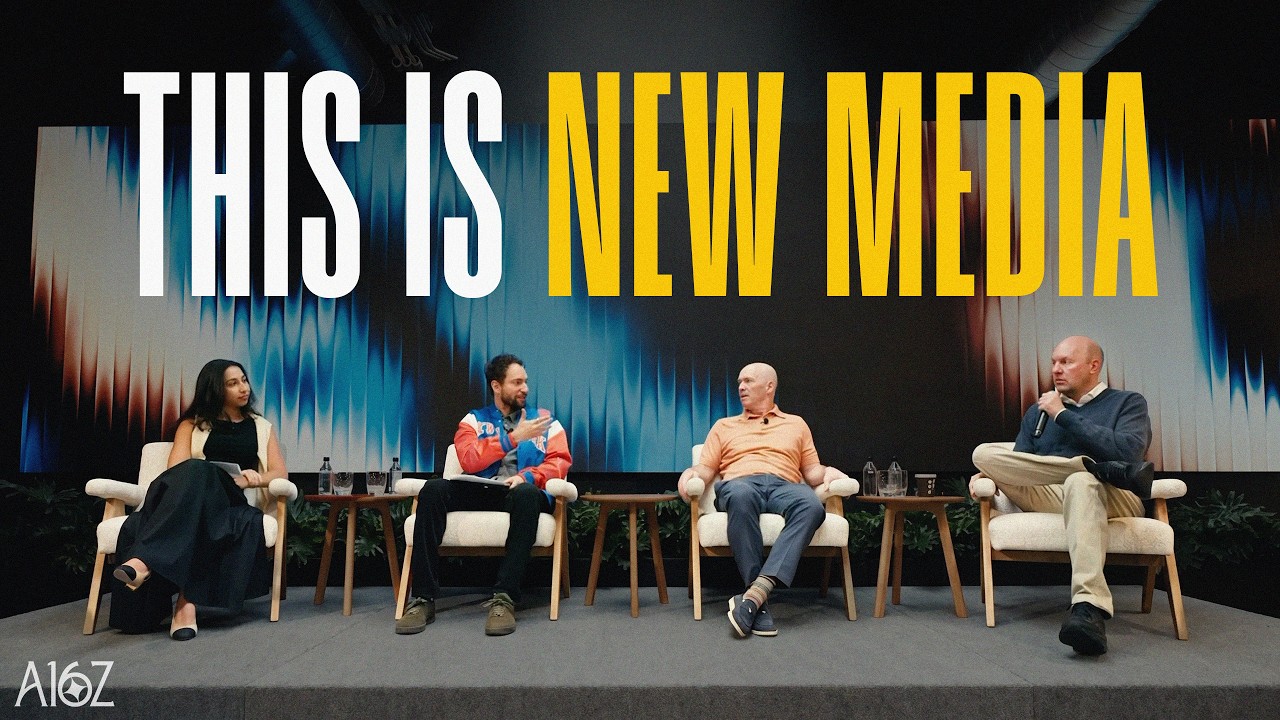
📺 Today’s recommended deep-dive video: https://www.youtube.com/watch?v=XROaLetSxg0
The End of Corporate Plastic: Master the New Rules of Media
In a world where legacy press has traded objective reporting for activism, founders can no longer rely on traditional PR to tell their story. Success now belongs to those who “go direct,” turning personal authenticity and bold worldviews into powerful offensive weapons.
Core Question: How can modern leaders navigate the collapse of centralized media by shifting from defensive corporate branding to offensive, person-led storytelling?
Highlights
- The transition from “corporate brands” back to “person-led brands” like Elon Musk and Alex Karp.
- Why the “outside-in” strategy beats traditional product marketing by focusing on global narratives.
- The importance of being interesting—and why being “hated” by the right people is a success signal.
- How to build a “new media” team that prioritizes storytelling and audience building over legacy PR tactics.
⏱️ Reading time: approx. 6 minutes · Saves you about 35 minutes vs. watching.
Want to take notes while watching? Click the image below and let AI Notebook capture the key points for you 👇

The Death of the Defensive Crouch
From Plastic People to Radical Authenticity
Traditional media training was designed to strip away everything that made a person human, leaving behind a plastic shell that could survive a sixty-minute interrogation without making any news. Success was measured by the total absence of controversy, a defensive strategy meant to protect the abstract corporate entity.
In the modern era, being uninteresting is the quickest way to guarantee your company remains invisible in a crowded, hyper-active digital landscape.
Ben Horowitz and Marc Andreessen argue that the “name on the door” era is returning, where the CEO is the brand and the company is merely the vehicle for their vision. Historical anomalies like centralized media forced messages through narrow straws, requiring abstract brands like General Electric to replace individual personalities. Now, with unlimited channels, the most successful leaders—like Elon Musk or Alex Karp—embrace high-stakes authenticity, speaking as viscerally interesting people rather than media-trained automatons.

💡 Digging Deeper
Q: Why was media training so “painful” in the past?
A: It involved watching yourself on camera for hours while a trainer critiqued every verbal tic and facial expression until you became a “plastic person.”
Q: What is the “Jedi Knight” trick for interviews?
A: It is the art of the “pivot”—refusing to answer bad or adversarial questions and instead substituting them with the important points you actually want to discuss.
Q: Is legacy media still the gold standard for prestige?
A: No; the “respectability” of legacy media is largely an illusion today, as smart audiences and even Washington insiders increasingly rely on direct newsletters and long-form podcasts.
The “Outside-In” Narrative Strategy
Stop Gazing at Your Navel
Most founders make the fatal mistake of starting with their product features rather than the tectonic shifts currently reshaping the global landscape.
Alex Karp of Palantir rarely discusses the technical specifics of software orchestration; instead, he positions himself at the center of massive global conversations regarding superintelligence and the future of Western military dominance. By speaking about the supply chain crisis from a helicopter, Ryan Peterson of Flexport didn’t just market a logistics platform—he became the primary source for understanding why the world’s children might go hungry during a global pandemic.
This “outside-in” approach creates a gravity well that pulls the media and key decision-makers toward the founder. When you are the one explaining how the world works, you aren’t just a vendor anymore; you become a strategic partner that the Secretary of War or a Fortune 500 CEO needs to meet.

💡 Digging Deeper
Q: What is the “Inside-Out” trap?
A: It’s the tendency for companies to talk only about themselves, their milestones, and their products, which is inherently uninteresting to the broader world.
Q: How does Alex Karp use “ontology” and “orchestration”?
A: He uses complex, niche terminology to maintain a sense of importance while focusing his actual public discourse on high-stakes geopolitics and the US military.
Playing Offense and Embracing Friction
Why the “Right Enemies” Are a Growth Hack
New media is inherently an offensive game where the goal is to galvanize a loyal audience by taking clear, often polarizing, stands on important issues.
Horowitz points out that having the “right enemies” is a signal of success, as nobody writes hit pieces on the unimportant or the unoriginal. When a traditional outlet attacks your mission, it presents a massive opportunity to “go direct” with a rebuttal that can catapult your brand awareness far beyond what a friendly profile ever could. Embracing the friction of a public fight often transforms passive observers into die-hard supporters who value your willingness to defend your ideas.
Attempting to please everyone effectively neutralizes your brand’s ability to cut through the noise, leaving you with a lukewarm and forgettable presence.

💡 Digging Deeper
Q: Should you respond to every negative tweet or “Anon”?
A: No; responding to small accounts with no audience is a waste of time and gives them unearned amplification.
Q: Why is “neutrality” dangerous for a brand?
A: Being neutral makes you uninteresting; the goal is to be loved by your core audience and potentially hated by your ideological opponents, as that creates engagement.
Key Takeaways
The landscape of communication has shifted from a centralized “narrow straw” to an unlimited field of direct channels. Founders must stop acting like defensive corporate officers and start acting like interesting, authentic individuals who have a stake in the world’s most pressing problems. This shift requires moving away from legacy media training and toward a “go direct” strategy where the person is the brand.
Building a team for this new era requires a different profile than the traditional PR head. You need world-class storytellers who are obsessed with the discourse and understand how to build and maintain an audience from the ground up. Ultimately, your ability to explain the world is what determines your importance in the marketplace, not just the quality of your product.
Q&A
Q1: How do you know when to fight back against a negative story?
A: You fight back when it provides a strategic opportunity to boost your brand by presenting your own point of view to a large audience.
Q2: Can a founder delegate the “spokesperson” role?
A: It is difficult; modern marketing requires a “person” to be the brand. If it isn’t the CEO, it must be someone who is a permanent, prominent fixture in the organization.
Q3: What makes a good storyteller in the business context?
A: A good storyteller understands tension, starts with the “outside world,” and uses specific, visceral details rather than abstract corporate jargon.
Q4: Why is Joe Rogan mentioned as the new bar for leaders?
A: Because appearing on a platform like Rogan requires the ability to have an authentic, three-hour conversation, which is the ultimate test of whether a leader is interesting and knowledgeable.
Q5: What is the “Responsibility of Explanation” in tech?
A: Given how complex and profound current tech shifts (like AI) are, leaders have a responsibility to honestly explain what is happening to a public that is often confused by noise.
Q6: Is it possible to learn the skill of being a “new media” personality?
A: Yes; even naturally restrained or “old media” figures have evolved their styles over decades to become more entertaining and direct in their communication.