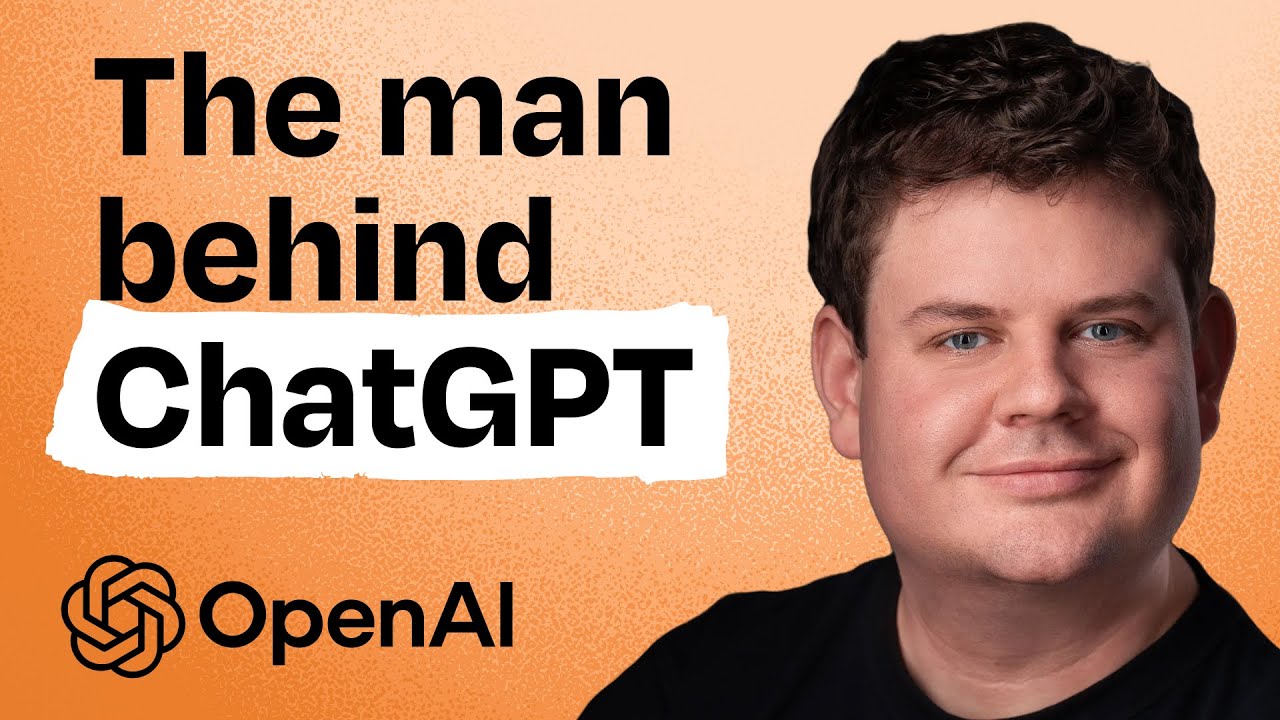
📺 Today’s recommended deep-dive video: https://www.youtube.com/watch?v=ixY2PvQJ0To
From Hackathon Project to GPT-5: The “Maximally Accelerated” Story of OpenAI
Nick Turley, Head of ChatGPT, pulls back the curtain on the chaotic, high-speed journey of building the world’s most impactful consumer product. From a 10-day shipping sprint to the recent launch of GPT-5, this conversation explores how a research lab transformed into a product juggernaut by prioritizing “vibe,” speed, and the resting heart rate of execution.
Core Question: How does OpenAI maintain a “maximally accelerated” pace while transitioning from an experimental research lab to a global software giant?
Highlights
- ChatGPT was originally a 10-day “hackathon” project meant to be a temporary research demo.
- GPT-5 introduces “taste” and “vibe” as primary product metrics alongside traditional academic benchmarks.
- The $20/month pricing was decided using a Google Form and a Discord survey just to manage server demand.
- Nick Turley explains the “Maximally Accelerated” principle as a tool to strip away corporate inertia.
⏱️ Reading time: approx. 7 minutes · Saves you about 38 minutes vs. watching.
Want to take notes while watching? Click the image below and let AI Notebook capture the key points for you 👇

The New Frontier: GPT-5 and the Shift to “Vibe”
Intelligence with Taste
GPT-5 represents a categorical shift in how users interact with AI models. Instead of focusing solely on academic benchmarks or math scores, Nick Turley emphasizes that the “vibe” of the model is what truly matters to the 700 million people using it every week.
It is the smartest, fastest, and most useful frontier model OpenAI has ever launched, specifically excelling in front-end coding and creative writing.
While previous versions like GPT-4o set a high bar, GPT-5 introduces dynamic reasoning. It automatically decides when to pause for deep thinking and when to respond instantly, removing the friction of the manual toggle found in earlier versions. This fluidity creates an experience that feels more “alive” and human, bridging the psychological gap between a software tool and a collaborative partner.
By making the model available for free, OpenAI aims to democratize this “general intelligence” rather than gating it behind a subscription.

💡 Digging Deeper
Q: Why is “vibe” a metric?
A: Users don’t look at academic data; they look at how the model feels. If a model has “taste” and style, it becomes a better editor and creative partner.
Q: How does the new reasoning work?
A: It is no longer a manual choice. The model evaluates the complexity of a prompt and decides internally whether to “think” (latent reasoning) or respond immediately.
Q: Is this a “Super Assistant”?
A: The term is limiting because it implies a personified, utilitarian thing. OpenAI views it as “your AI”—an entity that understands your context and can render its own UI.
The “Maximally Accelerated” Philosophy
Setting the Resting Heart Rate
Maintaining urgency in a massive organization is difficult, but Turley uses a specific forcing function: “Is this maximally accelerated?” This question isn’t a command to work 24/7, but rather a mental tool to identify the critical path and strip away the corporate bloat that typically slows down large tech companies.
Execution is the only thing that separates a visionary research lab from a successful consumer product.
This philosophy was born out of necessity during Turley’s time at Instacart and the early days of OpenAI. By setting a high “resting heart rate,” the team remains in a state of constant readiness. They treat model updates like software deployments, aiming for a dream state where they could ship improvements hourly to fix bugs or adjust the model’s personality in real-time.

💡 Digging Deeper
Q: Does acceleration compromise safety?
A: No. Safety is the one area where rigorous, slow process is a tool. Product velocity is high, but red-teaming and system cards remain separate and methodical.
Q: What is the “resting heart rate”?
A: It’s the baseline pace of a team. If the baseline is high, the “sprint” during a major launch like GPT-5 doesn’t feel like an unsustainable shock to the system.
The “Accidental” History of ChatGPT
From 10 Days to 700 Million Users
ChatGPT was never intended to be a permanent flagship product; it was a research demo designed to gather data on “instruction following” before being wound down after the holidays. The initial team was a ragtag group of volunteers, including a supercomputing expert who had built an iOS app and researchers writing backend code for the first time.
The move from the clunky “Chat with GPT-3.5” name to “ChatGPT” happened the night before launch.
The pricing strategy was equally serendipitous. Turley used a Van Westendorp survey via a Google Form shared on Discord to determine the $20 price point. At the time, the goal wasn’t a sophisticated monetization strategy but a simple mechanism to “turn away” demand from people who weren’t serious about using the tool during server shortages. This accidental decision ultimately set the industry standard for AI subscriptions.

💡 Digging Deeper
Q: Why was the chat interface chosen?
A: It was the simplest way to ship. While natural language is profound, Turley is “baffled” that so many companies copied the chat UI instead of inventing new ways to interact with AI.
Q: How did Enterprise ChatGPT start?
A: Companies were banning the tool due to privacy concerns. OpenAI launched the Enterprise version primarily to prevent a “generational opportunity” from being blocked by IT departments.
Key Takeaways
The transition of OpenAI from a research lab to a product company was fueled by a “ship to learn” mentality. By releasing ChatGPT as a “hackathon code base” without history or polished features, the team was able to observe emergent behaviors that they could never have predicted in a lab. This empirical approach—watching how users actually delegate tasks—remains the core of their product development strategy for GPT-5 and beyond.
Success at this scale requires a balance between extreme execution speed and the humility to listen to user feedback. Whether it is pricing a subscription via a Google Form or deciding to make a frontier model free for 10% of the world’s population, the common thread is a refusal to let “perfect” planning get in the way of “maximally accelerated” progress. The future of AI isn’t just a chatbot; it is a personalized entity that renders its own UI and integrates deeply into every facet of economically valuable work.
Q&A
Q1: How long did it take to build the first version of ChatGPT?
A: While the research took years, the actual productization and decision to ship the “open-ended” chat interface took only 10 days.
Q2: What is the most significant improvement in GPT-5?
A: Beyond the “vibe” and speed, it is the state-of-the-art performance in coding (specifically front-end) and its ability to reason dynamically without being told to “think.”
Q3: Why is ChatGPT’s retention so high (the “smiling curve”)?
A: Because people have to “learn” how to delegate to an AI. As they spend more time with the technology, they discover more personal and work-related use cases, causing them to return more frequently over time.
Q4: Will the “Chat” interface eventually go away?
A: Nick Turley believes natural language is here to stay, but the “turn-by-turn” chat paradigm is limiting. Future versions may render their own UI, like Figma or Google Docs, rather than just being a text box.
Q5: How did they decide on the $20 price point?
A: They used a standard four-question pricing survey (Van Westendorp) on Discord. The result was $20, and it stuck because it felt accessible while managing server load.
Q6: What does the “Maximally Accelerated” Slack emoji look like?
A: It is a pink Comic Sans emoji that the team uses to challenge whether a project is moving as fast as theoretically possible.
Q7: How does Nick Turley stay sane with such a high-pressure launch cadence?
A: He takes one day every week (usually Saturday) to completely unplug and think, treating the OpenAI journey as a “sprint marathon.”