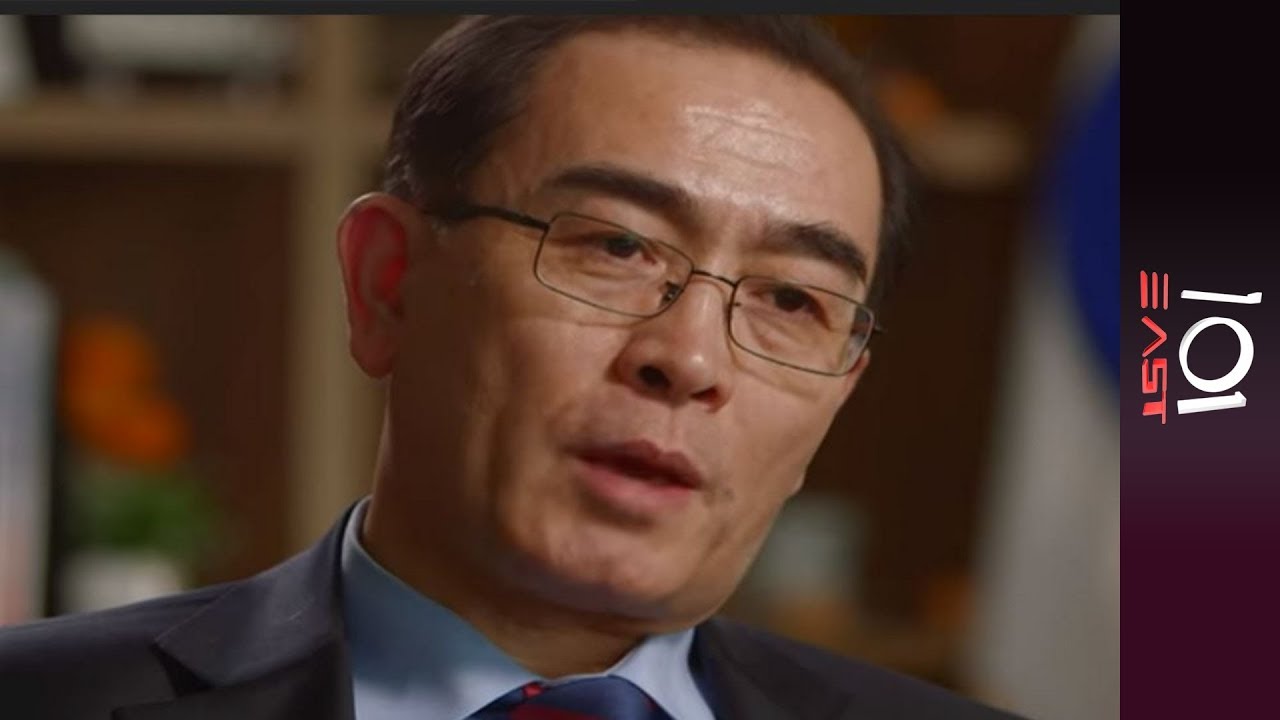
📺 Today’s recommended deep-dive video: https://www.youtube.com/watch?v=P_hkREbhpvo
The Diplomat’s Defection: Why the Kim Regime is a House of Cards
For decades, high-level diplomats served as the sophisticated face of a brutal regime, but the ascension of Kim Jong-un transformed quiet suspicion into a desperate need for escape. This internal perspective reveals how the execution of family members and the pursuit of nuclear weapons have stripped the North Korean leadership of its last vestiges of legitimacy.
Core Question: What drives a high-ranking official to abandon the regime, and what does the assassination of Kim Jong-nam tell us about the stability of Kim Jong-un’s rule?
Highlights
- The 2013 pivot toward nuclearization and the execution of Jang Song-thaek destroyed internal hope for reform.
- Kim Jong-un suffers from profound paranoia because he was a “hidden child” with no relationship with his grandfather.
- The assassination of Kim Jong-nam was a calculated move to eliminate the “main trunk” of the family bloodline.
- Regime change will likely come through information dissemination and the growth of capitalist markets, not just military intervention.
⏱️ Reading time: approx. 11 minutes · Saves you about 27 minutes vs. watching.
Want to take notes while watching? Click the image below and let AI Notebook capture the key points for you 👇

The Breaking Point of Loyalty
From Hope to Frustration
When Kim Jong-un first came to power, there was a fleeting sense of optimism among the North Korean elite that his time spent abroad might herald a period of modernization and international integration. This hope was quickly extinguished as the young leader doubled down on the rigid, isolationist policies of his predecessors, prioritizing nuclear development over the welfare of his people.
The illusion of reform shattered completely in March 2013.
It was during this time that Kim Jong-un officially announced the continuation of the “Byungjin” line—the simultaneous development of the economy and nuclear weapons—which signaled to the world and his own officials that the regime had no intention of changing its trajectory.
For a high-level diplomat, the realization was devastating: the system was not just flawed, but purposefully stagnant and devoid of any future for the next generation. This frustration was compounded by the chilling execution of Jang Song-thaek, the leader’s own uncle, which served as a violent warning to anyone who yearned for a different North Korea.

💡 Digging Deeper
Q: Why was the execution of Jang Song-thaek so significant for the elite?
A: It proved that no one, regardless of blood relation or rank, was safe from Kim Jong-un’s paranoia and purge-heavy leadership style.
Q: How did the diplomat view his life before defecting?
A: He described his high-status life in North Korea as nothing more than the “life of a slave,” a cycle of performing loyalty to a system he no longer believed in.
Q: What was the primary motivator for the timing of the defection?
A: The future of his two sons; he refused to hand down a destiny of servitude and wanted them to experience a “normal life” of freedom.
The Logic of a Political Assassination
The “Main Trunk” Theory
The murder of Kim Jong-nam in a Malaysian airport was not a random act of cruelty but a calculated necessity within the context of North Korean legitimacy. In the regime’s quasi-Confucian logic, the eldest son represents the “main trunk” of the revolutionary tree, making Kim Jong-nam the rightful heir in the eyes of traditionalists, while Kim Jong-un remains a mere “branch.”
Kim Jong-un is a man haunted by the ambiguity of his own origins.
Because his mother was not the official wife of Kim Jong-il, and because he was kept hidden from his grandfather Kim Il-sung, his claim to the throne is fragile. By eliminating his half-brother, he attempted to prune the family tree and ensure that no alternative “trunk” could ever be used by internal dissenters or foreign powers to replace him.

💡 Digging Deeper
Q: Did the diplomat believe the assassination could have been a “loyalty contest” among subordinates?
A: No, he insists that in the North Korean system, an order to kill a member of the Kim family can only come directly from Kim Jong-un himself.
Q: Why was the use of VX nerve agent and foreign “actors” significant?
A: It showed an evolution in North Korean tactics—using naive, low-cost foreign recruits to create plausible deniability while employing a weapon of mass destruction on foreign soil.
Q: How did the North Korean Ambassador in Malaysia handle the aftermath?
A: He acted as a mouthpiece for Pyongyang, as no diplomat is permitted to offer personal thoughts or apologies; every word is dictated by the capital to protect the leader’s image.
The Crumbling Pillars of the Regime
The Madman’s Gambit and Market Resistance
Kim Jong-un utilizes “madman tactics” to project an image of a leader without fear, hoping to coerce the international community into a “freeze-for-freeze” deal. This strategy aims to trade a temporary halt in nuclear testing for the lifting of sanctions, which would effectively grant him the status of a legitimate nuclear power.
Such a compromise is a dangerous trap that would only justify past provocations.
While the surface of the regime looks formidable, the internal foundation is on a “slippery slope” toward collapse because the state can no longer provide for the survival of its citizens. The daily lives of ordinary North Koreans are now dependent on the Jangmadang (private markets), creating a burgeoning capitalist class that is increasingly independent of government rations.
This economic shift is the true seed of revolution.
As people realize their survival comes from their own efforts and the market—rather than the “Great Leader”—their psychological dependence on the regime withers. Once the information blockade is pierced and people understand their inherent rights, the vast surveillance network currently keeping them in check will likely prove useless against a unified popular uprising.
💡 Digging Deeper
Q: What is the real intention behind North Korea’s push for a peace treaty?
A: To remove the legal justification for American troops in South Korea, thereby weakening the peninsula’s defense and giving the North more leverage.
Q: Can the elite be expected to support a popular uprising?
A: Yes, because many in the elite and security apparatus share the same sense of hopelessness and would likely abandon the regime once a “spark” occurs.
Q: Is a government-in-exile led by a Kim family member a viable option?
A: The diplomat believes North Koreans are so “fed up” with the Kim Dynasty that they would likely reject any leader carrying that surname.
Key Takeaways
The transition of power to Kim Jong-un has replaced the traditional, somewhat predictable authoritarianism of his father with a paranoid, erratic “reign of terror.” This shift has alienated the very elites required to maintain the state’s infrastructure, as seen in the high-profile defection of diplomats who see no future in a nuclear-obsessed, stagnant society. The brutal assassination of Kim Jong-nam serves as a primary example of this paranoia, targeting the “legitimate” bloodline to secure an insecure throne.
Ultimately, the regime’s survival is a race against time and information. As the private market replaces the state’s failed socialist economy, the North Korean people are gaining a level of independence that was unthinkable under Kim Il-sung. The strategy for the international community should not be a return to failed compromises, but a concerted effort to flood the country with outside information, empowering the populace to eventually dismantle the system from within.
Q&A
Q1: What was the primary “trigger” for your defection?
A: There wasn’t a single point, but rather a long accumulation of doubts. The pivot to nuclear development in 2013 and the execution of Jang Song-thaek were the final signs that reform was impossible.
Q2: How does Kim Jong-un’s relationship with his family differ from his predecessors?
A: He lacks a sense of solidarity. He was a hidden child and never even met his grandfather, Kim Il-sung. This isolation has fueled a unique level of paranoia toward his relatives.
Q3: Is the “madman” persona of Kim Jong-un an act?
A: It is a tactic. He wants to create an image of a leader who is willing to press the button, forcing countries like the U.S. and China to offer concessions just to manage the risk.
Q4: Why would ordinary North Koreans ever revolt given the level of surveillance?
A: Because the surveillance state only works as long as the people in it believe in the system. Once the “spark” of awareness happens, history shows that even the most formidable networks can collapse overnight.
Q5: What is the significance of the “main trunk” vs. “branch” terminology?
A: It refers to the Eldest Son’s right to inherit. Kim Jong-nam was the “trunk” (legitimate heir), making Kim Jong-un a “branch” who felt he had to destroy the trunk to survive.
Q6: How has your life changed since defecting?
A: While I have to live with high security and the “nightmare” of what might happen to my family back home, I am mentally free. I can speak and act according to my own will for the first time.
Q7: Do you think a military option is the only way to end the regime?
A: No, I believe disseminating information is more realistic. Educating the people for a popular uprising, similar to what happened in the Soviet Union, is the most effective path.