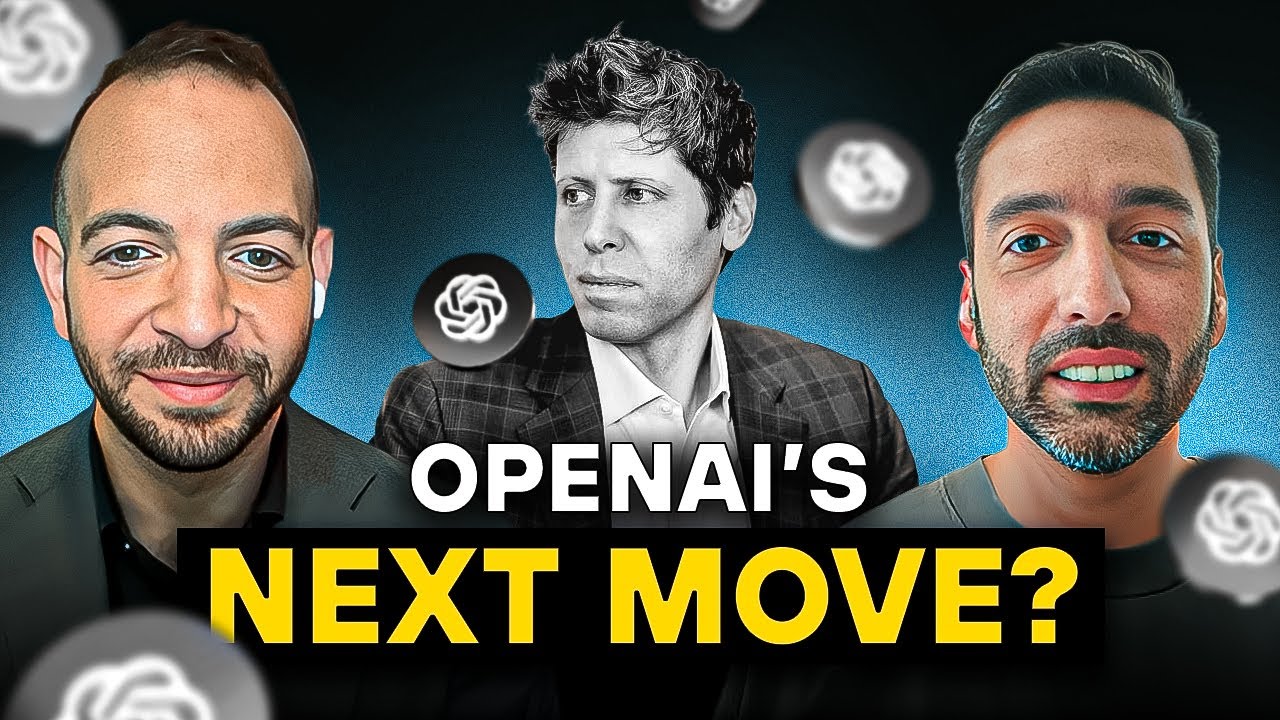
📺 Today’s recommended deep-dive video: https://www.youtube.com/watch?v=lqQOtfWkCs8
The Enterprise Pivot and Mickey’s AI Debut: Inside OpenAI’s 2026 Roadmap
Sam Altman is shifting OpenAI’s gaze from pure AGI dreams toward the lucrative world of enterprise software, signaling a major strategy change for 2026. Meanwhile, Disney is betting big on Sora, licensing its iconic characters for user-generated content in a deal that could redefine fandom. This shift comes as infrastructure giants like Oracle and Broadcom face a reality check, suggesting the AI trade is entering a more sober, application-focused phase.
Core Question: Is the AI industry shifting from a race for raw intelligence to a battle over practical, industry-specific applications?
Highlights
- OpenAI plans to prioritize enterprise AI in 2026, targeting a market expected to hit $37.5 billion.
- Disney invests $1 billion in OpenAI, licensing characters like Mickey Mouse and Stitch for Sora video generation.
- The AI infrastructure trade is wobbling as Oracle delays data centers and Broadcom reports lower-than-expected margins.
- Internal tensions at Meta rise as the “Super Intelligence” team clashes with executives over research versus product goals.
⏱️ Reading time: approx. 7 minutes · Saves you about 43 minutes vs. watching.
Want to take notes while watching? Click the image below and let AI Notebook capture the key points for you 👇

OpenAI’s Strategic Shift Toward the Enterprise
The End of Model Supremacy
For the past two years, OpenAI has operated with a roughly 70/30 split favoring consumer products over enterprise solutions, but Sam Altman recently signaled a massive reversal. During a high-stakes lunch with top media CEOs in New York, Altman identified “Enterprise AI” as the company’s defining priority for 2026. This isn’t just about selling more ChatGPT Plus accounts to businesses; it represents a fundamental pivot toward building deep, functional software for the corporate world.
The marketplace is currently witnessing the rapid commoditization of large language models, forcing OpenAI to seek value elsewhere.
When intelligence becomes a commodity, the real winners are those who build the most useful applications on top of that intelligence. Altman’s private comments suggest he now views AI as an “application problem” rather than a “training problem,” acknowledging that raw model gains are beginning to level off across the industry. This realization likely stems from Google’s Gemini catching up to GPT-4, effectively ending the era of OpenAI’s undisputed technical lead.

💡 Digging Deeper
Q: Why is enterprise AI the fastest-growing software category?
A: It is projected to jump from nearly zero in 2022 to over $37 billion in 2025 because businesses are finally moving past experimentation to real business transformation.
Q: Will this focus on business hurt the consumer experience?
A: There is a significant risk of cannibalization; enterprise tools require stoic, accurate responses, while consumers often prefer a warmer, more personable “assistant” personality.
Q: How does OpenAI plan to reach $100 billion in revenue by 2028?
A: They are betting on high-value industry partnerships in sectors like pharma, legal, and accounting, though their lack of a traditional sales infrastructure remains a hurdle.
Disney and the Era of Licensed Generative Video
Mickey Mouse Goes Viral
Disney’s $1 billion equity stake in OpenAI marks a historic moment where a protective media giant finally leans into the generative AI wave. By licensing over 200 characters for use in the Sora video generator, Disney is effectively trying to “legalize” and monetize fandom that was already moving toward AI tools. Users will soon be able to generate high-quality videos of themselves interacting with R2-D2 or Stitch, provided the content filters hold up.
This deal is the “iTunes moment” for AI video, moving the technology from a Wild West of copyright infringement to a structured, licensed ecosystem.
However, the “Cocaine Mickey” problem looms large, as keeping a family-friendly brand safe in a generative environment is a monumental technical challenge. Disney CEO Bob Iger appears to believe that the potential for deeper fan engagement outweighs the risk of illicit content, especially as Disney plans to curate user-generated Sora content directly onto Disney Plus. It is a bold play to transform passive viewers into active creators within the Disney ecosystem.

💡 Digging Deeper
Q: Is Disney’s investment purely cash-based?
A: While details are emerging, it appears to be a mix of equity and warrants, potentially involving “circular funding” where OpenAI stock is traded for IP rights.
Q: How is Google responding to this Disney-OpenAI alliance?
A: Google is in a defensive position after Disney sent a cease-and-desist letter regarding copyright infringement, leading to a visible frostiness between the two tech giants.
Q: What is the “Sora syntax” mentioned in the podcast?
A: Many AI-generated videos currently have a stilted, overly excited rhythmic dialogue that sounds remarkably like video game NPC speech, likely due to the training data.
The Infrastructure Wobble and Meta’s Civil War
A Haircut for the Hardware Giants
The “AI trade” hit a major speed bump this week as Oracle and Broadcom saw their stock prices tumble following disappointing updates on data center buildouts. Oracle, a cornerstone of the infrastructure movement, admitted that capital expenditures will outrun revenue for several quarters, while also delaying some critical OpenAI data centers to 2028. This suggests that the physical reality of building AI—power, chips, and cooling—is proving much harder than the market’s “rosy” valuations initially accounted for.
Credit Default Swaps for Oracle hit their highest intraday level since 2009, indicating growing market anxiety about the massive debt being taken on to fund these builds.

The Battle for Meta’s Soul
Inside Meta, a different kind of tension is brewing between Mark Zuckerberg’s new “Super Intelligence” lab and the company’s long-standing leadership. Alexander Wang, the 28-year-old lead of the siloed TBD Lab, is reportedly clashing with veterans like Chris Cox and Andrew Bosworth over the direction of model training. The researchers want to build “god-like” intelligence, while the executives want to use the data to sell more ads on Instagram.
This friction highlights the fundamental divide in Silicon Valley: are we building tools to fix the world, or just better ways to keep people scrolling?
Key Takeaways
The transition from 2025 to 2026 is shaping up to be the era of “Application over AGI.” As the intelligence of frontier models begins to hit a point of diminishing returns, the competitive moat is shifting toward distribution and product design. OpenAI’s pivot to enterprise and Disney’s embrace of Sora represent two sides of the same coin: the necessity of turning raw compute into something that businesses and consumers are actually willing to pay for in the long term.
We are also seeing the first signs of structural fatigue in the AI infrastructure trade. The reliance on a few key players like OpenAI to sustain multi-billion dollar data center builds is a precarious strategy that the market is beginning to re-evaluate. If the “Super Intelligence” researchers at places like Meta cannot reconcile their ambitions with the cold reality of business utility, we may see a significant talent migration as the industry matures.
Q&A
Q1: Why is Sam Altman calling AI an “application problem” now?
A: He believes the era of massive gains through raw model scaling is leveling off, meaning the next stage of value will come from how we channel that intelligence into specific professions like law or medicine.
Q2: What does the Disney deal mean for the average Sora user?
A: It means you will legally be able to use iconic characters in your videos, but expect heavy content filters to prevent the “Cocaine Mickey” scenarios that Disney is desperate to avoid.
Q3: Is the AI bubble bursting with the Oracle and Broadcom dips?
A: Not necessarily a burst, but a “sobering up.” The market is realizing that building data centers is expensive, low-margin work that takes years to pay off, unlike the high-margin software dreams of the past.
Q4: Why are Meta’s researchers pushing back against using Facebook and Instagram data?
A: The “Super Intelligence” team wants to maintain a pure research focus to catch up to OpenAI, viewing the social media data as a distraction that tethers them to Meta’s legacy advertising business.
Q5: What is the significance of Credit Default Swaps (CDS) in the Oracle story?
A: A rise in CDS indicates that investors are buying insurance against the possibility of a company defaulting on its debt. Seeing these hit 2009 levels suggests real fear regarding Oracle’s massive AI spending.
Q6: Will OpenAI split ChatGPT into separate consumer and professional models?
A: It’s likely. Professional users need a precise, non-sycophantic tool, while consumers want a warm, conversational assistant; trying to serve both with one “personality” is proving increasingly difficult.