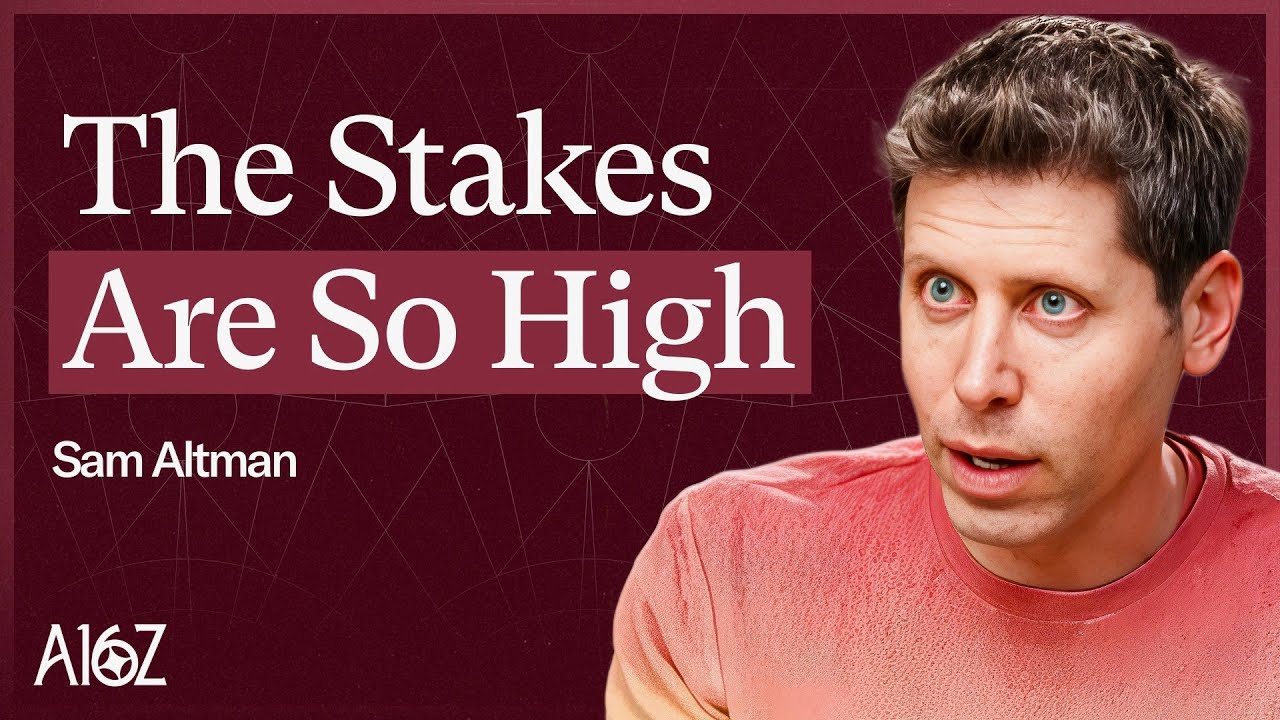
📺 Today’s recommended deep-dive video: https://www.youtube.com/watch?v=JfE1Wun9xkk
The Relentless Pursuit: OpenAI’s Vertically Integrated Vision for AGI
OpenAI’s Sam Altman offers an illuminating look into the multifaceted strategy driving the company’s ambitious mission. He reveals a tightly integrated approach, merging consumer technology, massive infrastructure development, and cutting-edge research, all centered on achieving Artificial General Intelligence (AGI). This interview provides a unique glimpse into the strategic decisions, technological bets, and evolving societal considerations shaping the future of AI.
Core Question: How does OpenAI’s multi-pronged strategy—encompassing research, infrastructure, and product development—aim to achieve AGI while navigating societal and technological shifts?
Highlights
- OpenAI functions as a vertically integrated entity, prioritizing research and infrastructure to support its overarching goal of AGI development and widespread utility.
- Products like Sora, while seemingly consumer-focused, are critical AGI enablers, advancing world models and preparing society for the implications of advanced AI capabilities.
- The emergence of the “AI scientist” role, capable of making significant scientific discoveries, is viewed as the next major AI breakthrough, surpassing even the Turing test in its impact.
- OpenAI consistently prioritizes GPU allocation for foundational research over immediate product demands, underscoring its deep commitment to advancing core AI capabilities.
⏱️ Reading time: approx. 14 minutes · Saves you about 35 minutes vs. watching.
Want to take notes while watching? Click the image below and let AI Notebook capture the key points for you 👇

The Vertical Stack: OpenAI’s Integrated Approach
Building Personal AI and Massive Infrastructure
OpenAI operates as a unique amalgamation of entities: a consumer technology business, a mega-scale infrastructure operation, and a pioneering research lab. This integrated structure is foundational to their long-term vision. The primary goal is to establish a personal AI subscription that will become indispensable for individuals, used across various first-party applications and third-party services, eventually integrating into dedicated devices. This personal AI aims to profoundly understand and assist its users, making daily life more efficient and connected.
Supporting this consumer-facing ambition necessitates an enormous and unprecedented infrastructure build-out. While critical for the research that underpins product development, this infrastructure might also, by its sheer scale, evolve into an independent business segment. The company’s leader notes that current plans focus solely on supporting their core mission of AGI development and making it broadly useful, yet acknowledges the possibility of other opportunities emerging from such a colossal undertaking. The sheer scale required for this infrastructure is described as “terrifying enough” to necessitate openness to future possibilities.
The company’s history reflects this adaptive strategy. Years ago, when asked about OpenAI’s business model, Sam Altman famously quipped, “We’ll ask AI, it’ll figure it out for us.” This seemingly lighthearted response has proven prescient, as internal teams have repeatedly consulted current models for strategic insights, receiving unexpectedly insightful answers. This self-referential capability highlights the symbiotic relationship between their research, infrastructure, and product development, forming a tightly knit vertical stack where each component fuels the others.

💡 Digging Deeper
Q: Why vertical integration, and has your view on it changed?
A: Sam Altman originally opposed vertical integration but now believes he was “wrong about that.” He observes that while an efficient economy ideally supports specialized companies, OpenAI’s mission required a broader scope. The iPhone, an “extraordinarily vertically integrated” product, serves as a powerful example of this successful strategy.
Q: Will OpenAI’s infrastructure become a separate business in the future?
A: While currently dedicated to supporting OpenAI’s services and research, there’s an acknowledged possibility that the massive infrastructure built could evolve into a separate business, given its scale and potential. However, this is not a current strategic focus.
Q: How does OpenAI balance allocating resources between product and research?
A: When faced with resource constraints, OpenAI almost always prioritizes giving GPUs to research over supporting product development. This reflects their core mission to build AGI, with product offerings often serving as valuable feedback loops for research.
Beyond Chat: New Frontiers in AI Interaction and Discovery
The Strategic Role of Sora
OpenAI’s ventures, such as Sora, are often misunderstood as purely consumer-focused tools. However, they play a crucial, dual role within the company’s AGI strategy. Sora, which generates video from text, is seen as a significant step toward developing robust “world models”—AI systems that can understand and simulate complex environments. These models are considered far more vital to achieving AGI than generally perceived, extending beyond the capabilities of previous large language models like ChatGPT.
Beyond its research benefits, Sora also serves a critical function in facilitating the “co-evolution” of society and technology. By releasing such advanced tools, OpenAI aims to give the world a “taste of what’s coming,” enabling society to grapple with the implications of powerful generative AI, particularly in emotionally resonant mediums like video. The release of Sora, much like ChatGPT before it, forces public engagement and understanding of rapidly advancing capabilities, prompting discussions around deepfakes, content authenticity, and societal adjustment. This proactive engagement is deemed essential for navigating the future responsibly.
The Rise of the AI Scientist
The concept of the “AI scientist” represents a groundbreaking leap in AI capabilities, far surpassing previous benchmarks. Sam Altman views AI’s ability to conduct scientific research as his personal equivalent of the Turing test, marking a profound shift in the world. He notes that with models like GPT-5, there are already “little examples” of AI making novel mathematical discoveries or contributing to physics and biology research, hinting at a future where AI significantly accelerates scientific progress.
This development is anticipated to have a massive, positive global impact, as scientific advancement is seen as a primary driver of human betterment. The rapid, almost overlooked, passing of the traditional Turing test served as a precedent for how quickly society might adapt to such revolutionary changes. The potential for AI to undertake “bigger chunks of science” within a couple of years is considered a “crazy thing” that will redefine research and discovery.

💡 Digging Deeper
Q: How does Sora directly contribute to AGI research?
A: Sora helps in building “world models,” which are crucial for AGI. By generating realistic and complex video, it pushes the boundaries of AI’s understanding and simulation of the physical world, a capability much more important to AGI than many currently realize.
Q: What does the emergence of an “AI Scientist” imply for human roles?
A: The AI scientist suggests a future where AI can independently make significant scientific discoveries, potentially leading to an unprecedented acceleration of progress. This would likely free up human scientists to focus on more complex, creative, or interpretive aspects of research.
Q: What will the future of AI-human interfaces look like beyond current chatbots?
A: While text interfaces can still evolve significantly (e.g., curing cancer queries), future interfaces might involve real-time rendered video, allowing for more immersive and dynamic interactions. Hardware devices could also become “ambiently aware,” understanding context to deliver information proactively rather than intrusively.
Navigating Societal Impact and Future Challenges
Evolving Perspectives on Safety and Regulation
While the technological advancements are swift, OpenAI is acutely aware of the societal implications and potential risks. Sam Altman anticipates “some really bad stuff to happen” as AI technology matures, acknowledging that all past technologies, “all the way back to fire,” have carried risks that society eventually learned to manage with guardrails. The current absence of a “really scary giant risk” doesn’t guarantee future immunity, and the profound impact of billions interacting with a single “brain” could lead to unforeseen societal-scale changes.
Regarding regulation, OpenAI’s stance emphasizes a targeted approach. The most crucial regulatory focus, they argue, should be on truly “superhuman capable” frontier models. Applying broad, European-style restrictions to less capable, yet wonderfully useful, AI models could stifle innovation and put countries like the US at a severe disadvantage against less regulated nations such as China. The aim is to avoid a “big bang” scenario where society is caught unprepared, advocating for careful, focused testing only for the most advanced systems.

Copyright and the Creator Economy
The advent of generative AI is profoundly reshaping discussions around copyright and content creation. OpenAI observes that the societal and technological landscape is constantly co-evolving, with different generative models (e.g., image vs. video) eliciting varying responses from rights holders. A “forced guess” on the future of copyright suggests that society will likely decide that training AI models on existing data constitutes “fair use.”
However, this doesn’t preclude the emergence of new monetization models for content generation “in the style of” or “with the IP of” specific creators. The analogy drawn is that while humans can be inspired by novels, they cannot reproduce them. The unique challenge and opportunity lie in how creators might actually want their characters or styles to be used by AI, potentially even becoming “upset with us for not generating their character often enough than too much,” as it could enhance brand value and audience engagement. This signals a complex, adaptive future for intellectual property, diverging from traditional, often “irrational,” industry behaviors seen in sectors like the music business.
💡 Digging Deeper
Q: What is OpenAI’s primary concern regarding AI safety and regulation?
A: The main concern is that while less capable models offer immense benefits and shouldn’t be over-regulated, extremely superhuman AI models could pose unique, serious risks. Regulation should be carefully targeted at these frontier models to avoid stifling innovation on a broader scale.
Q: How does OpenAI envision the future of copyright in the age of generative AI?
A: OpenAI speculates that training models on existing data will eventually be deemed fair use. However, new models for commercial content generation using specific styles or IPs will emerge, potentially requiring new licensing or revenue-sharing agreements, where rights holders might even desire more AI-driven engagement with their characters.
Q: What are the strategic implications of open-source AI models?
A: While acknowledging the benefits of open source, Sam Altman highlights the potential risks, particularly concerning geopolitical influence. If dominant open-source models originate from countries like China, this could lead to a significant loss of control over the interpretation and deployment of AI, posing strategic dangers.
The AI-Energy Nexus and OpenAI’s Culture
Powering the Future: AI and Energy Convergence
A significant and somewhat unexpected convergence is occurring between AI and energy, two fields Sam Altman has long prioritized. He posits that historically, cheaper and more abundant energy has been the most impactful driver of improved quality of life. The massive computational demands of advanced AI systems are now directly linking these two domains, making energy availability and cost a critical bottleneck for future AI development. This necessitates a dramatic expansion of energy production, especially in regions like the West, which have historically faced challenges with energy policy, particularly regarding nuclear power.
In the short term, natural gas is expected to fulfill much of the new energy demand, particularly in the US. However, the long-term vision for energy dominance for AI and beyond lies with a combination of solar-plus-storage and advanced nuclear technologies, including Small Modular Reactors (SMRs) and fusion. The pace of nuclear adoption, in particular, will hinge on its economic competitiveness. If nuclear becomes “crushingly economically dominant,” political and regulatory hurdles (like those with the NRC) are expected to be overcome rapidly, akin to historical energy transitions driven by significantly cheaper sources.

Cultivating Innovation and Leadership
OpenAI’s consistent ability to innovate, even amid intense competition and talent wars, is attributed to a unique culture. Sam Altman, drawing from his investor background, likens running a successful research culture to managing a “really good seed-stage investing firm,” where the focus is on betting on talented individuals (founders) rather than strict product-centric management. This approach fosters an environment where researchers are empowered, and ideas are given room to flourish, similar to how venture capital backs promising startups.
This leadership style contrasts sharply with the traditional CEO role, which Altman candidly admits he finds less inherently stimulating than investing. He notes that the operational complexities, organizational dynamics, and constant conflict resolution of running a large company are vastly different from the intellectual satisfaction of investment. Despite the demanding nature of the CEO position, this unique blend of investor mindset and operational necessity has been instrumental in shaping OpenAI’s distinctive and highly effective innovation culture, driving continuous breakthroughs like the unexpected persistence of “deep learning miracles.”
Key Takeaways
OpenAI is pursuing AGI through a deeply integrated strategy, where advanced research, massive infrastructure, and consumer-facing products like Sora form a synergistic “vertical stack.” This approach allows them to push the boundaries of AI, exemplified by the emerging “AI scientist” capable of groundbreaking discoveries, while also preparing society for profound technological shifts. Their commitment to foundational research is unwavering, even when it means prioritizing GPU allocation over immediate product demands.
Navigating the future involves proactive engagement with societal concerns, especially regarding AI safety and copyright. OpenAI advocates for targeted regulation on only the most “superhuman capable” models to foster innovation while managing risk, and envisions an evolving copyright landscape that balances fair use with new monetization opportunities for creators. Critically, the growing computational needs of AI are creating an inevitable convergence with the energy sector, highlighting the urgent need for abundant, affordable, and clean power, with nuclear and solar-plus-storage identified as long-term solutions.
Q&A
Q1: How does OpenAI’s multi-faceted approach contribute to its overall mission?
A: OpenAI combines a consumer tech business, a mega-scale infrastructure operation, and a research lab into a vertically integrated stack. This structure ensures that research drives product innovation, and vast infrastructure supports ambitious research goals, all focused on achieving AGI and making it widely useful.
Q2: What is the significance of products like Sora in OpenAI’s AGI strategy?
A: Sora is not just a consumer product; it’s a critical AGI enabler. It helps OpenAI build sophisticated “world models” by generating realistic video, which is crucial for AI to understand and interact with complex environments. It also helps society co-evolve with technology by exposing the public to advanced AI capabilities.
Q3: What does Sam Altman consider the “new Turing test” for AI?
A: Sam Altman views AI’s ability to “do science” and make significant scientific discoveries as the new Turing test. He notes that models like GPT-5 are already showing early signs of making novel contributions in fields like math and physics.
Q4: How does OpenAI address the distribution of user preferences for AI?
A: OpenAI acknowledges that users have a wide range of preferences for how a chatbot should behave. They aim to address this by allowing AI to adapt to individual users’ needs, potentially through dynamic “personality” configurations or by having the AI learn user preferences over time.
Q5: What is OpenAI’s stance on AI safety and regulation?
A: OpenAI believes regulation should be focused primarily on “truly superhuman capable” frontier models, rather than imposing broad restrictions that could stifle innovation on less capable models. The goal is to safely manage the most advanced AI while allowing the beneficial development of others.
Q6: How does Sam Altman perceive the convergence of AI and energy?
A: Altman sees AI and energy as two converging interests. The immense computational demands of advanced AI require vast amounts of power, making abundant and cheap energy essential for AI’s future. He believes long-term energy solutions will be dominated by solar-plus-storage and advanced nuclear power.
Q7: How does OpenAI foster its culture of innovation?
A: Sam Altman attributes OpenAI’s innovative culture to adopting a “seed-stage investing firm” mindset. This involves empowering researchers and betting on individuals, fostering an environment akin to how venture capital supports founders, which he finds more effective for deep research than traditional product management.