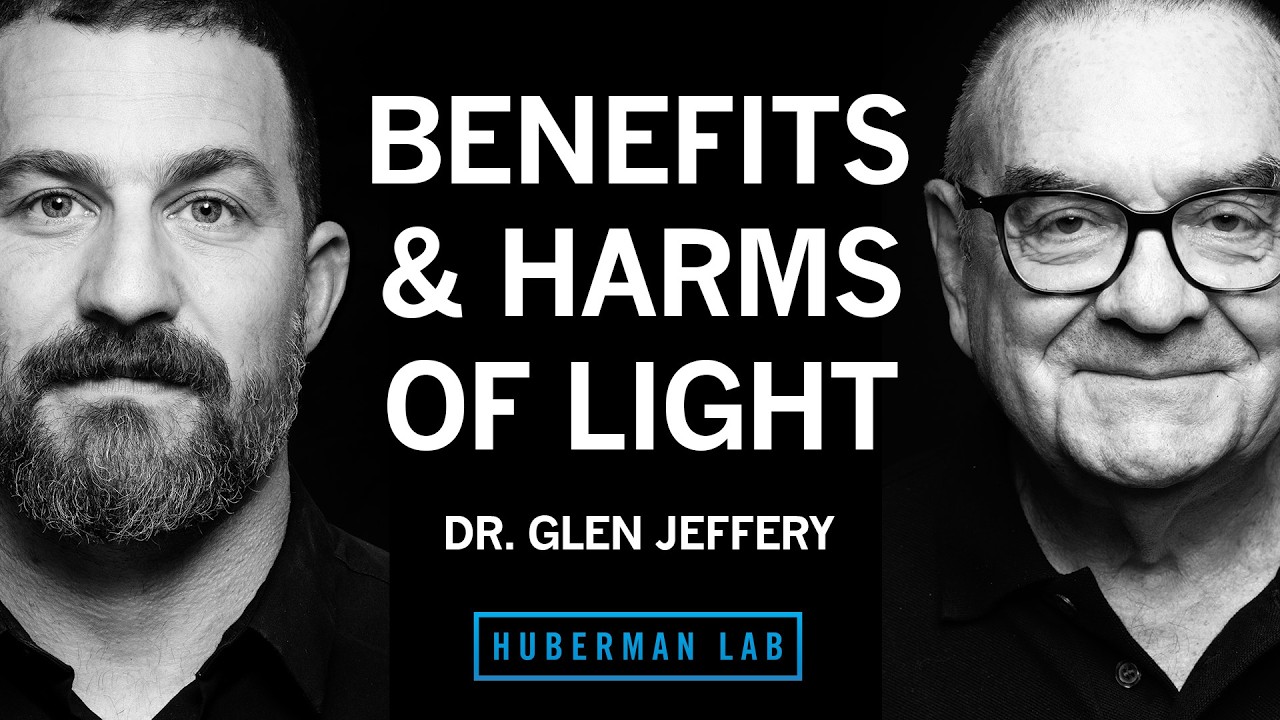
📺 Today’s recommended deep-dive video: https://www.youtube.com/watch?v=iT8W6kaD-RA
The Red Light Revolution: Saving Your Mitochondria from the LED Age
Our indoor environments have shifted from the balanced warmth of fire and sunlight to narrow-spectrum LEDs that may be silently undermining our cellular health. By understanding the biological interaction between long-wavelength light and the water within our mitochondria, we can unlock systemic benefits for vision, metabolism, and longevity.
Core Question: How does exposure to red and near-infrared light improve mitochondrial function and mitigate the health risks of modern artificial lighting?
Highlights
- Red light increases ATP production by reducing the viscosity of “nano-water” surrounding mitochondrial motors.
- Brief morning exposure to 670nm light can improve color vision thresholds by 20% for up to five days.
- Modern LED lighting lacks protective long wavelengths, potentially contributing to metabolic dysfunction and systemic inflammation.
- Long-wavelength light penetrates deeply through clothing and bone, allowing localized exposure to provide body-wide health benefits.
⏱️ Reading time: approx. 10 minutes · Saves you about 124 minutes vs. watching.
Want to take notes while watching? Click the image below and let AI Notebook capture the key points for you 👇

The Mitochondrial Motor: How Water and Light Power Life
The Nano-Physics of Cellular Energy
Most people view light solely through the lens of vision, yet its most profound biological impact occurs at the sub-cellular level through the mitochondria. These organels, often described as the engines of the cell, do not actually “absorb” red light directly through pigments; instead, the process is mediated by the nano-water surrounding their internal turbines. When long wavelengths penetrate the tissue, they decrease the viscosity of this water, allowing the ATP-producing motor to spin with significantly less resistance and much higher efficiency.
This mechanical ease triggers a secondary response where cells synthesize more mitochondrial proteins, effectively laying down extra tracks for the metabolic train to run on.
Dr. Jeffrey highlights that this isn’t just a localized phenomenon because mitochondria operate as a massive, interconnected community. Stimulating one small patch of skin—such as a 4×6 inch area on the back—can lead to systemic improvements in energy production across distal organs. This “cellular conversation” suggests that light therapy doesn’t require full-body immersion to be effective, as the signal travels via micro-vesicles and cytokines through the blood.

💡 Digging Deeper
Q: Is the light being absorbed by the mitochondria themselves?
A: No, it is primarily absorbed by the water surrounding the mitochondrial motors, which changes its physical properties to allow for faster rotation.
Q: Does the light have to be incredibly bright to work?
A: Surprisingly, no; while initial studies used high intensities, newer data suggests that even dim red light (around 1-8 milliwatts per square centimeter) can trigger the effect.
Vision and Metabolism: The Practical Benefits of Red Light
Reversing the Clock on Retinal Aging
The retina is the most metabolically demanding tissue in the body, making it a “canary in the coal mine” for mitochondrial decline. As we cross the age of forty, our visual sensitivity—specifically our ability to distinguish colors in the blue and red spectrums—begins to drop sharply. However, clinical evidence shows that brief exposure to deep red light (670nm) can act as a “service” for these biological sports cars, restoring their performance to youthful levels.
Subjects exposed to this light for just three minutes in the morning showed a 20% improvement in color detection thresholds that lasted for nearly a week.
Beyond the eyes, red light plays a critical role in managing how our bodies handle glucose. In a striking study, shining long-wavelength light on the back before a glucose tolerance test reduced the resulting blood sugar spike by over twenty percent. This suggests that “light nutrition” is just as vital as dietary choices for metabolic health, particularly for those living in environments dominated by narrow-spectrum artificial lighting that otherwise slows mitochondrial respiration.

💡 Digging Deeper
Q: What is the best time of day for red light exposure?
A: The morning is critical, specifically before 11:00 AM, because mitochondria are more biologically active and receptive to ATP stimulation during this window.
Q: Do I need to keep my eyes open?
A: Long-wavelength light passes through the eyelids with ease, so you can receive the benefits with your eyes closed if the light feels too bright.
The LED Crisis: A Modern Public Health Risk
The “Asbestos” of Artificial Lighting
For billions of years, life evolved under the broad, smooth spectrum of sunlight, which always balanced high-energy blue light with restorative, long-wavelength infrared energy. The sudden global transition to LEDs has stripped away this “antidote,” leaving us exposed to aggressive blue spikes that can damage mitochondria and decrease membrane potential. This imbalance is so pervasive that Dr. Jeffrey compares the potential long-term damage of unchecked LED exposure to the historical public health disaster of asbestos.
Evidence from animal models reveals that unbalanced LED environments lead to fatty livers, reduced sperm health, and increased systemic inflammation even when diet and exercise remain constant.
The solution isn’t to live in total darkness but to return to full-spectrum sources like incandescent or halogen bulbs whenever possible. These “old-fashioned” lights mimic the solar curve, providing the protective infrared energy that our bodies need to counterbalance the high-frequency light of our digital screens. Even adding indoor plants can help, as leaves naturally reflect infrared light back into the room, creating a more biologically compatible environment.

💡 Digging Deeper
Q: Why are LEDs so common if they are potentially harmful?
A: They are incredibly energy-efficient and cheap to produce, but their design focuses only on what the human eye “sees,” ignoring the wavelengths our mitochondria “need.”
Q: Can I just buy “full spectrum” LEDs?
A: Most commercially available “full spectrum” LEDs still lack significant energy beyond 700nm; true balance usually requires halogen or incandescent sources.
Key Takeaways
Mitochondria are the primary sensors of light’s long wavelengths, using that energy to optimize ATP production and maintain cellular health. This mechanism is conserved across species, from bumblebees to humans, indicating its fundamental importance to life. When we deprive ourselves of these wavelengths through modern office lighting and infrared-blocking glass, we effectively “starve” our cells of a necessary energetic input.
The timing of light exposure is just as important as the wavelength itself. Morning red light exposure aligns with natural circadian rhythms to produce the most significant biological gains in vision and blood sugar regulation. Because the effect of a single three-minute session can last for five days, it is a highly efficient intervention for those looking to offset the effects of aging or metabolic stress.
To mitigate the risks of modern life, prioritize getting outside for natural sunlight, replace high-use LED bulbs with halogen or incandescent alternatives, and consider targeted red-light therapy for aging-related declines. Small shifts in your lighting environment—like using a dimmable halogen lamp in the kitchen or placing plants near windows—can have profound long-term impacts on your systemic health and longevity.
Q&A
Q1: Can red light penetrate through my clothes?
A: Yes, long-wavelength light passes through standard clothing like T-shirts quite easily, allowing you to receive systemic benefits even if you aren’t directly exposing your skin.
Q2: Is there a danger in using lasers for red light therapy?
A: Dr. Jeffrey strongly advises against using lasers. Unlike LEDs, lasers create “caustics,” which are high-energy hot spots that can burn the retina or skin tissue.
Q3: Does the light have to be exactly 670 nanometers?
A: While 670nm is the most studied, any wavelength in the 650nm to 900nm range (red to near-infrared) appears to be effective for mitochondrial stimulation.
Q4: How does light affect myopia (nearsightedness) in children?
A: The absence of long-wavelength light is a known driver of myopia. Classrooms with narrow-spectrum LEDs and tinted windows prevent the eye from receiving the signals it needs to grow to the correct length.
Q5: Can red light help with neurodegenerative diseases like Parkinson’s?
A: Experimental evidence suggests that shining red light on the abdomen can reduce symptoms of Parkinson’s by protecting dopamine neurons through a systemic mitochondrial “rescue” signal.
Q6: Why don’t we feel “heat” from these red light devices?
A: At the therapeutic levels discussed, the light is non-ionizing and does not carry enough thermal energy to be felt as heat, making it safe for long-term exposure.
Q7: Will an incandescent bulb help my electric bill as much as an LED?
A: No, incandescent bulbs are less efficient, but Dr. Jeffrey suggests using them selectively in high-use areas like your desk or kitchen to prioritize health over minor energy savings.