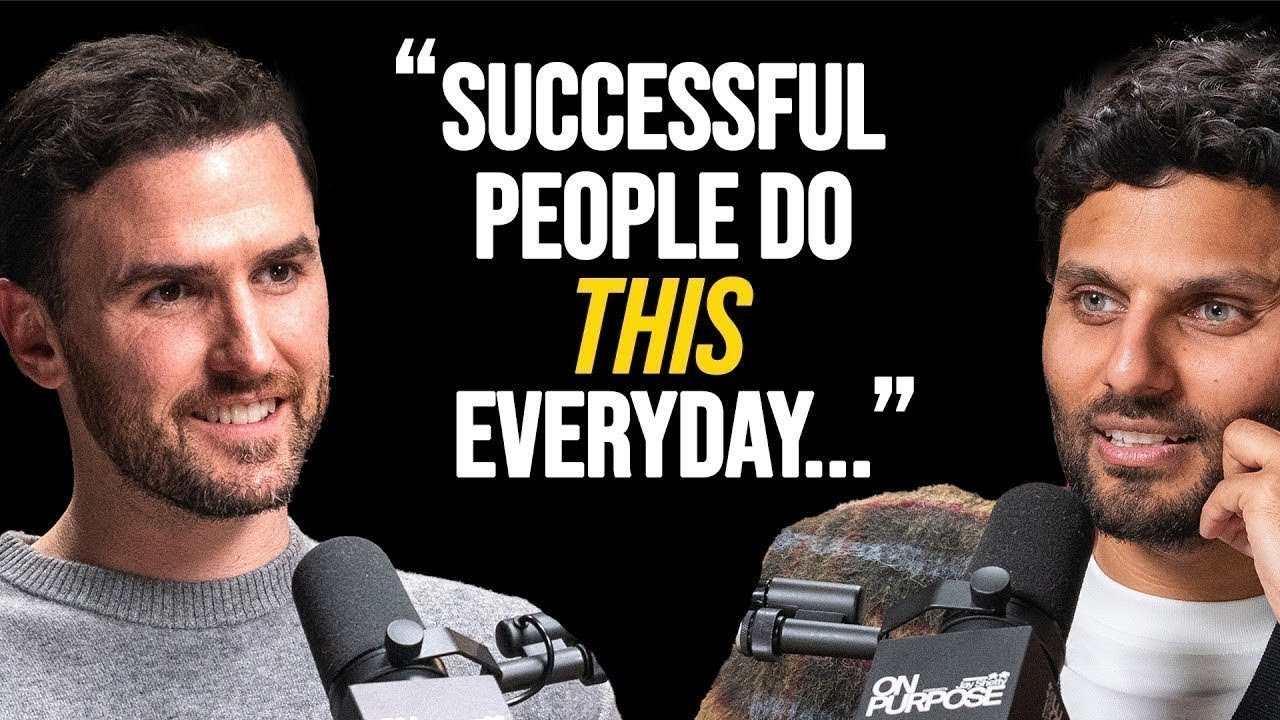
📺 Today’s recommended deep-dive video: https://www.youtube.com/watch?v=SJKr7BPOXY0
The Psychology of Action: Overcoming the Fears That Sabotage Success
Most people treat procrastination as a simple lack of willpower, but it is actually a protective mechanism triggered by intellectual fears and a weak internal “Why.” By dismantling the illusion of these fears and detaching from stagnant identities, you can shift from fleeting motivation to a state of being truly driven. This process requires moving beyond mere productivity hacks toward a deeper level of self-awareness and spiritual silence.
Core Question: How can we master our internal psychology to move from a state of paralyzed procrastination to a state of purposeful, heart-centered action?
Highlights
- The critical distinction between primal survival fears and the “intellectual” boogeymen that prevent modern progress.
- The “Seven Levels of Why” technique for uncovering the deep emotional fuel necessary to sustain difficult goals.
- How identity is often a “character” we play, and why losing that character can lead to a spiritual awakening.
- Shifting from “white-knuckling” through workaholism to achieving more through silence and presence.
⏱️ Reading time: approx. 6 minutes · Saves you about 65 minutes vs. watching.
Want to take notes while watching? Click the image below and let AI Notebook capture the key points for you 👇

The Architecture of Intellectual Fear
Primal vs. Intellectual Threats
We often treat modern anxieties like they are life-or-death situations, but the reality is that most of our obstacles consist of “intellectual fears.” Unlike a primal fear—where a predator is physically chasing you—intellectual fears such as rejection, failure, or success exist only within the confines of the human mind.
The human brain is an incredible projection machine that can place us into a future that doesn’t exist yet, triggering real biological stress. When you imagine your business failing, your brain sends neuropeptides to your body, creating hormones that make your heart race and your palms sweat as if the catastrophe were happening in the present moment. This physiological response keeps you paralyzed because the body is literally trying to protect you from a phantom that has no physical substance.
If you are going to spend time imagining the worst-case scenario, you have a responsibility to your psyche to also imagine the best possible outcome. By intentionally visualizing success and feeling the accompanying pride, you begin to rewire the nervous system to associate action with positive hormones rather than fear-based cortisol.

💡 Digging Deeper
Q: Why is it impossible to “overcome” an intellectual fear?
A: You cannot overcome something that doesn’t exist; you can only realize it is an illusion and redirect your focus toward your goals.
Q: What is the “Awareness, Practice, Repetition” framework?
A: It is the three-step process to change mental patterns: become aware of a thought, use a practice to shift it, and repeat that shift until it becomes the new default.
Q: Can we control our first thoughts?
A: No, the first thought is usually a result of past conditioning, but you have absolute control over your second thought.
Finding the Fuel: The Power of “Why”
Beyond Motivation to Drivenness
Motivation is a fleeting, unreliable emotion that disappears the moment you encounter a significant obstacle or a bad mood. Drivenness, however, is a permanent internal state fueled by a “Why” so powerful that the “How” becomes an afterthought.
When you discover a reason for your goal that transcends your own comfort, your brain stops looking for excuses. Rob Dial shares an example of a client who moved from wanting a “six-figure income” to realizing his true “Why” was saving his children from a dangerous living environment. Once the goal shifted from a number to his children’s survival, his procrastination evaporated instantly because the stakes were finally high enough.

💡 Digging Deeper
Q: What is the “Seven Levels of Why”?
A: A coaching technique where you ask “Why?” seven consecutive times to peel back superficial motivations and reach the core emotional truth.
Q: Why do we often fail at the things we don’t love?
A: Because even “safe” options are unstable in an uncertain world, so failing at something you dislike is a waste of your potential.
Q: How does a strong “Why” change your perception of obstacles?
A: It transforms a wall into a minor hurdle; when the purpose is clear, the mind finds a way to navigate any challenge.
The Spiritual Shift from Doing to Being
The Trap of Rewarded Addiction
Workaholism is one of the few addictions in modern society that is actively rewarded with money, status, and praise. For many high achievers, constant “busyness” is actually a sophisticated avoidance tactic used to keep from feeling deep-seated emotional pain or historical trauma.
Healing begins when you stop trying to fill an internal void with external achievements or material possessions. True peace is found in silence, where you can move from “knowing yourself” (which is based on the past) to “learning yourself” (which is an active, present-moment curiosity). When we provide ourselves with the space to sit without distraction, our bodies naturally release the stored tension and cortisol that we’ve been carrying for years.
We must learn to hold the duality of our lives: realizing that what we do is deeply significant to our mission, yet entirely insignificant in the grand scope of the universe. This paradox is freeing because it removes the crushing pressure of ego while still honoring the beauty of our creative contributions to the world.

💡 Digging Deeper
Q: What does “Everything is your fault” really mean?
A: It means you are the CEO of your life; while not everything that happened to you is your fault, your response to it is entirely your responsibility.
Q: Why is silence so difficult for most people?
A: Because when the external noise stops, the internal anxiety and unresolved emotions finally have the space to surface.
Key Takeaways
Achieving your highest potential is not about working harder; it is about becoming more self-aware. By identifying the intellectual fears that keep you in a state of paralysis, you can begin to choose a “second thought” that aligns with your true desires. This mental discipline, combined with a “Why” that touches your core values, creates a level of drive that far exceeds the temporary high of motivation.
Ultimately, the journey of leveling up is a move from external validation to internal peace. We must learn to treat our identities as flexible characters rather than fixed cages. When we take 100% responsibility for our current state and commit to the practice of presence and silence, we stop “white-knuckling” our way through life and start allowing our creative power to flow effortlessly.
Q&A
Q1: What is the most important habit for changing one’s life?
A: Practicing 5 minutes of self-awareness daily. If everyone—from politicians to parents—spent time reflecting on how their actions affect others, most global problems would vanish.
Q2: How should I handle my “negative” traits?
A: Instead of shaming them, engage them in a higher service. If you have an ego-driven desire for success, use that energy to create a better product that helps more people, thereby purifying the intent through action.
Q3: Is it possible to lose your identity like Jim Carrey did?
A: Yes, and that is often the start of a spiritual awakening. Realizing that the version of “you” you’ve been playing is just a character allows you to consciously choose who you want to become.
Q4: Why isn’t a high salary enough to make me happy?
A: Because money is often used to fill a void that only self-love and internal connection can fill; achievement and recognition are “hungry ghosts” that never truly satisfy the soul.
Q5: How do I deal with the feeling that I must do everything alone?
A: Recognize that asking for help is a sign of strength, not weakness. No one is an island, and trusting others allows you to impact the world at a scale that is impossible to achieve solo.
Q6: What is the difference between “knowing” yourself and “learning” yourself?
A: Knowing is based on past memories and labels; learning is an active, present-moment observation of who you are and how you feel right now.
Q7: How do I stop being a “people pleaser”?
A: Realize that you are seeking from others the love and acceptance you are failing to give yourself. Focus on internal validation to break the cycle.