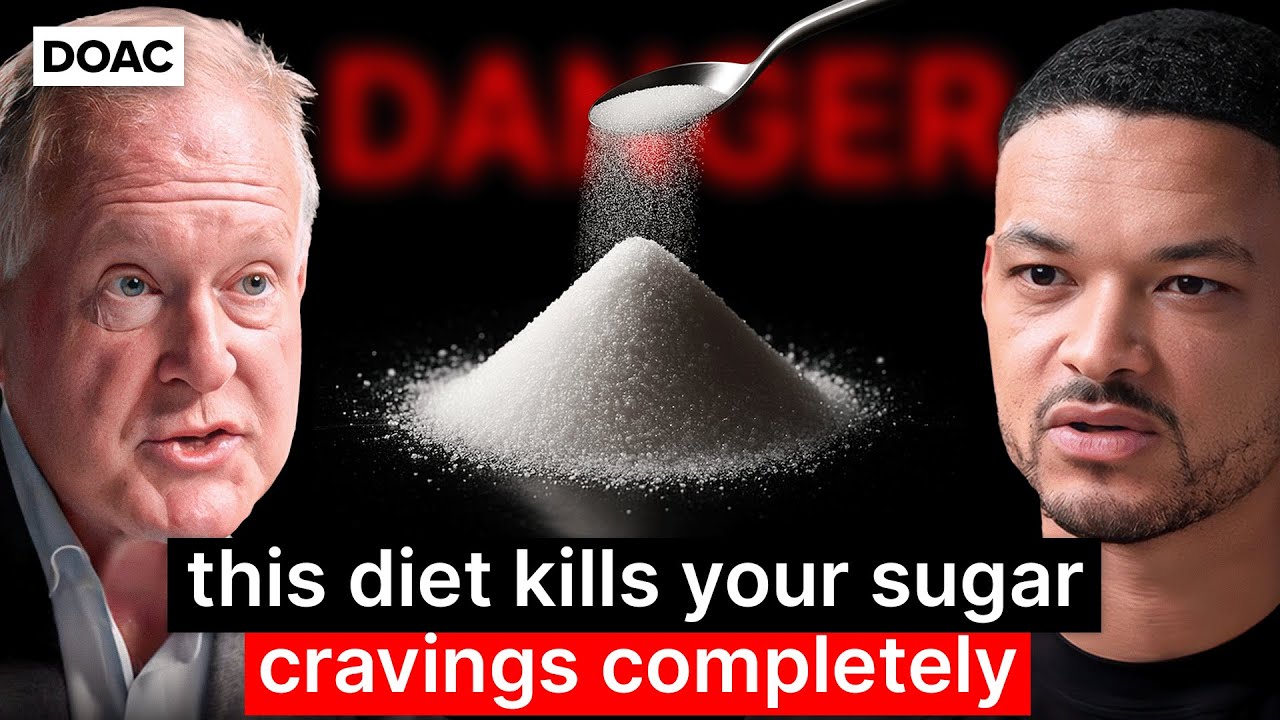
📺 Today’s recommended deep-dive video: https://www.youtube.com/watch?v=ZE_H7rijrVk
The Hostage Brain: Reclaiming Your Mind from the Sugar Industry
Dr. Robert Lustig explains that 95% of Alzheimer’s risk is environmental, driven by mitochondrial energy crises caused by ultra-processed foods. By understanding how dopamine hijacks our biology, we can shift from a state of addiction and inflammation to one of metabolic health and contentment.
Core Question: How does our modern diet trigger a cellular energy crisis that leads to dementia, addiction, and chronic disease?
Highlights
- Alzheimer’s risk is only 5% genetic; the remaining 95% is driven by environmental factors like sugar and pollution.
- The “Hostage Brain” is a state where chronic dopamine spikes lead to receptor downregulation and addiction.
- Dementia begins as an ATP energy crisis in the mitochondria, exacerbated by reactive oxygen species (ROS).
- Artificial sweeteners like aspartame and sucralose are linked to dementia through the generation of oxidative stress.
⏱️ Reading time: approx. 12 minutes · Saves you about 99 minutes vs. watching.
Want to take notes while watching? Click the image below and let AI Notebook capture the key points for you 👇

The Hostage Brain and the Dopamine Trap
The Biochemistry of Addiction
Our collective desire for control is often a survival illusion that masks deep psychological pain, driving us toward dopamine-heavy substances like sugar, alcohol, and social media to numb the stress. When the amygdala—the brain’s fear center—senses a lack of control, it triggers a search for immediate relief, which the food industry exploits by hiding sugar under 262 different names.
Dopamine serves two masters: learning and motivation. While essential for navigating the world, chronic overstimulation of the reward center leads to a dangerous downregulation of receptors, forcing the brain to demand higher doses for the same pleasure hit.
When tolerance turns into addiction, the brain enters a state Dr. Lustig calls the “Hostage Brain.” This cycle of consumption and misery is fueled by the food industry, which deliberately adds addictive substrates to ensure repeat purchases. Ultimately, the biochemical shift from “liking” to “needing” creates a medical crisis that requires significant behavioral intervention or a three-week “dopamine fast” to reset the receptors and restore cognitive clarity.

💡 Digging Deeper
Q: What is the main difference between dopamine and serotonin?
A: Dopamine says, “This feels good, I want more,” while serotonin says, “This feels good, I don’t want or need anymore.”
Q: How long does a dopamine reset take?
A: It generally takes about three weeks of abstinence from the stimulus for receptors to begin upregulating.
The Mitochondrial Energy Crisis and Dementia
The Real Cause of Alzheimer’s
Alzheimer’s isn’t just “genetic garbage”; it is a systemic energy failure within the brain’s mitochondria. These cellular power plants convert food into ATP, but when they are overwhelmed by toxins, they produce damaging reactive oxygen species instead.
A cellular energy crisis occurs when ATP generation drops while utilization—driven by stress and cortisol—spikes, leading to the formation of amyloid plaques.
When antioxidants like glutathione cannot keep up with the toxic fumes of reactive oxygen species, the cell shunts energy away from ATP production and toward fat or glycogen storage. This metabolic diversion starves the neurons, triggering a cascade of inflammation and cell death that we recognize as dementia. Modern dietary factors like fructose and artificial sweeteners like aspartame accelerate this damage, effectively poisoning the brain’s ability to power itself.

💡 Digging Deeper
Q: Is juice a healthy alternative to whole fruit?
A: No, juice is “sugar water” because the fiber has been removed; fiber is essential for slowing sugar absorption and feeding the gut microbiome.
Q: How do artificial sweeteners contribute to dementia?
A: Sweeteners like aspartame and sucralose generate reactive oxygen species (ROS) that damage mitochondrial function and energy metabolism.
The Metabolic Matrix and the Ozempic Myth
Why a Calorie is Not a Calorie
The bomb calorimeter measures physics and heat, but the human mitochondria measure biochemistry and energy efficiency, proving that not all calories are created equal. Fructose, for example, actually inhibits the burning of energy and stunts growth, making it a metabolic poison rather than a food.
Ultra-processed foods are uniquely hazardous because they contain five metabolic killers: excessive sugar, low fiber, lack of omega-3s, emulsifiers, and petroleum-based dyes. These ingredients don’t just add weight; they actively inhibit the mitochondria’s ability to burn energy and support bone growth. By treating food as a substrate for growth and burning rather than just a number on a label, we realize that much of what we eat is actually poison.
While GLP-1 agonists like Ozempic show promise for extreme obesity, they act as metabolic Band-Aids rather than cures. By slowing gastric emptying and dampening the brain’s reward center, they mimic starvation, often resulting in significant muscle loss alongside fat.

💡 Digging Deeper
Q: Can you “exercise off” a bad diet?
A: No. While exercise increases mitochondrial reserves and brain health, it is a poor tool for weight loss if the calorie hypothesis is the only guide.
Q: What are the risks of long-term GLP-1 use?
A: Potential side effects include pancreatitis, gastroparasis (stomach paralysis), and significant loss of muscle mass (sarcopenia).
Breaking the Vicious Cycle
The Path to Contentment
Dr. Lustig’s “Metabolic Matrix” provides a simple nine-word framework for health: protect the liver, feed the gut, and support the brain. If a substance fails to achieve these three goals, it cannot be considered true food.
Breaking the sugar habit is difficult because the brain is inflamed, reducing our capacity for oxytocin-driven bonding and the serotonin-driven feeling of contentment.
Practical change starts at the grocery store by avoiding the middle aisles and viewing every food label as a warning. If sugar is among the first three ingredients, you are eating dessert, not a meal. By prioritizing real food—rich in fiber and tryptophan—we can restore the gut-brain connection via the vagus nerve and finally break free from the cycle of inflammation and chronic disease.

Key Takeaways
The current health crisis is largely a result of our environment, not our biology. With 73% of items in grocery stores classified as ultra-processed, the average consumer is constantly bombarded with substrates that poison the mitochondria and hijack the brain’s reward system. This results in a “Hostage Brain” that seeks dopamine to mask the pain of systemic inflammation and metabolic dysfunction.
True health requires moving beyond the calorie-counting myth and focusing on mitochondrial efficiency. By reducing sugar consumption, increasing fiber, and managing stress, we can mitigate the ROS generation that leads to Alzheimer’s and other chronic diseases. The goal is to move from a state of dopamine-driven “wanting” to a serotonin-driven state of “contentment,” which is only possible when the brain is no longer inflamed.
Ultimately, we must advocate for systemic changes in food policy, such as removing soda from SNAP benefits and demanding transparency in food labeling. Individuals can take control by shopping the perimeter of the store and recognizing that any food with a television commercial is likely a product designed for profit, not for health.
Q&A
Q1: Why is Alzheimer’s called “Type 3 Diabetes”?
A: Because it is fundamentally a result of insulin resistance and energy failure in the brain, similar to how Type 2 diabetes affects the rest of the body.
Q2: Is fruit in a smoothie as healthy as whole fruit?
A: No. The high-speed blades shear the fiber into tiny pieces, destroying the “latticework” that prevents rapid sugar absorption in the gut.
Q3: What does cortisol do to the brain?
A: Cortisol, the stress hormone, increases ATP utilization while the diet decreases ATP generation, creating a cellular energy crisis.
Q4: Can you tell if someone has mitochondrial dysfunction just by looking at them?
A: No, mitochondrial health is a biochemical state that requires specific testing or metabolic markers to identify accurately.
Q5: What is the relationship between fluoride and sugar?
A: Fluoride was added to water to mitigate the dental decay caused by high sugar consumption; if we removed sugar from the diet, the need for public fluoridation would vanish.
Q6: What is the “Vagus Nerve” connection?
A: 90% of serotonin is made in the gut, and the vagus nerve conducts that information to the brain; gut inflammation from processed foods can disrupt this vital communication.
Q7: What is Dr. Lustig’s opinion on RFK Jr.’s health platform?
A: He supports the focus on food, pharma transparency, and environmental chemicals, but strongly disagrees with the anti-vaccine rhetoric and the uncoordinated removal of fluoride.