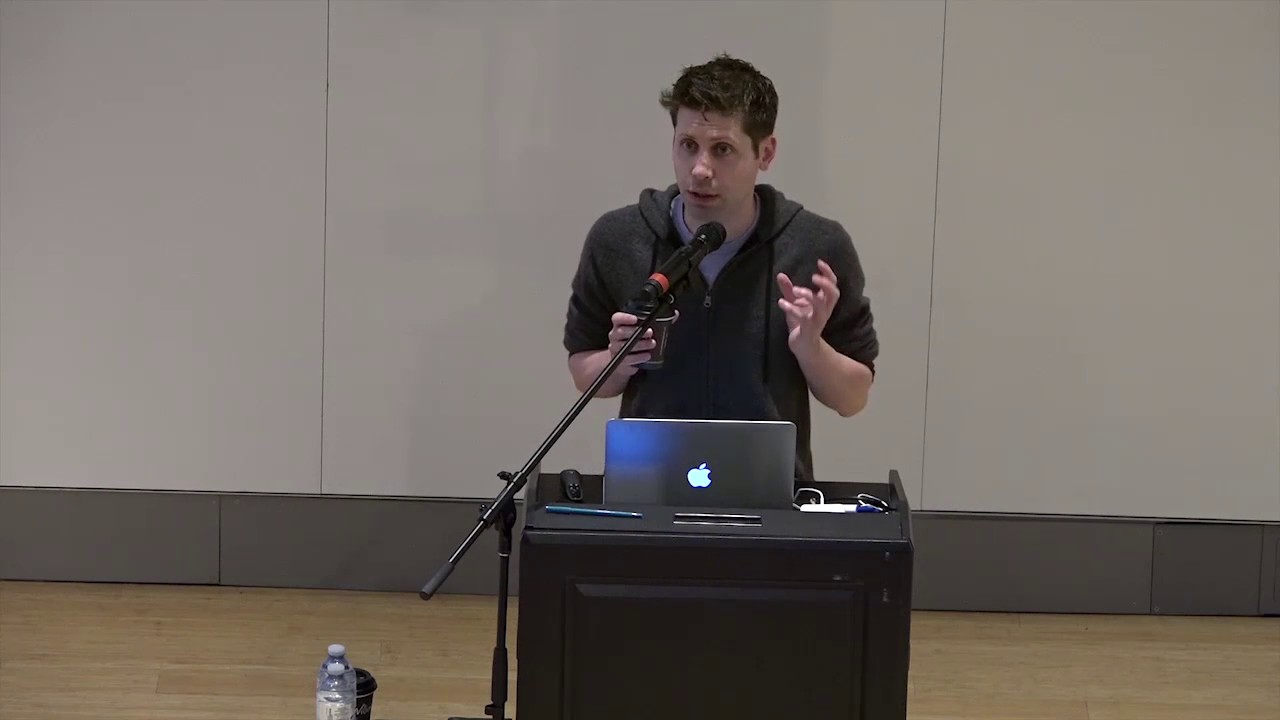
📺 Today’s recommended deep-dive video: https://www.youtube.com/watch?v=4SlNgM4PjvQ
The Sam Altman Playbook: Building the Future with Relentless Resourcefulness
Sam Altman shares the “Startup School” philosophy, detailing why Silicon Valley isn’t a magic location but a specific mindset of extreme ambition and density. This guide outlines the critical personality traits, product strategies, and cultural norms that turn a raw idea into a global force.
Core Question: How can founders cultivate the determination and focus required to ride the next great technological wave?
Highlights
- The “I will figure it out” mindset is the single most important predictor of founder success.
- Hard tech companies must iterate with the speed of software startups to avoid stagnation and death.
- Sustainable growth begins with a small group of users who love you, rather than a crowd that merely likes you.
- Hiring should prioritize shared values and raw aptitude over specific, fleeting technical skills or domain experience.
⏱️ Reading time: approx. 10 minutes · Saves you about 68 minutes vs. watching.
Want to take notes while watching? Click the image below and let AI Notebook capture the key points for you 👇

Section 1: The Silicon Valley Mindset and the Power of Density
Cultivating a Relentless Belief in the Future
Altman emphasizes that talent is globally distributed, but Silicon Valley thrives because of a relentless, culturally ingrained belief that the future will be better than today. This optimism allows founders to look 15 to 30 years ahead and ignore the mockery of those stuck in the present. Without this cultural shield, ambitious ideas are often killed by the social pressure to fit in before they ever have a chance to take root or find their first customer.
Density matters because you need a critical mass of people who won’t immediately mock your wildest, most nonsensical-sounding ideas.
Finding a group that humors your late-night epiphanies is essential for innovation. Most good ideas sound like bad ideas initially, and in a high-density environment, you are more likely to find the one person who helps you refine a crazy thought into a viable business model. This physical and mental proximity creates a “pay-it-forward” culture where successful veterans mentor the next generation, ensuring that institutional knowledge remains accessible to everyone.

💡 Digging Deeper
Q: Why is “Tall Poppy Syndrome” so dangerous for startups?
A: It forces founders to grade themselves on a curve and lowers their ambition to avoid social friction, which is fatal for world-changing companies.
Q: How far into the future should a founder look?
A: Aim to mentally live 30 years out, but work on building the technology that will be ready in 15 years.
Q: Is capital the only thing Silicon Valley has that other hubs don’t?
A: No; while capital is more accessible there, the real advantage is a culture that expects you to pay success forward.
Section 2: The DNA of a Great Founder
Determination Over Domain Expertise
When Y Combinator interviews founders, they aren’t looking for the smartest person in the room or the one with the most connections. They look for the person who says, “I always figure it out and I never give up.” This trait, often called “relentless resourcefulness,” is the rare limiting factor in success. While you need talent and a network, those can be acquired; the internal drive to push through the “down” cycles of the startup sine wave is often innate.
Momentum is a self-fulfilling prophecy, and only founders with extreme self-belief can maintain it when things look grim.
Communication is the secondary, often overlooked, requirement for greatness. If a founder cannot concisely explain what they are doing in 25 words or less, they will struggle to recruit top-tier talent or sell their vision to investors. Clear thinking leads to clear communication, which in turn allows a founder to inspire the “20th employee” to join a risky, hard startup instead of a safe, easy one.

💡 Digging Deeper
Q: Is it better to be a solo founder or have a partner?
A: Co-founders are preferred because they provide emotional support during lows, but a solo founder is infinitely better than a bad co-founder relationship.
Q: What should I look for in a first hire?
A: Treat the first ten hires like co-founders; they must share your values and possess the aptitude to solve problems they haven’t seen before.
Q: Why is a “hard” startup easier to build than an “easy” one?
A: Hard startups have an inspiring vision that attracts the best people; easy startups are boring and fail to generate the energy needed for long-term survival.
Section 3: Product Strategy and the Hard Tech Fallacy
The Iteration Speed of Success
A common mistake among “hard tech” or science-based startups is using their complexity as an excuse for slowness. Altman argues that the 90-day cycle used for software startups should apply to nuclear fusion and biotech companies as well. By breaking down a 10-year goal into aggressive 3-month milestones, companies create internal momentum. This speed is an exponential curve; if your product gets 10% better every week while a competitor’s takes three months, you will inevitably win.
Nothing but a great product will save a failing company, regardless of how good the marketing or fundraising is.
Startups should aim for a small group of users who love the product rather than a large group that merely likes it. It is much easier to expand a fanatical base than it is to turn lukewarm users into passionate ones. This “magic moment”—the instant a user realizes the product’s value—is what drives spontaneous word-of-mouth growth and replaces the need for expensive advertising.

💡 Digging Deeper
Q: How many “loving” users do I need?
A: For an enterprise product, ten might be enough; for a consumer app, you likely need a few thousand to prove the concept.
Q: Can you apply software speed to hardware?
A: Yes. Altman cites Cruise (self-driving cars), which built a highway-capable autonomous vehicle in just 90 days to prove momentum to investors.
Q: What is the “Magic Moment”?
A: It is the specific experience where a user falls in love with the product, like the first time an Airbnb guest stays in a truly “11-star” home.
Key Takeaways
The path to building a massive company is paved with “strong ideas weakly held.” Founders must have the conviction to pursue a specific vision but the humility to pivot when data proves them wrong. This balance of arrogance and humbleness is rare but necessary. Successful companies are reflections of their founders’ cultures; if you are entitled or arrogant, your company will eventually become poisonous to the very talent you need to survive.
Work hard early in your career because the benefits of that effort pay off like compound interest. The knowledge and connections you gain in your 20s have decades to grow, whereas effort exerted later in life has less time to multiply. Focus on noticing technology waves—like the current shift toward machine learning—and get on your surfboard before the wave crashes over the shore.
Q&A
Q1: What is the single worst experiment Y Combinator ever ran?
A: Funding 21 companies that had great founders but no initial idea. All 21 failed within the first year because good ideas require a level of passionate commitment that can’t be manufactured under pressure.
Q2: How does Sam Altman manage his own productivity?
A: He makes a list every night for the next day with three big priorities and many smaller tasks. He guards his morning time for creative work and breaks large, yearly goals into tiny, daily actionable steps.
Q3: What should a board of directors actually do?
A: A board’s role is “advice and consent.” They should be a sounding board for the CEO, but the CEO must run the company. If the board has to make the daily decisions, you have a bad CEO or a bad board.
Q4: How do you identify a fast-moving “hard tech” company if they don’t have a user graph?
A: You look at their research meetings and lab progress. If they can set an aggressive milestone for 90 days and actually hit it, they are operating with the necessary intensity to survive.
Q5: What is the most common mistake in a startup pitch?
A: Failing to explain exactly what the company does in the first minute. Founders often get bogged down in the “problem” or the “vision” before telling the investor what the actual product is.
Q6: Why is machine learning a “guaranteed shot” right now?
A: It is a massive technological wave that can be applied to almost every vertical. While it is competitive, there are still countless hundred-million-dollar companies to be built by applying ML to specific industries.
Q7: How do you handle disagreements between co-founders?
A: Establish clear domains of responsibility early on. Some things one person can decide alone; some require a small group, and only the most massive strategic shifts should require a full partnership vote.