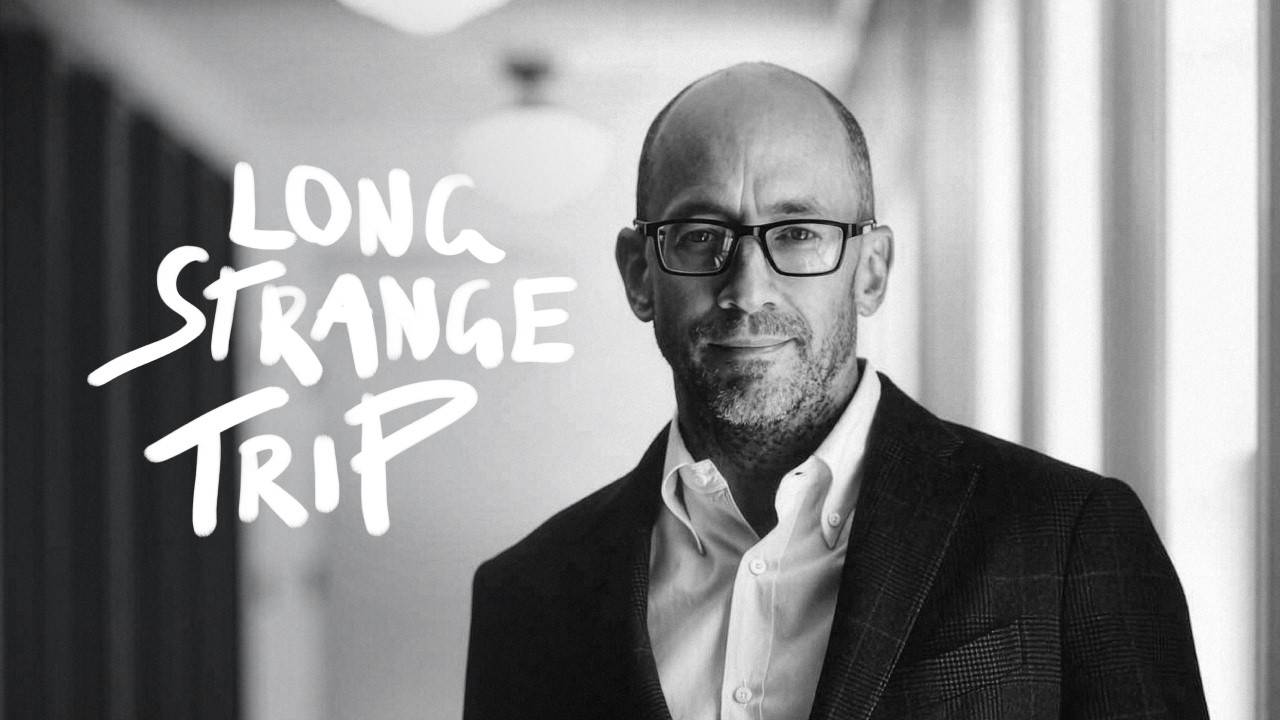
📺 Today’s recommended deep-dive video: https://www.youtube.com/watch?v=Kw5hhIsw-wQ
Leading the Drama Queen of Silicon Valley: Dick Costolo on Scaling Twitter
When Dick Costolo took over as CEO of Twitter, the company’s mascot was literally being depicted as a dead bird on magazine covers. He transformed a notoriously dysfunctional, consensus-heavy culture into a high-velocity machine by implementing a “bias to yes” and radical operational clarity.
Core Question: How can a leader transition a chaotic, founder-led startup into a disciplined global powerhouse without stifling the speed of innovation?
Highlights
- Transitioning from “collective” group voting to distributed decision-making through DRIs.
- Implementing the “Bias to Yes” rule to prevent cross-departmental stagnation.
- The “9:00 PM Walk” strategy for shifting company culture and identifying high-performers.
- The $700 million offer for Instagram and the strategic fallout of losing that deal to Facebook.
⏱️ Reading time: approx. 7 minutes · Saves you about 60 minutes vs. watching.
Want to take notes while watching? Click the image below and let AI Notebook capture the key points for you 👇

The Cult of Velocity and the End of Consensus
Breaking the Committee Habit
When Costolo arrived, Twitter was a “collective.” Major product decisions—like whether the retweet function should be a native button or a manual text string—were hashed out by groups sitting around tables. This democratic approach sounded noble, but it was agonizingly slow and left the organization paralyzed.
The first order of business was to kill the committee. Costolo realized that for a company to scale, it had to move away from group voting and toward clear accountability. He began pushing decisions as far down the hierarchy as possible, telling engineers to stop asking for permission and start finding the right answers themselves.
Speed is the only metric that matters in hyper-growth. Costolo constantly asked his teams: “If this project takes six weeks, what would have to be true for it to take two?” He wasn’t just looking for efficiency; he was looking for a psychological shift in how the entire company perceived time and delivery.

💡 Digging Deeper
Q: Why did Costolo remove the “Commit better mistakes” posters?
A: He felt they were indicative of a culture that accepted failure as a destination rather than a temporary hurdle, leading to repeated site outages and a lack of urgency.
Q: How did he handle the “Dick said so” excuse?
A: He actively fought against his name being used as a weapon to end debates, insisting that if an engineer couldn’t defend a decision to their director, using the CEO’s name wasn’t a valid substitute.
Q: What was the result of changing the status bar without a group vote?
A: It served as a shock to the system, signaling to the staff that the era of asking everyone for their opinion on minor UI changes was officially over.
Engineering a “Bias to Yes” Culture
Navigating Organizational Barnacles
As companies grow, they naturally accumulate “organizational barnacles”—internal gatekeepers who slow down progress under the guise of safety or alignment. Costolo observed experiments stalling because engineers were waiting for approval from Trust and Safety, Legal, Marketing, and four other departments.
To solve this, he introduced the “Bias to Yes.” The rule was simple: only your direct manager or the legal department (for regulatory reasons) could tell you “no.” No other department could veto a project or demand an approval meeting. This effectively stripped the power from horizontal “feuds” and returned it to the builders.
If you have a bias for action, you must also have a bias for forgiveness. Costolo preached that it wasn’t leadership’s job to prevent every mistake, but to help fix them quickly when they occurred. By removing the fear of punishment for bold errors, he enabled the engineering team to ship experiments at a rate the company had never seen.

💡 Digging Deeper
Q: What did Costolo learn about checklists from Google?
A: He saw that 17-page launch checklists, while intended to prevent disaster, often resulted in teams managing the process instead of managing the result.
Q: How do you prevent the “Bias to Yes” from becoming total chaos?
A: By keeping the manager as the single point of accountability; if an employee ignores their primary duties to chase a side project, the manager is responsible for corrective action.
Q: Why is “management by process” dangerous?
A: It creates a “talidomide effect” where a single past trauma leads to a permanent, slow-moving bureaucratic layer that stays long after the original threat is gone.
The Art of the “Adult” Leader
Management by Walking Around
Costolo revived a classic Hewlett-Packard technique: the late-night walkabout. By returning to the office at 9:00 PM, he could see who was still working and, more importantly, what they were working on. These informal chats provided more raw context than any scheduled 1-on-1 or status report ever could.
Context is the fuel for autonomy. He adopted Ben Horowitz’s mantra: “Ensure everyone understands what you understand.” When a CEO explains not just the what but the why, and how it affects the employee’s personal career, the need for micromanagement disappears.
To truly understand the health of the company, you have to talk to the individual contributors without their bosses in the room. Costolo used a “Pixar trick” borrowed from Steve Jobs: sitting with small groups, asking what was broken, taking notes, and then bringing those concerns directly to the leadership team without scapegoating the messengers.

💡 Digging Deeper
Q: What is the “silence technique” in feedback?
A: After delivering hard news or a critique, the leader remains completely silent, forcing the employee to process the information and speak their truth rather than filling the air with defensive babble.
Q: How did Costolo handle the press?
A: He developed a thick skin by drawing on his background in improv comedy, treating a bad “Yahoo Finance” review much like a heckler at a midnight comedy show.
Q: Why did he avoid the “celebrity CEO” lifestyle?
A: He intentionally skipped high-profile events like the Oscars to ensure he didn’t become addicted to the status of being “the CEO,” which would have compromised his ability to lead objectively.
Strategic Regrets and the Public Market Trap
The Instagram Miss and the IPO Reality
One of Costolo’s deepest regrets was missing the acquisition of Instagram. He had taken Kevin Systrom to dinner and offered a deal worth over 10% of Twitter, even offering to let Systrom run the company eventually. When Facebook swooped in with a billion-dollar offer, it was a “checkmate” move that locked Twitter out of the visual social media future.
Going public was a double-edged sword that changed the company’s internal rhythm. As a private company, Twitter could ignore minor revenue fluctuations, but as a public entity, a 1% miss led to an 8% stock drop and a panicked workforce. The “daily scoreboard” of the stock price became a massive distraction from long-term strategy.
Every CEO must find their own archetype. Costolo warns against trying to be a “second-rate Steve Jobs” or a “carbon copy of Elon Musk.” Authenticity is the only sustainable leadership style; employees can always sense when a leader is playing a role from a business biography rather than leading from their own convictions.

💡 Digging Deeper
Q: Why was Adam Bain a “non-consensus” hire?
A: He came from a traditional media background (Fox Interactive), which made the tech-heavy board skeptical, but his “incapable of being tired” energy was exactly what Twitter needed to fight Facebook.
Q: How did he manage underperformers?
A: He implemented a rule where employees with low performance ratings were forbidden from transferring teams, preventing managers from “passing the trash” to other departments.
Q: What was the “dead bird” goal?
A: It was a simple, low-bar communications goal for his first year as CEO: ensure Twitter wasn’t featured on any magazine covers depicted as a dead or exploding bird.
Key Takeaways
The transition from a founder-led startup to a mature corporation requires a leader who can install “the plumbing” without killing the passion. Dick Costolo’s tenure at Twitter serves as a blueprint for high-growth management, emphasizing that speed is a byproduct of clear accountability and a refusal to solve every problem with a new process. By pushing decisions down and demanding that context be shared at every level, he moved the company away from its “drama queen” roots.
Ultimately, the lesson for modern CEOs is the importance of intellectual honesty. Whether it’s admitting a massive strategic miss like Instagram or acknowledging the difficulty of public market scrutiny, transparency builds more trust than a manufactured persona of perfection. Leadership isn’t about having a 17-page checklist for success; it’s about having the courage to be the same person in public as you are in private.
Q&A
Q1: How did Dick Costolo deal with the “drama” at Twitter when he first joined?
A: He focused on lowering the “drama” by professionalizing communications and setting very simple, grounded goals, such as keeping negative imagery of the company off magazine covers.
Q2: What is “Management by Walking Around” in a modern context?
A: It’s about being physically present during non-peak hours to build rapport with the “night owls” and engineers who are doing the heavy lifting, allowing the CEO to see the “raw” version of the company.
Q3: How do you balance being direct with being empathetic in management?
A: Costolo suggests being frank and honest without “the fluff.” You can be empathetic by acknowledging that the situation is difficult, but you must still deliver the hard truth without sugarcoating it.
Q4: What advice does he have for VPs who want to become CEOs?
A: Make your intentions clear to executive recruiters and the board, and never take a risk that doesn’t genuinely excite you. He also recommends improv or public speaking classes to get comfortable with the discomfort of leadership.
Q5: Why did he value “independent” board members so early?
A: They provide a perspective outside the day-to-day grind. Specifically, he credited Peter Chernin and Peter Fenton with helping him think from the user’s perspective and closing key executive hires.
Q6: What is the “Hakeem Olajuwon” philosophy of leadership?
A: It’s the idea that you should be the same person in public as you are in private. Trying to maintain two different personas creates “anxiety and tension in the mind,” which eventually leads to burnout or failure.
Q7: How did Twitter compete with the “giant” of Facebook’s sales machine?
A: Instead of competing feature-for-feature, Adam Bain would ask clients what Facebook wasn’t asking, focusing on the client’s business problems rather than just showing off new ad products.