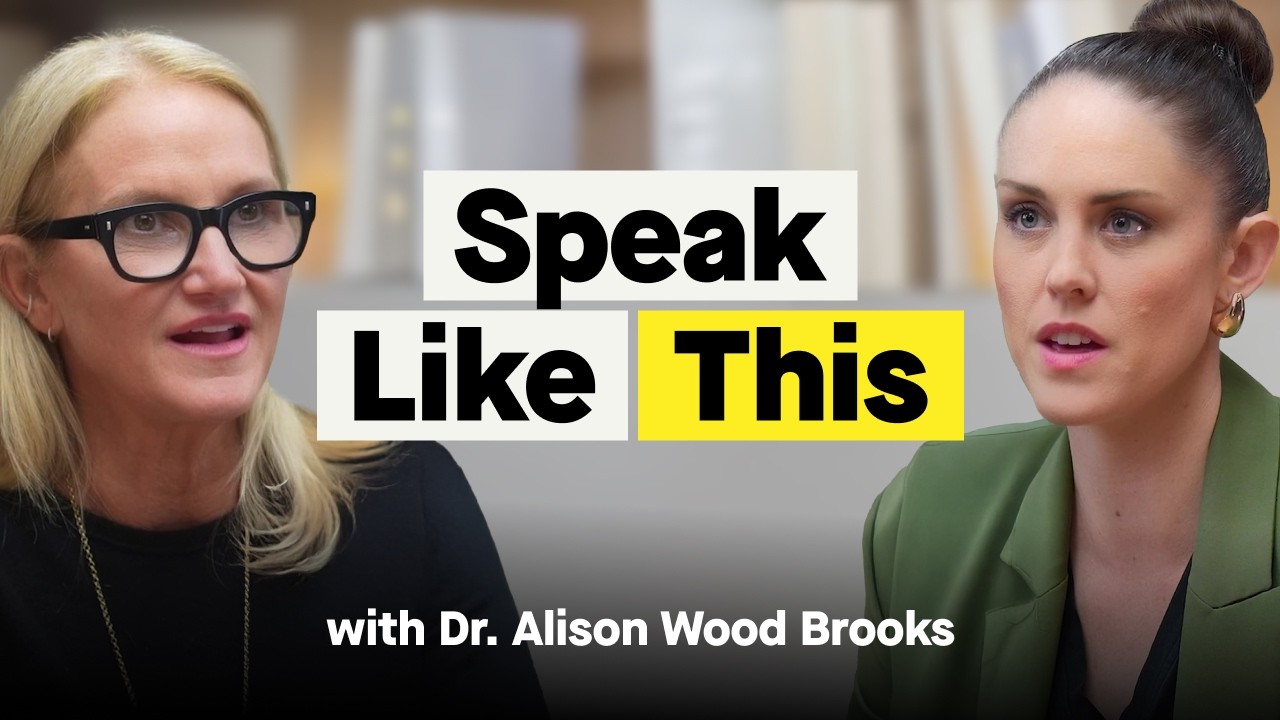
📺 Today’s recommended deep-dive video: https://www.youtube.com/watch?v=5yCqhY1D-VE
How to Talk “Goodter”: The Harvard Science of Better Connection
Most of us navigate our daily interactions on autopilot, yet every relationship in your life is simply a repeated sequence of conversations. Professor Allison Wood Brooks reveals that by making tiny, deliberate choices in how we prepare and respond, we can transform our social status and deepen our personal bonds.
Core Question: How can a simple four-part framework turn the “train wreck” of human interaction into a source of real influence and connection?
Highlights
- The “TALK” framework: Topics, Asking, Levity, and Kindness.
- Why 30 seconds of topic preparation makes you 100% more charismatic.
- The secret to “getting credit” for listening through “grounding” and follow-up questions.
- How to navigate status hierarchies and handle conversation “bulldozers” using eye gaze.
⏱️ Reading time: approx. 8 minutes · Saves you about 65 minutes vs. watching.
Want to take notes while watching? Click the image below and let AI Notebook capture the key points for you 👇

The TALK Framework and the Art of Topic Mastery
The Power of Preparation
Professor Brooks argues that while we prep for dates by choosing outfits and locations, only 10% of us plan what to say. This oversight leaves us scrambling for dull environmental cues like the weather or the appetizers, missing the chance to connect deeply.
Research shows that even 30 seconds of brainstorming topics before an interaction significantly reduces anxiety and increases conversational fluency. By having a “back pocket” list of interesting subjects, you avoid those panicky moments of silence. This simple act of foresight shifts the conversation from a survival exercise into a collaborative exploration where both parties feel engaged and excited to be present.
Communication isn’t just about what you say; it’s a co-constructed coordination game where you must decide when to veer left or right to avoid a social crash.

💡 Digging Deeper
Q: Is topic preparation “fake” or manipulative?
A: Not at all; even if you know you are doing it, the intent is to learn about the other person, which fosters genuine connection.
Q: How can introverts use this?
A: It is the ultimate tool for introverts because it replaces social panic with a pre-planned arsenal of engaging talking points.
Q: What if I don’t know the person?
A: Use “launch pad” questions about general experiences that are likely to lead to more personalized, second-tier topics.
The Superpower of Asking and Active Listening
Beyond the “Zero Question” Trap
The single greatest barrier to connection is egocentrism—our natural instinct to focus on our own survival and internal perspective. To combat this, Brooks recommends the “never-ending follow-up” method. Asking a follow-up question every time your partner speaks demonstrates genuine interest and forces you to step out of your own head. This direct pathway bypasses our poor ability to guess what others are thinking or feeling.
Being interested is the ultimate secret to being interesting, as it turns your partner into the primary source of discovery.
Listening is more than just silence; it requires “getting credit” through three distinct steps. You must physically hear the cues, process the information, and then verbally signal that you have understood through paraphrasing or “grounding.” Without that third step—showing the other person you heard them—the hard work of internal processing goes entirely unnoticed by your partner.

💡 Digging Deeper
Q: What is a “Z Q”?
A: A “Zero Questioner”—someone who talks only about themselves without ever asking a single question of their partner.
Q: How do I handle a ZQ?
A: Try shifting the topic to an area where you have expertise, or simply recognize it as a red flag for a long-term relationship.
Q: What is “grounding”?
A: It is a linguistic technique where you repeat or summarize what was said to ensure shared understanding and make the speaker feel heard.
Status, Levity, and the Topic Pyramid
Climbing the Conversation Ladder
Levity acts as the “sparkle and fizz” that prevents the quiet killer of connection: boredom. While humor is a high-status tool for leaders to show humanity, it also serves as a primary way to earn respect. If you can make someone laugh just once, they are significantly more likely to view you as a competent leader and follow your influence.
Brooks visualizes conversation as a three-layer pyramid, starting with the broad base of small talk. Small talk isn’t meaningless; it is a necessary warm-up ritual where you search for “launch pads” into the second tier of tailored, personalized talk. The goal is to eventually reach the top layer of “deep talk,” where true connection happens through vulnerability and mutual disclosure.
High-status individuals use equitable eye gaze and strategic questions to make the “invisible” or lower-status members of a group feel included.

💡 Digging Deeper
Q: Can anyone use self-deprecating humor?
A: It is most effective for high-status people to show they are human; for low-status people, it may accidentally undermine their perceived competence.
Q: How do I stop a conversation “bulldozer”?
A: Use your body and voice to physically direct the traffic of the conversation toward someone else in the group who hasn’t spoken.
Q: Is eye gaze really that powerful?
A: Yes; looking at lower-status members of a group invites them to speak without the pressure of a “cold call.”
Key Takeaways
Effective communication is not an innate talent but a series of micro-decisions that can be mastered through the TALK framework. By prioritizing topic preparation and relentless follow-up questions, you fight the human tendency toward egocentrism. This shift in focus from “What do I say next?” to “What can I learn about them?” is the hallmark of charismatic and competent individuals.
Furthermore, understanding the mechanics of status and the “Topic Pyramid” allows you to navigate complex social hierarchies with grace. Whether you are using levity to break the ice or “grounding” to validate a partner’s feelings, these tools build the trust necessary for high-stakes negotiation and deep personal intimacy alike.
Ultimately, conversation is a “train wreck” of half-finished ideas and interruptions. Giving yourself and others the grace to be imperfect—while still striving for kindness—is the most sustainable way to improve every relationship in your life.
Q&A
Q1: Why is “Goodter” used in the title of Professor Brooks’ course?
A: It is a deliberate use of levity to signal that the course balances serious academic research with a spirit of play, while also emphasizing the goal of becoming a “good” and kind person.
Q2: What is the single biggest reason people fail at communication?
A: Egocentrism. Our brains are wired for survival and self-focus, which prevents us from truly taking the perspective of the person we are speaking with.
Q3: How long should topic preparation take?
A: Just 30 seconds of brainstorming before a meeting or social event can significantly improve the quality and flow of the subsequent conversation.
Q4: What are the three steps of effective listening?
A: First, hearing and seeing cues; second, processing and elaborating on that data; and third, verbally showing the partner that you heard them.
Q5: How can you handle a person who constantly interrupts with off-topic points?
A: You can use “receptiveness language” to acknowledge their point but then make a lighthearted joke or a firm comment about wanting to finish your original thought.
Q6: What is the “Green Zone” in communication?
A: It is the state of emotional regulation where both parties are calm enough to engage; if someone is “overheated” or yelling, it takes about 20 minutes for the body to return to this zone.
Q7: How do you exit a conversation that has become awkward?
A: Accept the awkwardness as a natural part of a coordination game and use a simple, kind exit line like, “This was great, I can’t wait for the next one. Bye!”