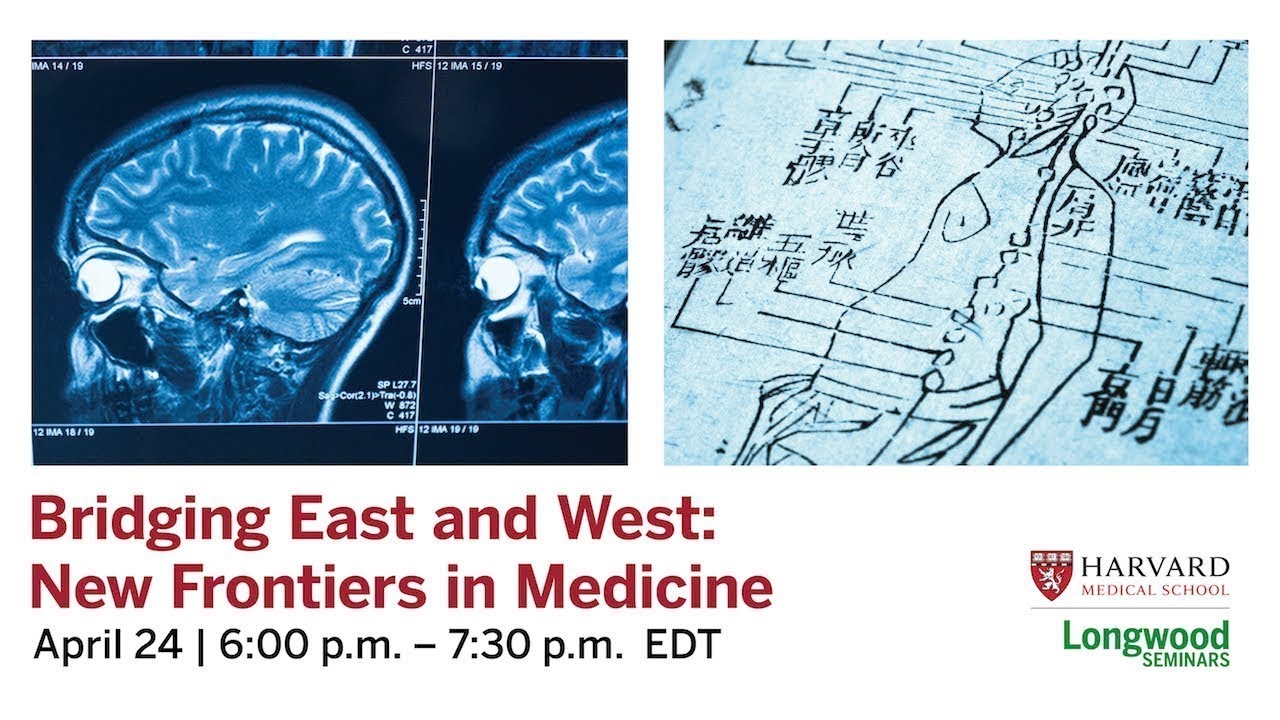
📺 Today’s recommended deep-dive video: https://www.youtube.com/watch?v=2WpGLopRtKg
Healing Bridges: Integrating Ancient Wisdom with Modern Science at Harvard
For decades, Western medicine viewed the body as a collection of isolated systems, while Eastern traditions focused on the interconnected whole. New research from Harvard Medical School is finally bridging this gap, revealing the biological mechanisms behind acupuncture, herbal toxins, and mind-body flow.
Core Question: How can traditional Eastern healing practices inform and advance our fundamental understanding of human physiology, pharmacology, and the mind-body connection?
Highlights
- The discovery that acupuncture meridians likely correspond to planes of connective tissue (fascia) that wrap every muscle and organ.
- Evidence that physical stretching triggers “pro-resolving” biochemical mediators that actively shut down chronic inflammation.
- A revolutionary theory suggesting that traditional herbal medicines may work by signaling the liver to release healing factors rather than targeting disease directly.
- Proof that Tai Chi serves as a “multi-drug” intervention that improves both physical balance and cognitive function in aging populations.
⏱️ Reading time: approx. 8 minutes · Saves you about 81 minutes vs. watching.
Want to take notes while watching? Click the image below and let AI Notebook capture the key points for you 👇

The Body’s Living Web: Acupuncture and Connective Tissue
The Architecture of Interconnectedness
Conventional Western medicine has historically been reductionist, dividing the body into specialized departments like cardiology, pulmonology, and neurology. This separation often leaves patients feeling like a collection of disconnected parts rather than a whole human being.
Research indicates that the mechanical force of a rotating acupuncture needle winds collagen fibers like spaghetti around a fork, triggering a systemic cellular cascade.
While conventional medicine focuses on individual organs, this research highlights the interstitium—a fluid-filled honeycomb structure—as a vital communication network. By understanding how the body’s mechanical environment influences cellular behavior, scientists can begin to explain why ancient techniques like needle manipulation actually produce measurable physiological changes in the immune system. This “living web” of fascia provides the anatomical map that Eastern practitioners have navigated for millennia using meridians.
Stretching the Immune Response
The musculoskeletal system and the immune system are not separate; they meet within the connective tissue where immune cells “patrol” for signs of trouble. When we stretch—whether through yoga, Tai Chi, or manual therapy—we are essentially massaging our internal sponge, squishing and moving fluid through the honeycomb of the interstitium.
Studies using animal models, colloquially termed “rat yoga,” have demonstrated that gentle stretching significantly reduces localized inflammation without the need for pharmacological intervention.
This occurs because stretching activates the production of “resolvins,” specialized molecules derived from omega-3 fatty acids that signal the body to turn off the inflammatory response. If these pro-resolution mechanisms fail, inflammation becomes chronic, leading to fibrosis and tissue damage. By viewing the acupuncture needle as a “micromanipulator” that performs targeted internal stretching, researchers are uncovering a natural, mechanical way to regulate the body’s defense systems.

💡 Digging Deeper
Q: Are acupuncture meridians the same thing as connective tissue?
A: Not exactly, but ultrasound studies show that over 80% of acupuncture points are located along planes of connective tissue between muscles.
Q: Can stretching help with cancer?
A: Researchers are currently investigating if the mechanical environment of connective tissue influences tumor growth and immune responses within the interstitium.
Q: Does it matter where I stretch?
A: While systemic effects are possible, evidence suggests that gentle, targeted stretching of the specific inflamed area is most effective for triggering local resolution.
Reverse-Engineering Nature: Herbs and the Liver
A Neoclassical Approach to Drug Discovery
The modern drug discovery mecca has shifted to the Boston-Cambridge area, focusing heavily on identifying specific molecular “targets” through human genetics. However, a “neoclassical” approach is gaining traction: taking ancient herbal treatments that are known to work and reverse-engineering their molecular and physiological basis. This method honors the traditional healer’s toolbox while applying the rigors of modern biochemistry to understand how these complex mixtures interact with the human system.
Molecules are relatively simple to describe precisely, whereas the human body is an immensely complex “biochemical black box” that reacts to every perturbation.
We must remain respectful of traditional treatments because, while ancient healers lacked knowledge of G-protein coupled receptors, they possessed a sophisticated understanding of the whole-body response. By dropping a “molecular pebble” into the pond of the human body, modern scientists can track the resulting ripples to see how a plant-derived toxin might actually serve as a potent medicine in controlled doses.
The Liver as a Signaling Hub
Colchicine, derived from the autumn crocus, has been used since the time of Ancient Greece to treat the agonizing pain of gout. While textbooks claim that colchicine works by entering white blood cells and dismantling their internal “railroad tracks” (microtubules), new Harvard research suggests a far more radical mechanism.
Experiments show that colchicine primarily impacts the liver, triggering it to secrete a mysterious “Factor X” that subsequently regulates white blood cell behavior.
This theory suggests the liver acts as a sophisticated translator, taking in plant toxins and broadcasting systemic signals to the rest of the body. Since the liver produces almost all proteins in the blood, it is the logical site for “detoxifying” and repurposing herbal compounds. This “outrageous” model could change how we evaluate hundreds of other traditional Chinese medicines that are typically administered as complex, multi-herb mixtures.

💡 Digging Deeper
Q: Is herbal medicine safer because it is “natural”?
A: Absolutely not; plants produce some of the world’s most deadly poisons, like colchicine, which are only therapeutic in very specific, limited quantities.
Q: Why treat the liver if the pain is in the joints?
A: The liver is the body’s primary chemical processing plant; influencing it can create a systemic ripple effect that reaches every joint through the bloodstream.
Q: Can herbs interact with Western drugs?
A: Yes, many herbs affect liver metabolism, which can dangerously change how Western medications are processed in your body.
The Mind-Body Pharmacy: Tai Chi and Aging
Breaking the Cycle of Fear
For the aging population, a single fall can be a life-altering event, often leading to a “fear of falling” phenotype characterized by stiff, anxious movement. This anxiety creates a vicious cycle: the fear causes the individual to move less, leading to physical deconditioning, which ironically makes a future fall much more likely. Tai Chi offers a unique way to break this cycle by integrating slow, intentional movement with deep breathing and focused awareness.
Tai Chi functions as a “multi-drug” intervention, combining elements of aerobic exercise, musculoskeletal strengthening, and dynamic meditation into a single practice.
Because Tai Chi is a standing, functional martial art, it translates more directly to daily activities like opening car doors or navigating uneven pavement than floor-based exercises. The practice encourages “structural integration,” teaching the body to move as a unified whole rather than a set of disjointed limbs. This holistic approach reduces the “anxiety of falling,” allowing elderly practitioners to regain confidence and re-engage with the world around them.
Cognitive-Motor Integration
Modern science is discovering that walking is not just a physical act; it is a cognitive one that requires significant “top-down” processing from the brain. If you ask an older adult to walk while counting backward by sevens, their gait will often become irregular or slow, revealing a high “cognitive-motor cost.” Tai Chi specifically trains this intersection by requiring practitioners to focus on complex movements and imagery while maintaining balance.
Research proves that just 12 weeks of Tai Chi can significantly improve walking speed and step regularity in adults over the age of 85.
Brain imaging now shows that Tai Chi actually induces “plastic” changes in the brain, enhancing the executive functions responsible for multitasking. By practicing “dual-tasking” in a safe environment, seniors can protect their brains against the early stages of dementia and mild cognitive impairment. Tai Chi isn’t just about moving the legs; it’s about re-wiring the connection between the mind and the feet.

💡 Digging Deeper
Q: How does Tai Chi differ from Yoga?
A: While both share mindfulness and breathing, Tai Chi’s roots as a martial art focus more on functional, standing balance and weight-bearing movements.
Q: Can Tai Chi prevent dementia?
A: Evidence suggests it helps preserve and sometimes reverse the loss of mental function by strengthening the brain-body connection.
Q: Is it ever too late to start?
A: No; Harvard studies included participants over 90 years old who showed significant improvements in balance and walking speed.
Key Takeaways
The integration of Eastern and Western medicine is moving beyond “alternative” labels and toward a deeper, unified understanding of human physiology. By studying acupuncture, we have discovered the critical role of connective tissue and mechanical stretching in regulating the immune system. This suggests that movement is not just for fitness; it is a vital biochemical signal that tells our body to heal inflammation.
Furthermore, the study of traditional herbalism and Tai Chi challenges the “one drug, one target” model of Western pharmacology. We are learning that the liver acts as a central coordinator for systemic health and that the brain’s executive functions are inextricably linked to how we walk and balance. These insights allow for more personalized, holistic treatments that address the patient as a complex, interconnected system.
Ultimately, the future of medicine lies in this “ecological” approach. Whether it is through the tip of a needle, the chemistry of a plant, or the flow of a Tai Chi form, the goal remains the same: to activate the body’s innate capacity for balance and health. As these two traditions continue to merge, we gain a more robust toolkit for treating chronic pain, aging, and complex diseases.
Q&A
Q1: How can I tell if my doctor is open to integrative medicine?
A: Most doctors are becoming more open, but the best approach is to be proactive and honest about your use of herbs or Tai Chi. A good doctor will prioritize your safety, especially regarding potential drug-herb interactions.
Q2: What is the main difference between alternative and complementary medicine?
A: “Alternative” usually refers to using a non-mainstream practice instead of conventional care, while “complementary” or “integrative” means using both together to achieve a better outcome.
Q3: Is there a specific type of stretching that works best for inflammation?
A: The research emphasizes “gentle” stretching. Pushing through intense pain can actually increase inflammation, so the goal is to gently engage the connective tissue to trigger the resolution phase.
Q4: Why does Tai Chi help with balance more than a treadmill?
A: A treadmill is a single-task physical activity, whereas Tai Chi is a multi-tasking exercise that requires mental focus, imagery, and coordination, which trains the brain to manage balance in real-world, distracting environments.
Q5: Are there regulatory hurdles for doctors using these methods?
A: Yes, especially with herbal supplements, which are often sold as “nutraceuticals” and bypass strict FDA drug testing. Doctors must navigate these unregulated waters carefully to ensure patient safety.
Q6: What is the “Factor X” mentioned regarding the liver?
A: It is a placeholder name for a specific molecule or signal the liver releases when triggered by certain compounds. Researchers are currently working to identify the exact chemical nature of this signal.
Q7: Can Tai Chi help with knee or back pain?
A: Yes, there is robust evidence from multiple clinical trials showing that Tai Chi is effective for managing osteoarthritis of the knee, as well as chronic neck and back pain.