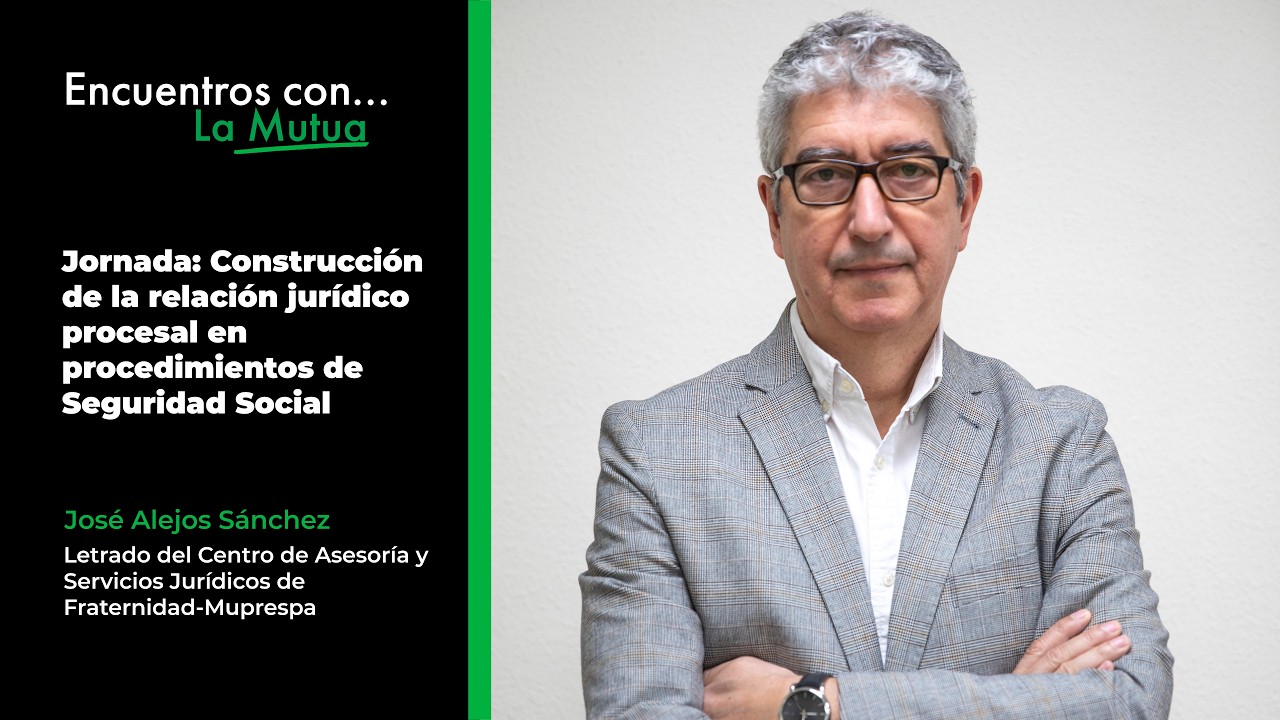
📺 Today’s recommended deep-dive video: https://www.youtube.com/watch?v=xZBVuKVjbLA
Master the Social Security Lawsuit: A Guide to Legal Standing
Avoiding procedural delays in Social Security litigation requires more than just a strong case; it demands a precise understanding of which entities must be summoned to court. In this session, expert lawyer José Alejos Sánchez breaks down the complexities of passive standing (legitimación pasiva) to ensure your legal strategy doesn’t end in a frustrating suspension.
Core Question: Which specific entities and individuals are legally required to be named as defendants in Spanish Social Security proceedings to avoid procedural nullity?
Highlights
- The essential “tandem” requirement of naming both the INSS and the TGSS in almost every lawsuit.
- The specific and limited scope of Mutua liability, focused primarily on professional contingencies.
- Why omitting an employer in safety-related or salary-basis claims leads to immediate trial suspension.
- The critical distinction between the legacy “maternity supplement” and the new “gender gap supplement.”
⏱️ Reading time: approx. 6 minutes · Saves you about 48 minutes vs. watching.
Want to take notes while watching? Click the image below and let AI Notebook capture the key points for you 👇

The Architecture of Legal Standing
Understanding Passive Standing and Joinder
Legal standing serves as the fundamental gateway to any judicial proceeding, determining which individuals or entities have the right to claim or the obligation to defend. While active standing—the right of the worker to sue—rarely presents complications, passive standing is a common stumbling block for practitioners who fail to identify every necessary defendant.
In the realm of Social Security, the most common procedural hurdle is not the lack of merit, but the failure to sue all necessary parties, a concept known as litisconsorcio pasivo necesario. When a plaintiff omits a mandatory defendant, the court is often forced to suspend the hearing to allow for a formal amendment of the claim, causing significant delays that can stretch for months or even years in backlogged jurisdictions. This procedural trap turns a quest for justice into a bureaucratic marathon.
Lawyers must look beyond the immediate payor to identify all entities with a direct interest in the outcome. A well-constructed lawsuit ensures that the resulting judgment is enforceable against the correct party and avoids the frustration of a procedural dismissal.

💡 Digging Deeper
Q: What is the primary consequence of failing to sue a necessary party?
A: The judge will likely declare a “lack of necessary passive joinder,” resulting in the suspension of the trial and a requirement for the plaintiff to expand the lawsuit.
Q: Can the court include a party on its own initiative?
A: Yes, the High Court of Justice (TSJ) has the power to annul lower court rulings ex officio if it finds a mandatory defendant, such as the Treasury (TGSS), was missing.
The Administrative Giants: INSS and TGSS
The Inseparable Tandem
As a general rule, the National Institute of Social Security (INSS) and the General Treasury of Social Security (TGSS) must be sued together. While the INSS typically manages the benefit and handles the administrative claim, the TGSS is the entity responsible for the financial “common pot” and must be present to ensure the judgment can be executed.
There are very few exceptions to this rule, such as claims involving purely voluntary improvements provided by an employer. Even in cases where a Mutua manages a specific benefit—like the care of children with serious illnesses (CUME) or pregnancy risk—it is strategically advisable to include the INSS and TGSS to prevent any procedural objections regarding standing.
Recent jurisprudence, including rulings from the TSJ of Galicia, emphasizes that the absence of the Treasury is a defect so grave that it can lead to the total annulment of a trial. Even if the INSS attorney represents both entities in practice, the formal lawsuit must name both to be procedurally sound.

💡 Digging Deeper
Q: Is the Treasury required in permanent disability claims?
A: Absolutely; the TGSS is a mandatory defendant in these cases as they are the ultimate custodians of the funds, regardless of the contingency.
Q: Do the INSS and TGSS always have separate lawyers?
A: No, in the majority of Spanish courts, a single Social Security lawyer appears in court to represent both entities simultaneously.
The Role and Limits of the Mutuas
When to Include the Collaborating Entity
The standing of a Mutua is strictly governed by Article 82 of the General Law of Social Security, which limits their participation to specific delegated functions. You must name the Mutua as a defendant whenever the claim involves professional contingencies (accidents at work or occupational diseases) or specific benefits they manage directly, such as CUME or risk during pregnancy.
A frequent error involves suing a Mutua for permanent disability claims arising from common illnesses. In these scenarios, the Mutua has no management capacity or financial liability, and their inclusion only results in unnecessary legal appearances and eventual dismissal of the claim against them.
Furthermore, Mutuas are not responsible for “voluntary improvements” established in collective bargaining agreements. These top-ups to the standard benefit are the sole responsibility of the employer, and including the Mutua in these specific disputes is a waste of judicial resources.

💡 Digging Deeper
Q: Should a Mutua be sued for the new “gender gap” supplement?
A: No; liability for the gender gap supplement rests with the INSS, unlike the old maternity supplement which could involve the Mutua in professional contingency cases.
Q: Are Mutuas liable for lack of safety measures?
A: No, Mutuas are never responsible for the “safety surcharge” (recargo de prestaciones) or civil damages resulting from employer negligence.
Employers and Health Services
The Final Pieces of the Puzzle
Employers are not always necessary defendants, but they become essential when the dispute touches upon their specific obligations or financial interests. For example, if a worker claims a higher benefit based on a disputed salary or an unregistered job category, the employer must be there to provide evidence and defend against the resulting increase in contributions.
Similarly, in cases involving the “safety surcharge” or direct claims for damages due to workplace injuries, the employer is the primary target. If the worker is challenging a medical discharge issued by a primary care doctor rather than a Mutua, the Regional Public Health Service (such as SERMAS or CatSalut) must also be named as the author of the contested decision.

💡 Digging Deeper
Q: Must the employer be sued in a medical discharge dispute?
A: Usually no, unless the contingency (professional vs. common) is also being disputed within the same proceeding.
Q: When is a Public Health Service a necessary party?
A: Primarily when the lawsuit challenges a medical discharge issued by a doctor within the public health system rather than the Mutua.
Key Takeaways
Successfully navigating Social Security litigation requires a “safety first” approach to procedural configuration. The golden rule is to ensure that the INSS and the TGSS are named as a tandem in almost all circumstances, as their absence is the most common cause of trial annulment. Misidentifying the responsible entity—such as suing a Mutua for a common contingency or the INSS for a voluntary improvement—leads to wasted time and legal costs.
Practitioners must carefully distinguish between the nature of the benefit and the entity that manages it. While the Mutua is the protagonist in professional accidents and specific social benefits like pregnancy risk, the employer remains the sole responsible party for safety violations and salary-based discrepancies. By meticulously aligning the defendants with the legal basis of the claim, lawyers can ensure their clients receive a timely and valid judicial resolution.
Q&A
Q1: Can the INSS claim a safety surcharge (recargo de prestaciones) on its own initiative?
A1: The INSS does not “claim” it in court; they fix the surcharge via an administrative resolution, usually following a proposal from the Labor Inspectorate, though they have the authority to decide the percentage.
Q2: Who pays the benefit after a worker has been on sick leave for more than a year?
A2: Once the 365-day mark is passed, the benefit typically shifts to a “direct payment” model handled by the Mutua (if the company has contracted them for common contingencies) or the INSS.
Q3: Is the employer liable for “voluntary improvements” if they are not in the contract?
A3: Yes, if the employer has a established practice of paying these supplements over time, it can be considered a binding voluntary improvement even if not explicitly written in a collective agreement.
Q4: Should the Mutua be sued for a retirement pension claim?
A4: Never. Mutuas have no jurisdiction or management capacity over retirement, unemployment, or non-contributory pensions.
Q5: What happens if a worker is billed by public health for an accident they claim was work-related?
A5: The worker must sue the Public Health Service to contest the invoice and include the Mutua and the employer to determine the professional nature of the injury.
Q6: Are Mutuas involved in the new “special” sick leaves for menstruation or pregnancy termination?
A6: No, the law defines these as special situations managed by the INSS; Mutuas have no standing or management role in these specific cases.
Q7: Can a salary claim and a Social Security benefit claim be combined in one lawsuit?
A7: Generally, they are distinct procedures. While the salary determines the base, the Mutua is not a party to the wage dispute itself, only to the resulting benefit calculation.