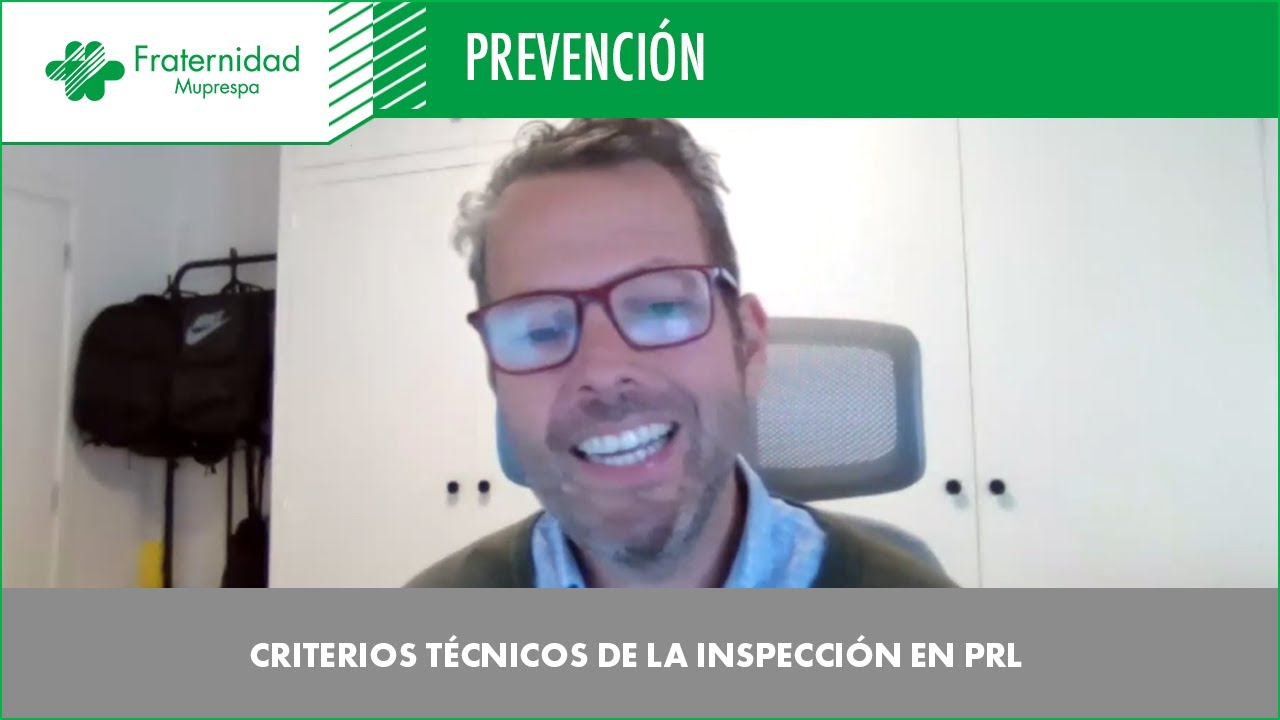
📺 Today’s recommended deep-dive video: https://www.youtube.com/watch?v=95Eu1yZzMqw
Decoding the Labor Inspection: Technical Criteria for Safer Workplaces
Navigating labor inspections can often feel like walking through a legal maze, yet understanding the underlying technical criteria transforms compliance from a bureaucratic burden into a strategic preventive asset. Pablo Segado Rodríguez, a veteran Labor Inspector and Doctor of Law, breaks down how the Spanish system balances rigorous enforcement with technical guidance to protect worker integrity.
Core Question: How does the Spanish Labor Inspection utilize standardized technical criteria to ensure legal consistency and improved health and safety outcomes across diverse industries?
Highlights
- The Spanish “Generalist” model provides a holistic view of worker safety, social security, and labor rights during investigations.
- Preventive requirements represent 80% of all Labor Inspection actions, signaling a focus on correction over mere punishment.
- Technical criteria (such as 104/2021 for psychosocial risks) serve to harmonize enforcement across different regions and provinces.
- The 2026 reform aims to integrate mental health, digitalization, and gender perspectives into the core of occupational risk prevention.
⏱️ Reading time: approx. 8 minutes · Saves you about 57 minutes vs. watching.
Want to take notes while watching? Click the image below and let AI Notebook capture the key points for you 👇

The Architecture of Spanish Labor Inspection
A Generalist Approach to Workplace Safety
The Spanish Labor Inspection system distinguishes itself through a “generalist” model, where inspectors possess the authority to oversee labor relations, social security, and occupational risk prevention (ORP) simultaneously. This holistic approach is particularly vital during accident investigations. Instead of merely looking at a faulty machine, an inspector evaluates the worker’s contract status, their training history, and whether they were legally registered with social security at the moment of the incident.
Efficiency in prevention relies on the inspector’s ability to demand immediate changes before risks manifest into tragedies.
By integrating technical sub-inspectors—often engineers or chemists—with legally-trained inspectors, the system bridges the gap between technical reality and legal obligation. This dual expertise ensures that inspections are not just formal exercises but deep dives into the physical and organizational health of the company. It allows the administration to address the root causes of risks, which are often buried in management failures rather than simple mechanical errors.
The 2024 Inspection Landscape by the Numbers
According to consolidated data from 2024, occupational risk prevention is the engine of the inspectorate’s activity. While preventive orders represent about 28% of total service orders, they account for a staggering 80% of all formal “requirements” issued to businesses. This discrepancy highlights a fundamental truth: the Inspectorate prefers to mandate corrections to safety deficiencies rather than jumping straight to financial penalties, provided there is no immediate grave risk.

💡 Digging Deeper
Q: Why is the Spanish “generalist” model preferred over the specialized Anglo-Saxon model?
A: It prevents a fragmented view of the workplace; an inspector can verify if a safety failure is linked to precarious hiring or excessive overtime, which a specialist might miss.
Q: What happens when an inspector finds a “grave and imminent” risk?
A: The inspector has the power to immediately paralyze work activities at that specific site or station, a move that usually accompanies significant financial sanctions.
Q: How much of the inspection work is based on worker complaints?
A: While complaints are vital, roughly 80-85% of current inspection activity is “planned” via strategic campaigns targeting high-risk sectors like construction and industry.
The Power of Technical Criteria
Standardizing Legal Interpretation across Regions
In a field as complex as prevention, where every factory and process is unique, the law cannot possibly cover every variable. This is where Technical Criteria come into play. These documents are not new laws, but rather interpretative guides that tell inspectors—and companies—what constitutes “sufficient compliance.” They serve as the “manual of style” for enforcement, ensuring that a safety standard in Tenerife is the same as one in Madrid.
Technical criteria provide the legal certainty necessary for businesses to invest in safety without fearing arbitrary enforcement.
These criteria are essential for maintaining the principle of proportionality. For instance, they help inspectors decide when a deficiency warrants a 24-hour fix versus an immediate fine. By publishing these criteria, the Labor Inspection creates a transparent roadmap, allowing prevention services to align their evaluations with the government’s expectations before an inspector even sets foot on the premises.
Targeted Guidance: From Psychosocial Risks to COVID-19
Specific criteria have been developed to tackle “grey areas” where traditional safety measures fall short. Criterion 104/2021, for example, revolutionized how inspectors evaluate psychosocial risks. Instead of accepting generic climate surveys, inspectors now look for deep organizational evidence of how stress, burnout, and workload are managed. This shift forces companies to move beyond “paper prevention” and into real organizational change.

Health Surveillance and Ethics
Beyond the Annual Medical Checkup
Health surveillance is frequently misunderstood as a simple annual blood test or a “fit for work” certificate. In reality, it is the closing loop of the preventive cycle. If a risk assessment predicts a hazard, health surveillance confirms if that hazard is actually causing harm to the collective workforce. It is an epidemiological tool that detects early signs of pathology before a permanent injury occurs.
The company is entitled to know the “fitness” of a worker, but the clinical details must remain a locked secret between the doctor and the patient.
A common pitfall for many SMEs is treating health surveillance as a generic service. To be effective, medical exams must be strictly linked to the specific risks identified in the worker’s station. A warehouse worker and an office clerk should not be undergoing the same tests, as their physical and mental stressors are fundamentally different.
The Conflict of Voluntariness
The Spanish legal framework establishes that health surveillance is generally voluntary, requiring the worker’s informed consent. However, there are three critical exceptions where it becomes mandatory: when it is essential to evaluate work condition effects, when the worker’s state poses a risk to others, or when mandated by specific legal norms. In practice, the Constitutional Court requires these exceptions to be interpreted restrictively to protect the individual’s right to privacy.
Key Takeaways
The landscape of Labor Inspection in 2026 is shifting from reactive policing to proactive management. The data proves that the inspectorate’s primary goal in the realm of prevention is the correction of hazards, evidenced by the high volume of requirements compared to immediate sanctions. Companies that view prevention as a mere administrative hurdle are increasingly vulnerable, especially as the focus moves toward complex issues like psychosocial health and the integration of technical sub-inspectors.
Effective prevention requires a marriage between technical precision and management commitment. Whether it is ensuring the “real” presence of preventive resources on a construction site or accurately reporting accidents via the Delta system, the trend is toward transparency and quality. As legislative reforms loom, the integration of digital risks and mental health into standard protocols will define the next decade of workplace safety.
Q&A
Q1: Can an inspector require technical changes not mentioned in the company’s own risk assessment?
A: Yes, but only if they have a clear technical or legal basis. The inspector cannot invent requirements; they must rely on specific regulations, UNE standards, or specialized technical reports.
Q2: What is the most common error in accident reporting (Delta parts)?
A: Inaccuracy and lack of detail. Often, companies misclassify severe trauma as “minor” (leve) for administrative reasons, which actually triggers higher suspicion from the Inspectorate.
Q3: Is the “External Prevention Service” (SPA) model failing SMEs?
A: Not necessarily, but the market has become “atomized” and price-driven. Many SMEs buy the cheapest service, which leads to “paper prevention” where the technician rarely visits the site.
Q4: Can a company see the clinical results of a worker’s medical exam?
A: Absolutely not. The company only receives the “Fit,” “Fit with limitations,” or “Unfit” status. Sharing clinical data with HR is a serious breach of privacy and a sanctionable offense.
Q5: How will the 2026 reform change health surveillance?
A: It will focus more on “emerging risks,” specifically mental health and the impact of digitalization, while demanding better epidemiological data to spot patterns of harm across industries.
Q6: Can a client company force a contractor’s workers to undergo medical exams?
A: Generally, no. Coordination of Business Activities (CAE) does not override the right to privacy unless the specific risks of the shared workplace make the exam legally mandatory under Art. 22 exceptions.