📺 Today’s recommended deep-dive video: https://www.youtube.com/watch?v=Q-B_ONJIEcE
The Miracle of Language: A Window Into the Human Mind
Language is a biological miracle that allows humans to share an infinite array of thoughts—from reality TV gossip to the origins of the universe—simply by exhaling a sequence of hisses and pops. Far more than a communication tool, it is a complex cognitive engine that reveals the underlying architecture of human nature and our unique evolutionary journey.
Core Question: How does the human mind use a finite set of words and rules to generate an infinite variety of expressions and social connections?
Highlights
- Language is not Thought: Cognition exists independently of words, as evidenced by pre-linguistic babies and mental visual processing.
- The Complexity of Dialects: Non-standard dialects like African-American Vernacular English are not “corruptions” but sophisticated systems with unique grammatical tenses.
- Chomsky’s Productivity: Human language is defined by its ability to create brand-new sentences that have never been uttered in history.
- The Evolutionary Trade-off: Humans evolved a descended larynx to facilitate complex speech, despite it creating a lethal risk of choking.
⏱️ Reading time: approx. 10 minutes · Saves you about 40 minutes vs. watching.
Want to take notes while watching? Click the image below and let AI Notebook capture the key points for you 👇

Beyond the Surface: What Language Is Not
Debunking Common Misconceptions
Before exploring what language is, we must strip away three common myths that cloud our scientific understanding of the mind.
Language is frequently confused with writing, yet speech is a universal human instinct while writing is a recent technology invented only a few times in history. Many people also conflate language with “proper grammar,” but linguists focus on descriptive rules—how people actually speak—rather than prescriptive rules, which are often based on illogical analogies to Latin. For instance, the “rule” against splitting infinitives is a stylistic preference that clashes with the natural rhythm of English, famously ignored by Captain Kirk’s “to boldly go.”
The third misconception is the belief that language is synonymous with thought itself.
While language is a primary medium for expressing ideas, cognitive psychologists have proven that babies and animals possess sophisticated cognition without any speech. Adults also rely on non-linguistic thinking, such as visual imagery or the “gist” of a conversation, where the meaning is retained long after the exact words are forgotten. This suggests that words are merely the tip of a vast, non-verbal iceberg of mental processing.

💡 Digging Deeper
Q: Why is writing different from speech?
A: Writing is a late invention (approx. 5,000 years ago) that must be taught, whereas speech emerges instinctively in every human child.
Q: Is “Black English” a corruption of Standard English?
A: No; it is a complex dialect with its own sophisticated rules, such as a “habitual be” tense that distinguishes between being employed and currently working.
Q: Can we think without words?
A: Yes; experiments on mental rotation and studies of pre-verbal infants show that we register cause, effect, and intent without using sentences.
The Architecture of Expression
Lexicons, Rules, and Hierarchies
In a nutshell, language functions through three core components: a mental dictionary of words, a set of rules for assembly, and the interfaces that connect them to the world.
The “mental lexicon” is a massive repository of arbitrary signs, where a sound like “duck” is linked to a concept through brute-force memory. By high school graduation, the average person has memorized roughly 60,000 of these arbitrary associations, a feat of long-term memory that requires learning a new word every two hours since infancy. This vocabulary provides the raw materials that our internal “grammar” then reshapes into complex structures.
Grammar is not a list of clichéd formulas but a productive algorithm.
As Noam Chomsky famously noted, sentences like “Colorless green ideas sleep furiously” prove that syntax exists independently of meaning; we recognize the structure even when the content is nonsense. This productivity allows us to create an infinite number of sentences. Because of the way rules can be nested within one another, there is no such thing as the “world’s longest sentence”—you can always add another “he said that…” to make it longer.
Sentences are not simple chains of words but hierarchical trees.

💡 Digging Deeper
Q: What is the “arbitrariness of the sign”?
A: It is the fact that the sound of a word (like “duck”) has no physical or logical connection to the object it represents; the link is purely conventional.
Q: How does grammar allow for infinite creativity?
A: Through recursive rules that allow phrases to be embedded within other phrases, allowing a finite vocabulary to produce an unlimited number of thoughts.
Q: Why do linguists use “upside-down trees”?
A: These diagrams help visualize the hierarchical relationships between words, which is essential for determining who did what to whom in a sentence.
The Biology and Social Interface
From the Vocal Tract to Social Context
Language must eventually leave the mind through production and enter it through comprehension, necessitating a complex set of biological and social interfaces.
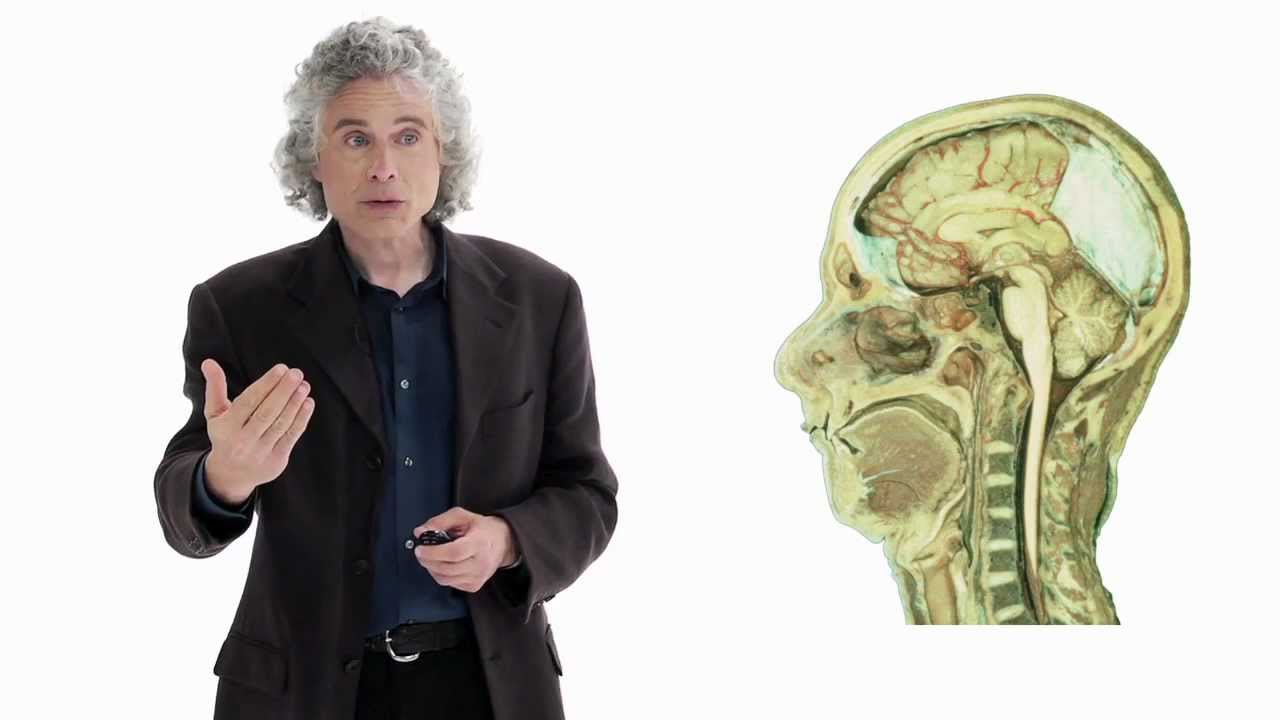
The human vocal tract is a masterclass in evolutionary compromise. We produce sound using the larynx, then sculpt that sound into vowels and consonants by moving the tongue and lips to change the shape of our resonant cavities. However, to achieve the range of sounds required for speech, the larynx descended in the throat, creating a dangerous overlap between the pathways for breathing and swallowing. This evolutionary choice suggests that the survival benefits of language far outweighed the risk of death by choking.
Understanding speech is equally difficult for the brain.
Computers often struggle with “co-articulation,” where the sound of a letter changes based on its neighbors, or the “segmentation problem,” where there are no physical silences between spoken words. Humans solve these ambiguities through “Pragmatics”—using context and the “cooperative principle” to infer meaning. When someone says “John says: ‘Who is he?'” after Martha says “I’m leaving you,” we instinctively know “he” refers to a romantic rival without being told.

💡 Digging Deeper
Q: What is “Universal Grammar”?
A: It is the theory that humans are born with a “spec sheet” for language, allowing children to learn complex rules despite limited and “poor” input.
Q: Why do computers fail at translation?
A: Machines often lack the background knowledge of human behavior needed to resolve linguistic ambiguities, like the word “have” in “Mary had a little lamb.”
Q: What is the “cooperative principle”?
A: It is the social assumption that our conversational partners are trying to be truthful and clear, allowing us to interpret metaphors and polite requests.
Key Takeaways
Language is the defining trait of the human species, serving as the “original wiki” that aggregates the contributions of millions of speakers over generations. It is a productive system, not a static list of phrases, which is why a child can say “more outside” or “all gone sticky” without ever having heard those exact combinations from an adult.
By separating language from prescriptive “proper” grammar and written scripts, we see it for what it truly is: a window into human nature. It reveals our capacity for infinite creativity, our complex social strategies, and the biological trade-offs we have made to become the only species capable of discussing the universe through a sequence of hisses and pops.
Q&A
Q1: Is language synonymous with the way we think?
A1: No. Cognitive science shows that while language expresses thought, thinking also occurs through visual imagery and abstract concepts that don’t rely on words.
Q2: Why did Noam Chomsky argue that linguistics is a branch of psychology?
A2: He believed that by studying the rules people use to assemble sentences, we are actually studying the internalized algorithms and structures of the human mind.
Q3: What is the “Wug Test”?
A3: It is a laboratory demonstration where children are shown an imaginary creature called a “wug” and asked to name two of them. Their response (“wugs”) proves they have mastered grammatical rules, not just memorized words.
Q4: How does the “Poverty of the Input” argument support the idea of innate language?
A4: It suggests that children learn rules—like how to move the correct “is” to form a question—that are too complex to be learned solely from the limited examples they hear from parents.
Q5: Why do we have accents when learning a second language?
A5: Accents occur when a speaker applies the phonological (sound) rules of their first language to the words of a new language.
Q6: What makes pragmatics so difficult for computers to master?
A6: Pragmatics requires a vast store of real-world knowledge and an understanding of human intentions, which are difficult to program as simple logical rules.