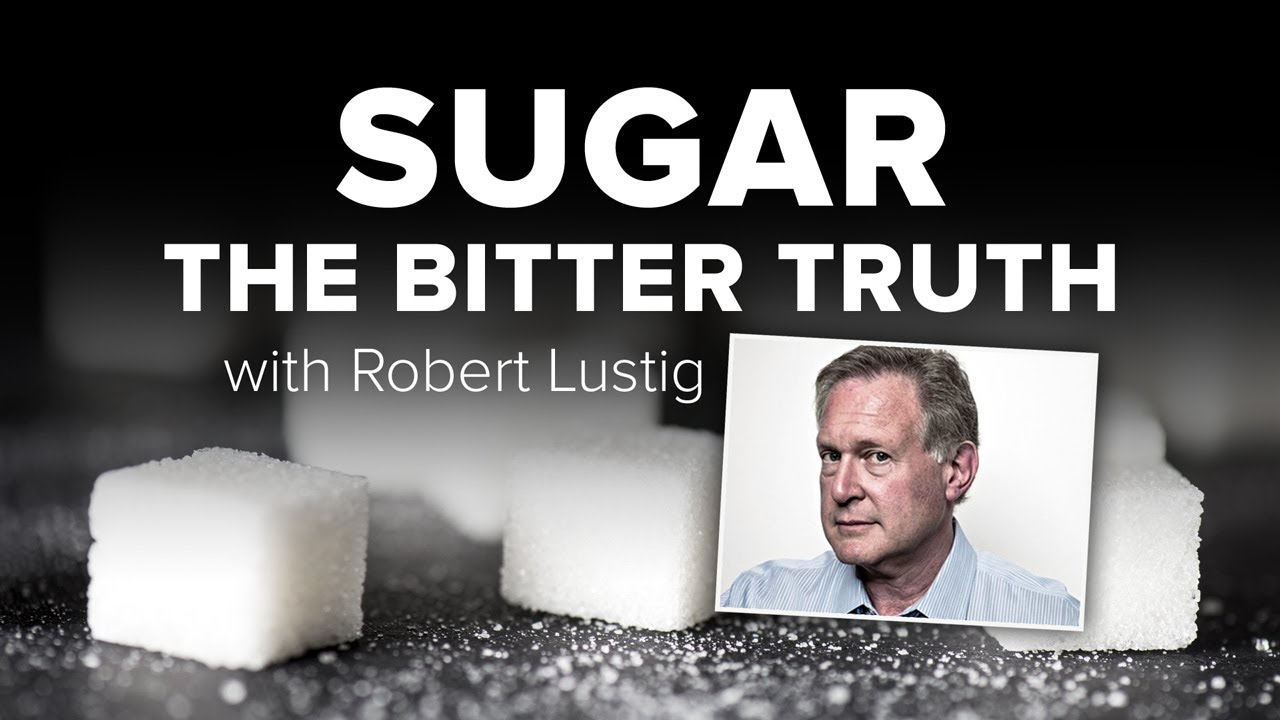
📺 Today’s recommended deep-dive video: https://www.youtube.com/watch?v=dBnniua6-oM
Sugar: The Bitter Truth About a Metabolic Poison
For decades, the public has been told that obesity is a simple matter of gluttony and sloth, a failure of willpower in the face of excess. Dr. Robert Lustig challenges this dogma, revealing how our food environment has been chemically altered to bypass our internal satiety signals. By examining the unique biochemistry of fructose, he demonstrates that we are not just eating too much; we are being poisoned by the very ingredients designed to make our food palatable.
Core Question: Is fructose a chronic hepatotoxin that bypasses our biological feedback loops to drive the global metabolic syndrome epidemic?
Highlights
- The “First Law of Thermodynamics” is often misinterpreted; biochemical forces drive energy storage, which then dictates eating behavior and lethargy.
- Fructose is metabolically identical to ethanol without the “buzz,” causing the same liver damage and insulin resistance over time.
- The removal of fiber from processed foods creates a “perfect storm” that accelerates sugar absorption and eliminates natural satiety signals.
- Low-fat dietary guidelines in the 1980s led to the massive addition of sugar to maintain food palatability, inadvertently triggering the obesity crisis.
⏱️ Reading time: approx. 11 minutes · Saves you about 78 minutes vs. watching.
Want to take notes while watching? Click the image below and let AI Notebook capture the key points for you 👇

The Thermodynamic Trap and the Rise of Sugar
Reinterpreting Energy Balance
The standard interpretation of the first law of thermodynamics suggests that if you eat more than you burn, you gain weight. However, this assumes that “calories in” and “calories out” are independent variables under conscious control. In reality, biochemical forces—specifically the hormone insulin—drive energy into fat cells first.
This creates an obligate weight gain that forces the body to compensate by increasing hunger and decreasing energy expenditure. Under this model, gluttony and sloth are the secondary symptoms of a primary biochemical disaster, rather than the root causes themselves.
We all weigh significantly more than we did thirty years ago, yet our genetic pool has remained constant. This proves that our environment, specifically the composition of our calories, has shifted in a way that our negative feedback systems can no longer manage.

The Great Fat Substitution
In 1982, the USDA and American Heart Association admonished Americans to reduce fat consumption from 40% to 30%. We complied, yet the rates of obesity, diabetes, and heart disease skyrocketed as our fat intake fell. The industry replaced fat with sugar to ensure processed foods didn’t taste like cardboard.
This substitution was catastrophic because it ignored the difference between types of LDL cholesterol. While dietary fat raises large, buoyant LDL, it is carbohydrate consumption that raises the small, dense LDL responsible for arterial plaque and heart attacks.
💡 Digging Deeper
Q: Why is “fiberless food” the definition of fast food?
A: Fiber ruins shelf life and takes too long to cook, so the industry removes it to maximize profit and consumption speed, despite fiber being the natural “antidote” to sugar.
Q: Is High Fructose Corn Syrup (HFCS) worse than cane sugar?
A: Metabolically, they are nearly identical; the real issue is that HFCS is so cheap that it has been surreptitiously added to almost every processed food, from bread to ketchup.
Q: How does the “Coca-Cola Conspiracy” work?
A: Soda contains caffeine (a diuretic) and salt (which makes you thirsty), but the massive sugar content masks the salt, tricking you into drinking more to quench the thirst the drink itself created.
The Biochemistry of a Toxin
Fructose vs. Glucose Metabolism
To understand why sugar is dangerous, one must look at how the liver treats different substrates. When you eat 120 calories of glucose, only 24 calories hit the liver, while the rest is used by the brain and muscles. The liver easily converts this small amount into glycogen, a non-toxic storage form of energy.
Fructose is an entirely different story because every single calorie of it is sent directly to the liver. This creates a volume overload that forces the liver to convert the excess sugar into fat, leading to non-alcoholic fatty liver disease and high VLDL levels.
Unlike glucose, fructose does not suppress the hunger hormone ghrelin or stimulate insulin and leptin. Consequently, your brain never receives the message that you have eaten, leading to a vicious cycle of continuous overconsumption.

The Ethanol Connection
Fructose is essentially alcohol without the “buzz.” Because they are both fermented sugars processed exclusively by the liver, they follow the same metabolic pathways and cause the same long-term damage. Chronic fructose exposure leads to the same “beer belly,” hypertension, and cirrhosis that we associate with alcoholism.
The only reason we don’t regulate fructose like alcohol is that it doesn’t cause acute intoxication. However, as a chronic hepatotoxin, it is just as deleterious to public health over a period of decades.
Reversing the Damage
The Antidote: Fiber and Exercise
Nature packaged the poison (fructose) with its antidote (fiber). In its natural state, such as in a piece of fruit, fiber slows down the absorption of sugar and triggers satiety signals in the gut. When we juice fruit or process it, we remove the “brakes,” allowing the sugar to hit the liver with maximum impact.
Exercise is also misunderstood as a simple “calorie burner.” Its real value lies in its ability to improve insulin sensitivity and speed up the TCA cycle in the liver. This allows the body to burn off metabolic intermediates before they can be turned into fat.
Success in treating obesity requires a total removal of sugared liquids from the home and a return to “real” food. If you eat your carbohydrates with fiber, you provide your body with the time it needs to process energy without triggering a toxic response.

💡 Digging Deeper
Q: Is fruit juice healthy for children?
A: No; it is essentially “soda with vitamins” because the lack of fiber causes the same metabolic spike as a sugary soft drink.
Q: Can exercise “make up” for a bad diet?
A: No; the math doesn’t work. One Big Mac requires hours of intense exercise to “burn off,” but exercise can help prevent the liver from turning sugar into fat.
Key Takeaways
We have been victims of a perfect storm of bad science, corporate interest, and political maneuvering. Starting in the 1970s, the push for cheap, shelf-stable food led to the “fructosification” of the global diet. This shift bypassed our evolutionary biology, leading to a world where even six-month-old infants are showing signs of obesity.
The solution is not a new fad diet, but a return to biochemical reality. We must stop viewing a calorie as just a calorie and start viewing fructose as a chronic toxin. By restoring fiber to our diets and eliminating liquid sugar, we can begin to repair the metabolic damage inflicted over the last thirty years.
Ultimately, the responsibility lies with the consumer to recognize that the FDA and USDA are not currently equipped to regulate chronic toxins. We must advocate for real food and protect the next generation from an environment that is biologically rigged against them.
Q&A
Q1: Does the body need any fructose to survive?
A1: No. While glucose is the “energy of life” used by every cell, there is no biochemical reaction in the human body that requires dietary fructose.
Q2: Why does sugar cause high blood pressure?
A2: Fructose metabolism creates uric acid as a waste product. Uric acid inhibits nitric oxide in the blood vessels, which is the body’s natural way of lowering blood pressure.
Q3: Is it okay to eat fruit if it contains fructose?
A3: Yes, because the fiber in whole fruit limits the total amount you can eat and slows the absorption rate, preventing liver overload.
Q4: Why don’t doctors talk about this more?
A4: Many are still trained under the “calorie is a calorie” paradigm and the “fat is bad” logic that has dominated nutrition science since the 1970s.
Q5: What is the single most important change a person can make?
A5: Eliminate all sugar-sweetened beverages, including soda, sports drinks, and fruit juices, and replace them with water or milk.
Q6: How does sugar lead to “starvation” in the brain?
A6: High insulin levels, caused by sugar, block the hormone leptin from reaching the brain. This makes the brain think the body is starving, even if the person is obese.
Q7: Is the glycemic index a good way to measure sugar’s danger?
A7: Not entirely, because the glycemic index only measures glucose. Fructose has a low glycemic index but causes much more significant long-term liver damage.