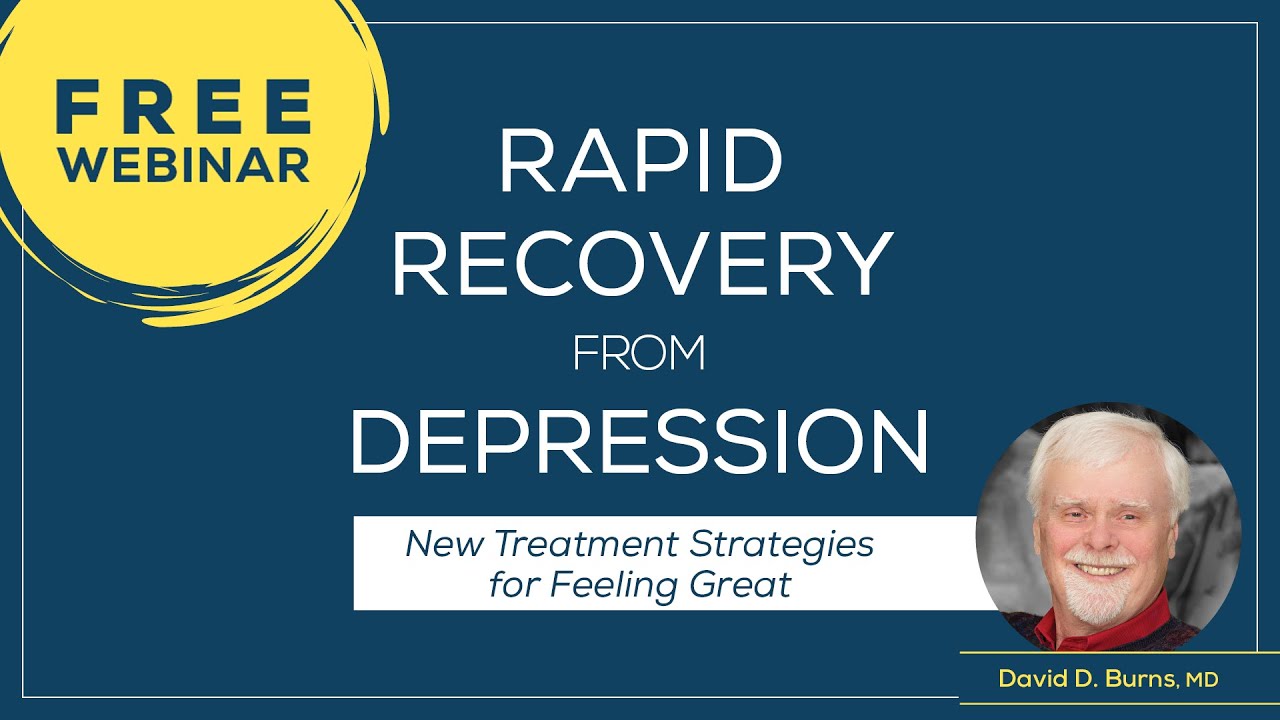
📺 Today’s recommended deep-dive video: https://www.youtube.com/watch?v=0FEDmPyeBio
Beyond Traditional CBT: Mastering the TEAM-CBT Framework for Rapid Recovery
For decades, traditional talk therapy has focused on long-term processing, yet many patients remain trapped in cycles of despair. Dr. David Burns introduces a revolutionary evolution of Cognitive Behavioral Therapy that prioritizes data, empathy, and the hidden beauty within negative emotions to catalyze recovery in a single session.
Core Question: How can therapists leverage the TEAM framework to bypass patient resistance and transform severe depression into lasting self-esteem?
Highlights
- Testing and empathy scales provide an “x-ray” of the therapeutic relationship, ensuring therapist accountability.
- Positive reframing reveals that depression and anxiety are often expressions of a patient’s highest core values.
- The “Magic Dial” technique allows patients to retain the protective benefits of their emotions while lowering their intensity.
- Live clinical demonstrations show that even deep-seated trauma and shame can be resolved through cognitive techniques like the Double Standard.
⏱️ Reading time: approx. 8 minutes · Saves you about 110 minutes vs. watching.
Want to take notes while watching? Click the image below and let AI Notebook capture the key points for you 👇

The TEAM Framework: CBT on Steroids
A Data-Driven Approach to Empathy
TEAM is not a new school of therapy but a structured evolution of cognitive behavioral science. The “T” stands for Testing, which involves measuring symptoms at the start and end of every single session. This ensures the therapist is accountable and can see exactly when a patient is moving from 90% depressed to 50% depressed, providing a real-time “x-ray” of the patient’s emotional state.
Therapists often overestimate their own effectiveness. Research suggests that clinicians are only about 9% accurate in perceiving the quality of the therapeutic relationship, which is why the “E” for Empathy is so vital. In TEAM-CBT, patients rate their therapist after every encounter, forcing the clinician to let their ego die and learn directly from the patient’s honest feedback.

💡 Digging Deeper
Q: Why is testing at the end of a session just as important as the beginning?
A: It provides immediate data on whether the strategies used were effective, allowing the therapist to pivot in the next session if no change occurred.
Q: How do empathy scales improve clinical skills?
A: They expose “therapeutic failures” that therapists usually miss, creating an opportunity for the therapist to adjust their approach based on the patient’s actual experience of feeling heard.
Melting Resistance through Positive Reframing
Finding the Gold in the Mud
The most revolutionary part of TEAM is the “A,” or Assessment of Resistance. Most therapeutic failures happen because the therapist tries to “fix” the patient before the patient is truly ready to change. Paradoxically, symptoms like anxiety or shame often protect a patient or reflect their most beautiful values, such as integrity, high standards, or a deep love for others.
Instead of fighting the depression, the therapist helps the patient see how their “negative” feelings are actually awesome and protective. If we have a “magic button” that makes all depression vanish, we must ask: what would we lose? In the case of Melanie, her shame reflected her deep respect for marriage and her colleagues. By honoring the symptom first, we melt the subconscious resistance that prevents recovery.
When a patient becomes proud of what their depression says about their character, the need to cling to the illness diminishes. We then use the “Magic Dial” to lower the volume of the pain rather than silencing it entirely. This keeps the patient’s values intact while removing the debilitating sting of the emotion.
💡 Digging Deeper
Q: What is the “Magic Button” paradox?
A: It is a technique where the therapist asks if the patient would push a button to be 100% happy, then points out all the beautiful values they would lose by doing so, forcing the patient to choose to change on their own terms.
Q: Can resistance be addressed in a single session?
A: Yes, by bringing the benefits of the symptoms to conscious awareness, the therapist can help the patient decide which parts of the emotion are useful and which are distorted.
Methods for Crushing Distorted Thoughts
The Double Standard and Feared Fantasy
Once resistance is gone, we move to “M” for Methods. One of the most powerful is the Double Standard Technique. We often speak to ourselves with a cruelty we would never use with a friend. By asking a patient to talk to a “clone” of themselves who has the same problem, they usually find a voice of warmth and reason that they previously denied themselves.
Another high-level solution is the “Feared Fantasy.” This involves acting out the worst-case scenario, like being judged by a “Church from Hell.” When patients stop running and instead learn to talk back to their monsters, they realize that even their worst fears are survivable and often based on “mind-reading” distortions rather than reality.
The moment you stop believing a distorted thought, the emotion changes instantly. Recovery isn’t a long, slow climb; it is often a sudden shift in perception. Melanie went from 100% shame to near-zero by realizing her “failures” were simply human experiences that didn’t define her worth.

Key Takeaways
TEAM-CBT represents a shift from a “medical model” of brokenness to a “values model” of wholeness. By measuring every session and prioritizing the patient’s hidden motivations, therapists can achieve results in hours that used to take years. The focus remains on the “here and now,” challenging the idea that we must spend decades digging into the past to find relief today.
This approach is applicable across a spectrum of challenges, from daily anxiety to severe trauma and even as a supplement for managing chronic conditions like schizophrenia. Whether through the upcoming “Feeling Great” app or traditional clinical practice, the goal is the same: to help the patient’s heart “smile” again by uncovering the truth behind their distorted thoughts.
Q&A
Q1: Is TEAM-CBT effective for severe trauma survivors?
A: Absolutely. Dr. Burns has treated numerous trauma survivors where recovery occurred in a single session by focusing on the specific negative thoughts triggered by the trauma and using positive reframing to honor the patient’s survival and self-love.
Q2: How does this work for patients with lower IQs or developmental disabilities?
A: The concepts are simplified into “positive” and “negative” thoughts. Using icons and simple language (like “black and white thinking” instead of “all-or-nothing thinking”), the core principles of self-esteem and thought-challenging remain highly effective.
Q3: What if the patient’s negative thought is actually true?
A: If a thought is true, such as grieving a death, it is not a “distortion.” TEAM treats this as “healthy sadness” or a “celebration of love,” rather than a clinical disorder to be cured.
Q4: Can these techniques help with addictions like alcoholism?
A: Yes, using the “Triple Paradox” and the “Devil’s Advocate” technique, therapists can help patients explore the “benefits” of their habit to build genuine, internal motivation to quit, rather than just complying with external pressure.
Q5: Does Dr. Burns believe medication is unnecessary?
A: Not necessarily. While he critiques the “chemical imbalance” theory due to a lack of evidence, he acknowledges that medications like lithium are crucial for conditions like bipolar disorder. However, he emphasizes that cognitive tools are often vastly more powerful for depression and anxiety.
Q6: Where can I find training for TEAM-CBT?
A: Free training is available through Dr. Burns’ Tuesday group (for California residents) and Rhonda Berovsky’s Wednesday group (for those worldwide), as well as resources at the Feeling Good Institute.