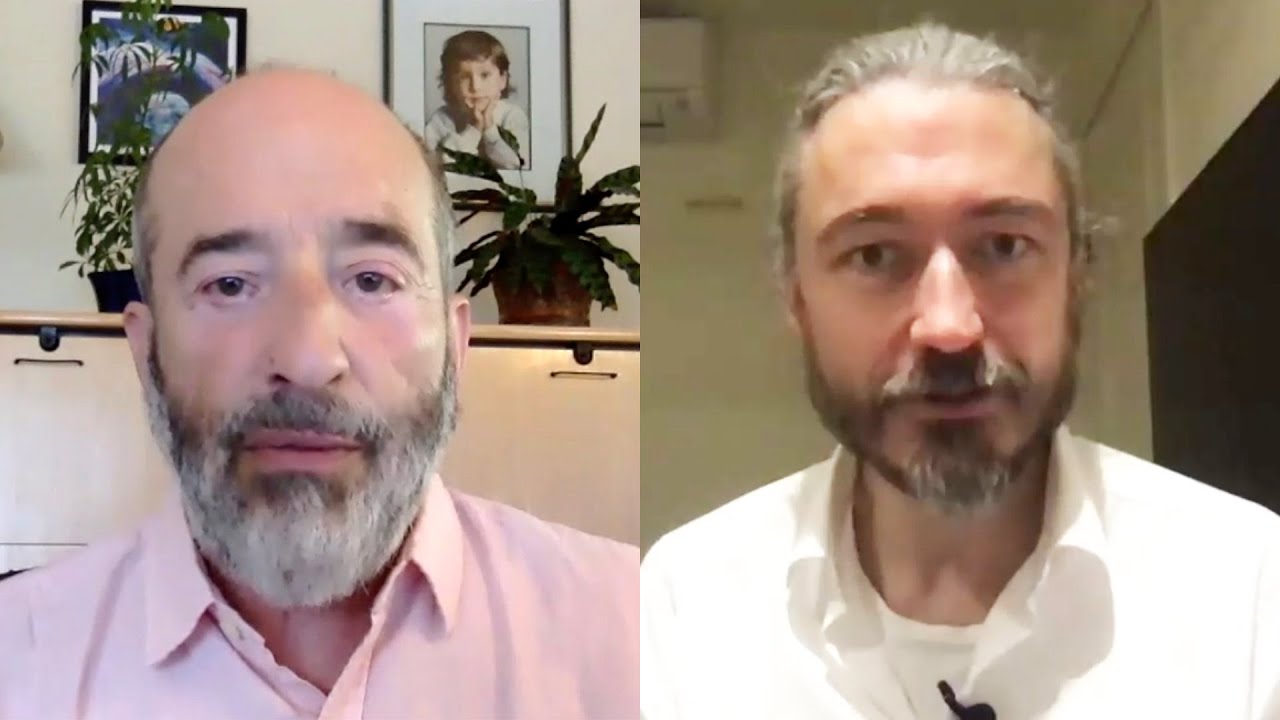
📺 Today’s recommended deep-dive video: https://www.youtube.com/watch?v=D9KQm0hhhhU
The Alchemy of Isolation: Finding Coherence in a Global Pandemic
As the world enters unprecedented periods of quarantine and uncertainty, we are forced to face both our personal fears and the collective ghosts of our past. Thomas Hübl explores how to maintain relational intimacy and spiritual grounding when the physical structures of society are under immense pressure.
Core Question: How can we utilize inner practice and relational intelligence to turn a global health crisis into an evolutionary step for collective resilience?
Highlights
- The necessity of non-dissociated witnessing to integrate personal and collective fear.
- How virtual intimacy serves as a vital resource for nervous system regulation during isolation.
- Recognizing “the system” not as an external enemy, but as an interdependent extension of ourselves.
- The role of ancestral resilience as a “crystallized intelligence” available in times of crisis.
⏱️ Reading time: approx. 8 minutes · Saves you about 53 minutes vs. watching.
Want to take notes while watching? Click the image below and let AI Notebook capture the key points for you 👇

The Inner Response to Global Disruption
Navigating the Interior Landscape of Fear
Facing a global pandemic isn’t just a health challenge; it’s a profound disruption of our economic, social, and existential foundations that requires a new inner stability.
When fear arises, our first instinct is often to suppress it or become overwhelmed by the magnitude of the situation, yet spiritual practice allows us to witness these emotions without becoming hijacked by them. This maintains our vulnerability as a source of strength rather than a liability, ensuring our decisions are rooted in intuition rather than reactionary panic.
A key component of this process is realizing that fear is not a disruption of the situation but an inherent part of the current reality. By integrating these feelings, we move away from defensive dissociation and toward a developmental step that allows us to stay human despite the pressure. This connection to our inner state ensures that the choices we make—whether regarding health, family, or finances—are rooted in self-contact rather than a collective charge that we might later regret.

💡 Digging Deeper
Q: Why is vulnerability considered a strength in a crisis?
A: Vulnerability indicates that we are staying in touch with the reality of the moment; when we lose it, we are usually defending ourselves through dissociation, which clouds our judgment.
Q: How does inner practice change our decision-making?
A: It provides a “spaciousness” that allows us to filter out collective panic, enabling us to hear our own intuition and make moves that are sustainable rather than impulsive.
Bridging the Distance through Relational Intelligence
The Power of Virtual Intimacy
We are discovering that physical touch is not the only way to transmit support and care across the human field, especially when technology acts as a bridge.
While social distancing is a biological necessity, it paradoxically increases the risk of depression and weakened immunity due to social isolation, making intentional connection more important than ever. Technology serves as a copy-paste of our internal nervous system, allowing for energetic transmission and heart synchronization even through a screen. When we feel another person truly receiving our emotions virtually, we create a relational resourcing that stabilizes our bodies against the rising tide of global anxiety.
This is a time to reach out to those on the front lines, such as healthcare workers or the elderly, who are bearing the heaviest burden of this crisis. Simply providing an open heart and a listening ear is a profound competency that anyone can offer, turning our forced isolation into a deliberate practice of global collaboration and mutual care.

💡 Digging Deeper
Q: Can virtual contact truly replace physical presence?
A: While physical touch triggers specific hormones, the “relational energetic transmission”—feeling felt by another—is fully possible virtually and provides significant nervous system regulation.
Q: What is the primary “competency” needed during isolation?
A: An open heart; the ability to listen deeply to someone else’s stress without trying to fix it immediately, which allows their system to discharge tension.
Loving the System We Seek to Change
Overcoming Fragmentation and Polarization
True maturity lies in the radical realization that “the system” is life itself, and our calling is to heal it from within rather than tearing it down from the outside.
Many of us view the system as an external machine responsible for ecological destruction and social inequality, yet we must recognize that we are inseparable parts of it. We breathe its air, use its technology, and embody its historical Momentum’s, making the idea of an “outside” perspective a convenient but dangerous illusion that prevents real integration.
Polarized anger often reconfirms the very fragmentation it seeks to cure, leading to movements that simply replace one dysfunctional structure with another. If we approach systemic evolution from a place of care and gratitude for the functions that sustain us, our feedback becomes a form of “constructive confrontation.” This shift allows us to protect the vulnerable while pushing for rapid adaptation, ensuring that the tree of life remains grounded even as its branches are reshaped.

💡 Digging Deeper
Q: Is it wrong to be angry at systemic failures?
A: Anger is a natural response, but if it leads to a “separated” stance, it loses its ability to transform the system effectively. The goal is “related confrontation.”
Q: How does the “pause” caused by the pandemic help?
A: It stops the habit of “running” to avoid fear, forcing a reorganization of the system that can lead to more grounding and ethical intelligence.
Key Takeaways
The current global crisis functions as an evolutionary exam, testing our capacity to stay related when the impulse to retreat or polarize is strongest. By leaning into our spiritual practices, we can witness both our personal fear and the collective trauma being reactivated, preventing them from turning into a destructive spiral of panic.
Resilience is not something we must create from scratch; it is an ancestral intelligence stored within our very cells. Every human who preceded us survived their own versions of uncertainty, and that crystallized wisdom is available to us now if we can stay present and grounded in our bodies.
Ultimately, the health of our society depends on the quality of our feedback loops. When we stay in communication, share our vulnerabilities, and support the most fragile among us, we increase the coherence of the entire system. This crisis is an invitation to move from a state of separation to one of radical interdependence, where every act of care contributes to a more resilient global fabric.
Q&A
Q1: How can we deal with the “collective ghosts” of the past?
A: By digesting our own portion of past trauma through presence, we help ground the entire collective field, preventing historical panic from hijacking current events.
Q2: What is the risk of “running faster” during a crisis?
A: When we speed up our consumption or technology use to avoid feeling fear, we create an unstable “tree” without roots that will eventually fall over under pressure.
Q3: How should we respond to those acting out of panic or unkindness?
A: We should meet them with “radical compassion,” recognizing that their behavior is a symptom of an overwhelmed nervous system, while still maintaining clear boundaries.
Q4: What is the “evolutionary certificate” mentioned in the talk?
A: It is the capacity for humanity to collaborate intelligently during a crisis rather than regressing into tribalism or separation.
Q5: Why is the concept of “interdependence” so critical now?
A: Because no one is outside the system; the air we breathe and the technology we use link us all, meaning the suffering of one part eventually affects the whole.
Q6: What does “grounding in nature” mean in a digital context?
A: It means ensuring our innovation and excitement are balanced by a deep, ethical connection to our physical environment and our biological reality.