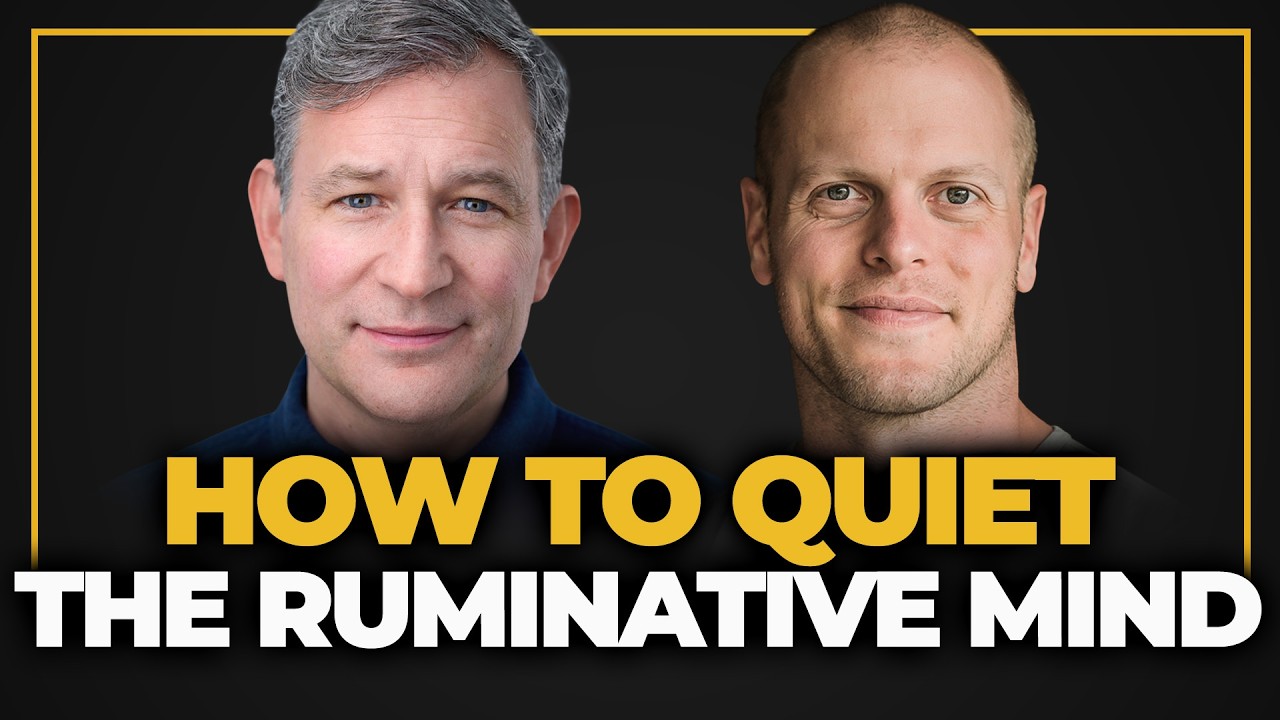
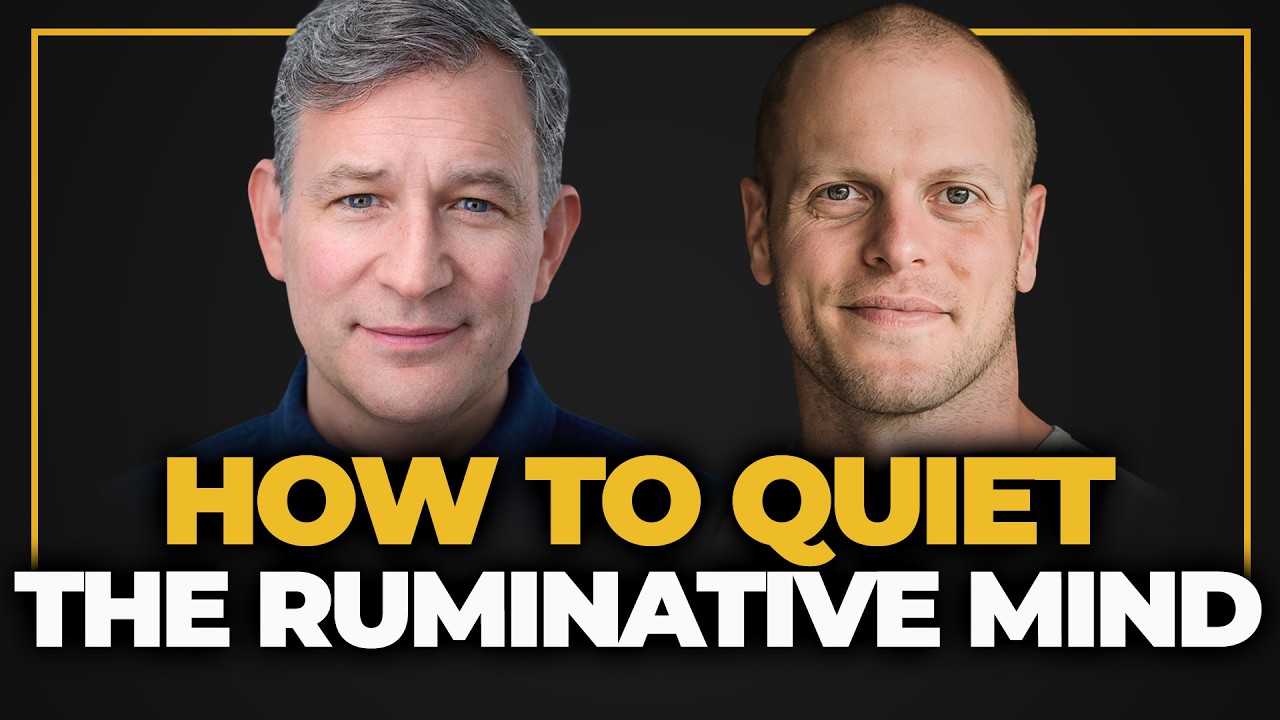
📺 Today’s recommended deep-dive video: https://www.youtube.com/watch?v=qOUnBaeTUOY
Beyond the Self-Help Trap: Tim Ferriss on Radical Healing and the Art of Saying No
After years of public struggle with “monkey mind” and rumination, Tim Ferriss reveals how he moved from severe OCD to feeling “better than ever.” He shares the specific neuro-technologies and social frameworks that moved the needle for his mental health.
Core Question: How can we balance high-performance optimization with the essential human needs of deep relationship and neurological recovery?
Highlights
- The “SAINT” protocol: Using accelerated TMS and D-cycloserine to “flip a switch” on anxiety.
- The PhD in Soccer: Why the self-help movement often creates a recursive trap of isolation.
- Life Tetris: A graceful linguistic tool for defending your time against “promiscuous overcommitment.”
- Metabolic Psychiatry: Why ketosis is being studied as a foundational tool for brain health.
⏱️ Reading time: approx. 8 minutes · Saves you about 67 minutes vs. watching.
Want to take notes while watching? Click the image below and let AI Notebook capture the key points for you 👇

The Neuro-Technology of Happiness
Breaking the Ruminative Loop
Conventional talk therapy is a vital tool for many, but Tim argues that sometimes talking about a problem simply keeps you trapped within the loop instead of breaking the underlying neurological circuit that causes the distress.
Tim describes a breakthrough involving Accelerated Transcranial Magnetic Stimulation (TMS), specifically the SAINT protocol developed at Stanford. This technology uses magnetic pulses to excite or inhibit specific brain regions. While standard TMS treatments can take several months of occasional visits, the accelerated version compresses the entire process into a single, intense week. By pre-dosing with D-cycloserine—an antiquated antibiotic that acts as a powerful catalyst for neuroplasticity—Tim achieved near-instant remission from severe ruminative OCD and anxiety that had plagued him for years. This combination allowed him to achieve in one day what previously took months.
The results were stark: moving from an “eight-out-of-ten” on the anxiety scale down to a manageable one or two. This wasn’t a temporary high but a durable shift in his lived experience that has lasted months. It highlights a new frontier in “combination therapies” where hardware and chemistry work together to physically rewire the brain’s default modes.

💡 Digging Deeper
Q: Is accelerated TMS widely available?
A: It is available in major cities like New York and Chicago, though it is currently rarely covered by insurance and remains quite expensive.
Q: What exactly is D-cycloserine (DCS)?
A: Originally a tuberculosis drug, it is used here off-label as an NMDA receptor agonist to “prime” the brain for the changes induced by the magnetic pulses.
Q: How long do the effects of this treatment last?
A: While not a “one-shot” cure, many patients see remission for several months, often requiring only minor “booster” sessions later on.
Escaping the “PhD in Soccer” Trap
The Danger of Self-Infatuation
One of the most insidious risks of the personal development world is that it can quickly morph into a state of self-infatuation or obsession. We spend years “polishing the self” in isolation, waiting for a state of perfection that never arrives while the actual experience of life passes us by.
Tim likens this to getting a PhD in soccer and practicing drills alone in your backyard without ever actually playing a game. You can believe you are improving, but you are merely simulating life rather than engaging with it.
The antidote to this recursive self-obsession is doubling down on high-quality relationships. Humans are evolved as social animals; physical isolation or internal thought loops catalyze psychiatric instability and depression. By conducting a “Past Year Review” and blocking out extended periods for nourishing friendships—like a week in the Montana wilderness—Tim offsets the “bleeding edge” of technology with the “dull edge” of ancient evolutionary needs like laughter and physical presence.

💡 Digging Deeper
Q: What is the “Past Year Review”?
A: A process of looking at your calendar to identify which people and activities were “energy-in” versus “energy-out,” then scheduling the “energy-in” items for the year ahead.
Q: Is socializing always the answer?
A: No. Tim warns against “compulsive socializing” used as a distraction to avoid being with oneself; the goal is nourishing, intentional connection.
The Productivity of “No”
Defending the Big Rocks
True productivity isn’t about doing more things faster; it is about the ruthless selection of what to do in the first place. Tim argues that most productivity content is “productivity porn”—indiscriminate optimization that makes people efficient at doing things that don’t actually matter. To combat this, he suggests an 80/20 analysis to find the “Big Yeses” that are actually worth defending.
Using the classic Mason jar analogy, Tim explains that we must place our “Big Rocks” (life-changing goals) into our schedule first. Only then can the “gravel” (essential tasks like taxes) and “sand” (distractions) fit in the remaining gaps. Most people start with the sand and wonder why they never have time for the rocks.
To protect these rocks, we need a “benevolent phalanx” of boundaries. This includes linguistic tools like the “Life Tetris” excuse—a phrase Tim borrowed from Martha Beck—to decline commitments without offering room for negotiation or defensive explanations.

💡 Digging Deeper
Q: Why do people have trouble saying no?
A: Often it is because they don’t have a “Yes” big enough to defend, or they harbor a core belief that they are “too nice” to decline others.
Q: What is the “Life Tetris” line?
A: Saying, “I really wish I could, but I just can’t do the life Tetris right now.” It is a non-negotiable way to state that your schedule is at capacity.
Key Takeaways
Optimization must be preceded by interrogation. Before you apply a 4-hour-workweek-style hack to a task, you must ask if that task needs to exist at all. Tim’s shift toward “surgical optimization” involves doing fewer things but doing them with greater intensity and protection. Whether it is using ketosis for metabolic brain health or taking a specific drug like Zetia for cholesterol, the goal is the “minimum effective dose” to achieve a result without unnecessary side effects.
Furthermore, we must remain skeptical of our own data. A single bad blood test shouldn’t trigger a dozen new prescriptions; it should trigger a replication of that test. Factors like the time of day, a heavy meal, or a stressful weekend can wildly skew biomarkers. By slowing down the reaction time between data and intervention, we can avoid the “over-optimization” that leads to pharmaceutical clutter and unnecessary anxiety.
Ultimately, the most powerful “hack” for a good life remains the most ancient: deep, silly, and energizing relationships. No amount of AI, biohacking, or productivity templates can replace the neurological stabilization provided by a campfire with friends.
Q&A
Q1: Why is Tim currently experimenting with the ketogenic diet?
A: He is exploring “metabolic psychiatry,” specifically the idea that ketosis can provide neuroprotective and anti-cancer effects, as well as stabilizing psychiatric pains that don’t respond to standard medication.
Q2: How does Tim recommend using AI for health?
A: Use LLMs to build basic medical literacy (learning the vocabulary of blood tests) and to check for contraindications between supplements and medications that doctors might miss.
Q3: What is the “Coyote” game?
A: A casual card game Tim designed. He used it as a “win even if it fails” project, prioritizing the relationships he built and the knowledge of manufacturing he gained over the commercial outcome.
Q4: Why has Tim removed social media from his phone for three years?
A: He believes having those apps is like bringing a “butter knife to a gunfight.” The friction of only using social media on a laptop prevents compulsive “dopamine scratching” and protects his ability to focus.
Q5: What is “Fear Setting”?
A: An exercise to define the worst-case scenarios of a decision. By de-fanging the fears of saying “no” or taking a risk, you gain the clarity that others mistake for courage.
Q6: What advice does Tim give for blood testing?
A: Never base a major health decision on one photograph. Replicate the test a week later at the exact same time of day to ensure the result wasn’t just a fluke of your “diurnal cycle” or a recent meal.
Q7: How does Tim view the coming wave of AI distraction?
A: He believes the external forces wanting to distract us will become 1,000 times more sophisticated. Being able to single-task for just two hours a day will soon put you in the top 1% of performers.