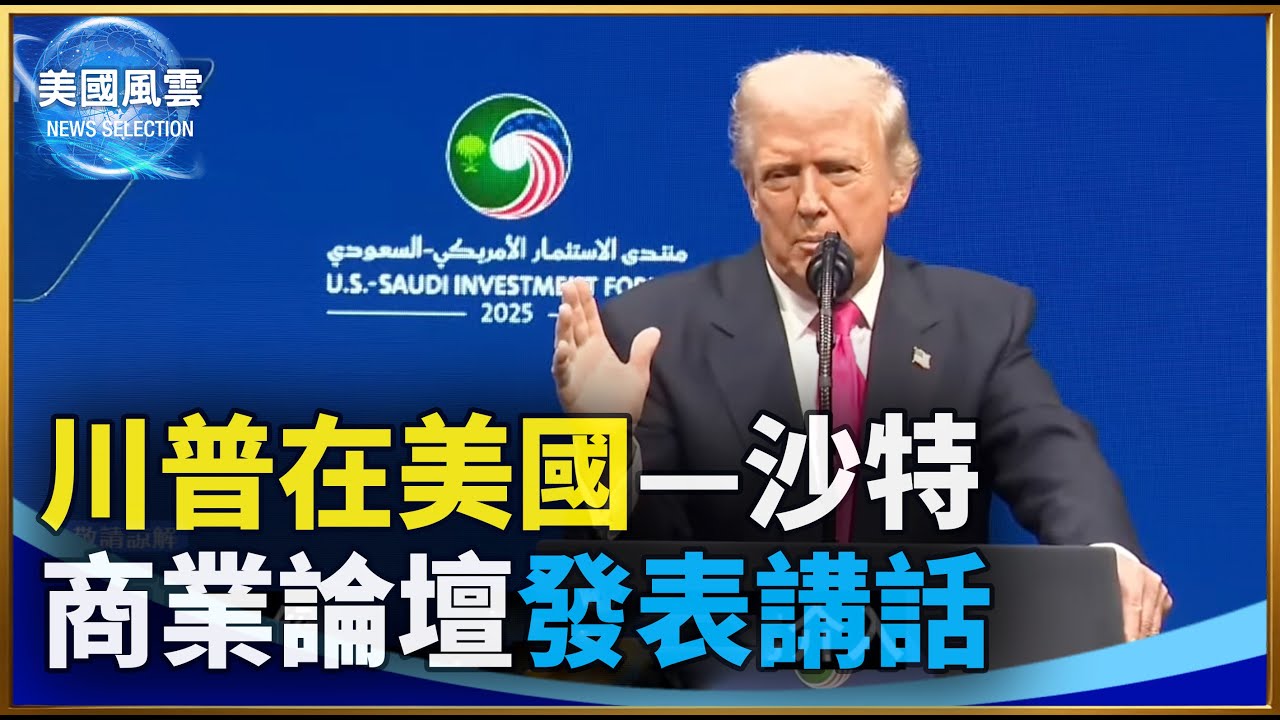
📺 Today’s recommended deep-dive video: https://www.youtube.com/watch?v=FAxo3_7suwY
The Trillion-Dollar Handshake: A New Era of US-Saudi Dominance
At the recent US-Saudi Investment Forum, President Donald Trump and Crown Prince Mohammed bin Salman unveiled a massive surge in bilateral cooperation, anchored by a jaw-dropping $1 trillion investment pledge. This transcript captures a pivotal moment where the world’s two energy superpowers align their interests across defense, artificial intelligence, and global diplomacy.
Core Question: How are the United States and Saudi Arabia leveraging their strategic partnership to dominate the future of energy, technology, and geopolitical stability?
Highlights
- Saudi Arabia commits to a historic $1 trillion investment in the US economy.
- The Kingdom is officially designated as a Major Non-NATO Ally, signaling a new level of military trust.
- A radical “28-day” permitting rule is introduced to accelerate AI infrastructure and energy projects.
- President Trump announces the “Board of Peace,” a high-level diplomatic body to resolve global conflicts.
⏱️ Reading time: approx. 8 minutes · Saves you about 55 minutes vs. watching.
Want to take notes while watching? Click the image below and let AI Notebook capture the key points for you 👇

Capital and Commitment: The Trillion-Dollar Pivot
Investing in the American Backbone
The forum opened with a monumental announcement from Crown Prince Mohammed bin Salman, who confirmed that Saudi Arabia would increase its investment in the United States to a staggering $1 trillion. This capital flow is specifically targeted at high-growth sectors including rare minerals, finance, and advanced defense manufacturing to ensure mutual economic resilience.
President Trump highlighted that this influx of capital serves as the primary engine for his “Made in America” revival, focusing heavily on the creation of high-paying industrial jobs. By shifting Saudi wealth into the US heartland, the administration aims to rebuild the domestic middle class while providing the Kingdom with a secure, innovative environment for its sovereign wealth diversification. This is not merely a trade deal; it is a fundamental reconfiguration of global capital.
Whether you are a local worker or a global CEO, the message remains clear: the United States is positioning itself as the most aggressive destination for international investment.

💡 Digging Deeper
Q: Why is the $1 trillion figure significant compared to previous years?
A: It represents a massive escalation from the $600 billion initially pledged, signaling a deeper trust in US market stability and the current administration’s deregulation efforts.
Q: What role does the Public Investment Fund (PIF) play here?
A: The PIF, represented by Governor Yasir Al-Rumayyan, acts as the primary vehicle for these investments, bridging the gap between Saudi “Vision 2030” and American industrial needs.
The AI Revolution and Energy Independence
Cutting the Red Tape
To facilitate the construction of massive $50 billion AI data centers, the administration is introducing a radical “28-day” maximum for all federal permitting processes. This move is designed to bypass decades of bureaucratic stagnation that previously forced tech giants to wait up to 20 years for project approvals.
American and Saudi firms are now being encouraged to build their own dedicated power plants to support these energy-hungry AI ecosystems. This decentralized approach prevents the overloading of the existing 200-year-old electric grid while allowing companies to sell excess power back to the public system. It is a win-win for infrastructure.
Innovation cannot wait for a slow government. If we want to lead China in the AI race, we must move at the speed of business, not the speed of a committee.

💡 Digging Deeper
Q: How will AI plants handle their massive electricity requirements?
A: President Trump is allowing these companies to build on-site nuclear or natural gas plants, effectively turning tech campuses into self-sustaining utilities.
Q: Will this regulatory shift affect environmental standards?
A: The administration claims the 28-day rule focuses on efficiency rather than lowering standards, though it emphasizes “clean, beautiful coal” and nuclear as preferred energy sources.
Geopolitics: The “Board of Peace”
A Strategic Military Alliance
The Kingdom of Saudi Arabia has officially been designated as a Major Non-NATO Ally, a status reserved for the most trusted partners of the United States. This designation facilitates the sale of advanced military hardware, including F-47 jets and hundreds of American-made tanks, reinforcing the Kingdom’s role as a regional stabilizer.
Beyond military hardware, the focus shifted to a new diplomatic initiative: the “Board of Peace.” Chaired by Donald Trump with the Crown Prince as a distinguished member, this board aims to settle long-standing conflicts through economic leverage and personal diplomacy. The board has already targeted conflicts in Sudan and the Middle East for immediate mediation.
Peace is a byproduct of strength and transactional clarity. When nations respect our economic power, they are far more likely to come to the bargaining table.

Key Takeaways
The US-Saudi partnership has evolved from a traditional “oil-for-security” arrangement into a diverse, high-tech alliance. By pledging $1 trillion, Saudi Arabia is betting on the long-term success of American deregulation and industrial policy. Meanwhile, the US is providing the Kingdom with the military and technological tools it needs to remain the dominant force in the Middle East.
Crucially, the administration’s focus on “drill, baby, drill” and nuclear energy ensures that both nations can power the AI-driven economy of the future. The introduction of the 28-day permitting rule and the “Board of Peace” represents a shift toward a “CEO-led” foreign policy, where economic incentives and speed are prioritized over traditional, slow-moving diplomatic channels.
Ultimately, this forum serves as a signal to the world that the US and Saudi Arabia intend to remain the primary architects of global energy and technology.
Q&A
Q1: What is the significance of the “Major Non-NATO Ally” status for Saudi Arabia?
A: It is a rare honor that signifies a high level of trust, granting the Kingdom preferential access to US military equipment, training, and defense research cooperation without the formal obligations of NATO membership.
Q2: How does the administration plan to use tariffs in international diplomacy?
A: President Trump explicitly stated that tariffs are used as a negotiating tool to settle wars. For example, he mentioned using the threat of 350% tariffs to prevent nuclear escalations between India and Pakistan.
Q3: What is the 28-day rule for permitting?
A: It is a new mandate requiring federal agencies to approve or deny permits for large-scale energy and infrastructure projects within 28 days, down from the previous average of several years.
Q4: How are AI companies being told to handle their energy needs?
A: Instead of relying on the national grid, AI companies are encouraged to build their own on-site power generation plants, with expedited approvals for natural gas and nuclear options.
Q5: What is the “Board of Peace”?
A: A newly proposed high-level diplomatic body chaired by Donald Trump and including world leaders like the Crown Prince, intended to mediate global conflicts like those in Sudan and Gaza through direct negotiation.
Q6: Why was the Federal Reserve Chairman criticized during the speech?
A: Trump criticized the Fed for high interest rates and the $4 billion renovation of its headquarters, arguing that the Chairman lacks the “instincts” necessary to manage the economy effectively.
Q7: Will international workers be allowed into the US for these new plants?
A: Yes, the President indicated that specialized foreign workers would be welcomed to help open advanced factories (like chip plants) and train the American workforce, emphasizing that “MAGA” includes bringing in the best talent to ensure success.