📺 Today’s recommended deep-dive video: https://www.youtube.com/watch?v=LjqbdCRUr9k
A Bold Step Across the Line: The Historic Trump-Kim DMZ Meeting
In an unprecedented breach of diplomatic protocol, a sitting US president stepped across the Korean Demarcation Line into North Korean territory. What began as a social media invitation transformed into a historic handshake that reignited stalled nuclear talks in the heart of the world’s most fortified border.
Core Question: Can a symbolic gesture at the DMZ overcome decades of geopolitical mistrust and technical stalemate between Washington and Pyongyang?
Highlights
- Donald Trump becomes the first sitting US president to enter the DPRK.
- The meeting marks a shift back to “top-down” diplomacy following the collapsed Hanoi summit.
- Tangible de-escalation at the DMZ includes the removal of firearms and propaganda speakers.
- South Korea’s President Moon Jae-in solidifies his role as a crucial mediator in the peace process.
⏱️ Reading time: approx. 8 minutes · Saves you about 80 minutes vs. watching.
Want to take notes while watching? Click the image below and let AI Notebook capture the key points for you 👇

The Logistics of a Spontaneous Summit
Breaking Protocol at the 38th Parallel
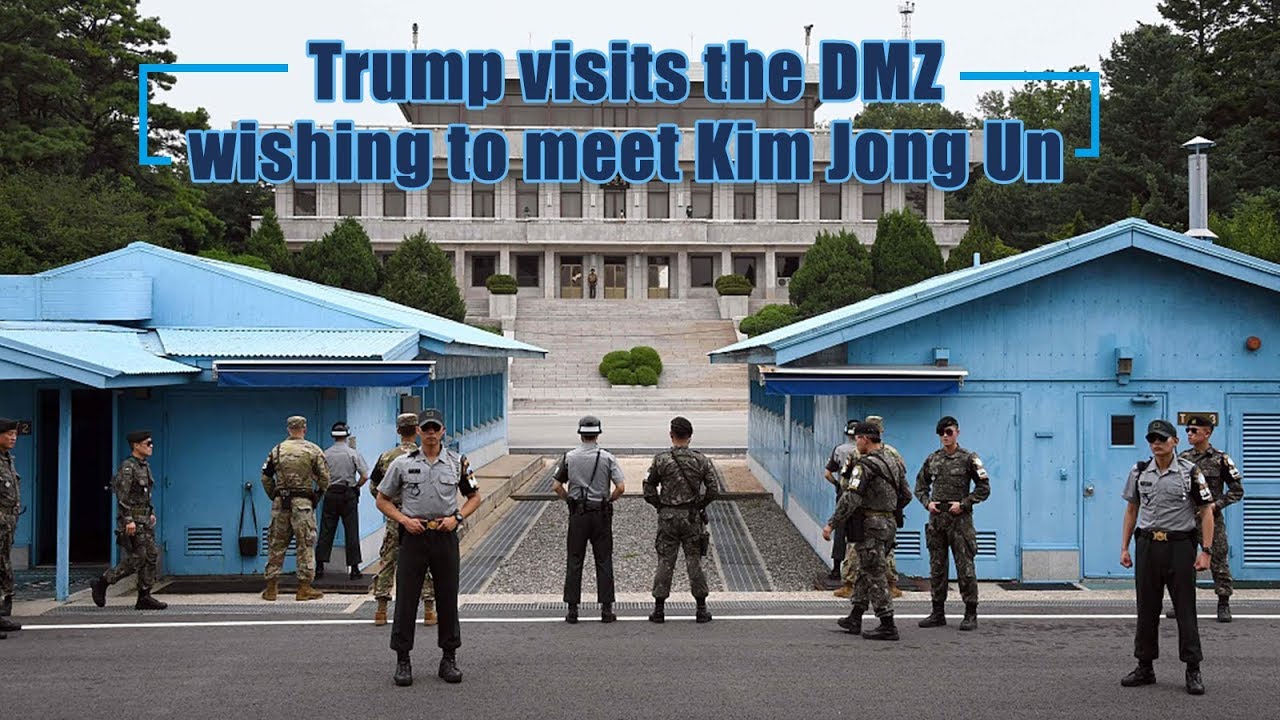
History was made not through months of bureaucratic planning, but through a flurry of activity that culminated in a historic handshake at the Joint Security Area (JSA).
While the visit to the DMZ was officially scheduled to address US and South Korean troops, the real momentum shifted when President Trump extended a social media invitation to Chairman Kim Jong-un. The atmosphere at the border was described as “festive” yet electric, with helicopters ferrying the US and South Korean leaders into a zone that, only years prior, was defined by helmeted soldiers facing off with firearms.
Experts suggest that while the meeting appeared spontaneous, the sheer volume of security and the presence of top officials like Mike Pompeo and Jared Kushner indicate that back-channel communications had been smoothing the path for days. This event represents a departure from traditional “bottom-up” diplomacy, where working-level agreements precede a leader’s meeting, favoring instead a “top-down” approach where the leaders’ personal rapport dictates the pace of progress.

💡 Digging Deeper
Q: Was this meeting truly spontaneous?
A: While Trump billed it as a last-minute “hello,” the logistics of moving two heads of state into the high-security JSA suggest significant behind-the-scenes coordination.
Q: What is the JSA exactly?
A: The Joint Security Area is the only portion of the DMZ where North and South Korean forces stand face-to-face; it has recently been converted into a gun-free zone to facilitate peace talks.
Stepping into the North
A Historic Twenty Steps
The visual of Donald Trump walking twenty paces into North Korean territory alongside Kim Jong-un provided the kind of diplomatic optics that decades of war and sanctions had failed to produce.
“I never expected to meet you at this place,” Kim Jong-un remarked through a translator, his voice captured by global media for a rare moment.
This act was more than just a photo opportunity; it was a physical manifestation of Trump’s “business-style” diplomacy, which prioritizes personal relationships over rigid State Department frameworks. By stepping over the line, Trump signaled a willingness to move past the “Axis of Evil” rhetoric of the early 2000s and the “Strategic Patience” of the Obama era, both of which Pyongyang viewed as existential threats.

💡 Digging Deeper
Q: Why did Kim Jong-un invite Trump to cross the line?
A: It was a powerful symbolic gesture of trust and respect, aimed at showing the North Korean public that their leader is recognized as a global peer by the US President.
The Geopolitical Stakes
Election Politics and Regional Pressure
For President Trump, this meeting serves as a significant diplomatic legacy item as he approaches the 2020 election cycle, allowing him to claim a “victory” in stabilizing a region that was on the brink of nuclear conflict in 2017.
However, the “hard facts” of denuclearization remain stubbornly unchanged.
DPRK has not just nuclear technology, but a stockpile of weapons and missiles that serve as Kim Jong-un’s primary bargaining chip. Without a guarantee of security from major powers—including China and Russia—Pyongyang is unlikely to dismantle its nuclear program entirely, regardless of how “good” the personal feelings are between the two leaders.

💡 Digging Deeper
Q: Has the “Mistrust Gap” actually narrowed?
A: While personal rhetoric has softened—moving from “Rocket Man” and “Dotard” to “great friendship”—fundamental disagreements over the timing of sanctions relief versus denuclearization persist.
Q: What is China’s role in this?
A: China remains a vital security guarantor for the DPRK; the recent meeting between Xi Jinping and Kim Jong-un in Pyongyang helped set the stage for this DMZ breakthrough.
From War Zone to Peace Zone
Tangible Changes on the Ground
Beyond the high-level meetings, the DMZ itself has undergone a radical transformation over the last twelve months, moving from a symbol of confrontation to one of potential connectivity.
The loud propaganda speakers that once blared across the border have been silenced, and the minefields are being cleared to make way for a neutral zone where troops can move freely.
South Korean President Moon Jae-in is pushing for even more ambitious projects, including the reopening of the Kaesong Industrial Complex and the reconnection of cross-border railways. The dream of a train journey from Pusan to Paris is technically possible, as the tracks already exist; only the political hurdle of international sanctions stands in the way of a multi-billion dollar infrastructure upgrade for the North.

💡 Digging Deeper
Q: What happened to the propaganda balloons?
A: The South Korean government has largely stopped the release of leaflets by defectors to maintain the current de-escalation momentum.
Q: Can economic cooperation happen under current sanctions?
A: No. Major projects like the Kaesong Industrial Complex require a partial lifting of UN Security Council sanctions, which the US has so far refused to grant without concrete denuclearization steps.
Key Takeaways
The meeting at the DMZ is a masterpiece of symbolic diplomacy, providing both Donald Trump and Kim Jong-un with domestic political wins while temporarily lowering the risk of military conflict. By becoming the first sitting US president to step onto DPRK soil, Trump has effectively reset the diplomatic clock, moving past the failure of the Hanoi summit and re-establishing a direct line of communication that bypasses the friction of working-level officials.
However, the underlying structural issues remain as complex as ever. The “business-like” give-and-take favored by Trump has yet to produce a technical roadmap for the decommissioning of North Korea’s nuclear facilities, such as Yongbyon. Furthermore, the role of South Korea as a mediator is crucial; President Moon Jae-in has successfully positioned the JSA as a “peace zone,” but his hopes for economic integration are entirely dependent on Washington’s willingness to ease sanctions.
Ultimately, while the images of the handshake are historic, the world now waits to see if this “photo op” can be converted into a formal treaty. The transition from a 1953 armistice to a permanent peace regime requires more than just good feelings; it requires a geopolitical consensus that has eluded the international community for over six decades.
Q&A
Q1: What is the significance of the “first sitting president” status?
A1: Previous presidents like Clinton and Carter visited only after leaving office or remained on the South side. Trump’s crossing signifies a de facto recognition of the DPRK’s territory and leadership.
Q2: Did the Hanoi summit failure impact today’s meeting?
A2: Yes. The stalemate in Hanoi necessitated this high-level “reset” to prove to both domestic audiences that the peace process was not dead.
Q3: What does South Korea gain from stepping aside during the Trump-Kim talk?
A3: President Moon Jae-in prioritized the bilateral US-DPRK breakthrough, believing that any progress there would naturally lead to the inter-Korean economic cooperation he desires.
Q4: What is the “Axis of Evil” mentioned in the report?
A4: A term used by George W. Bush in 2002 to group North Korea with Iraq and Iran, which Pyongyang cites as the beginning of modern hostilities and the justification for their nuclear program.
Q5: Will sanctions be lifted soon?
A5: Unlikely. While some regional powers suggest partial lifting in exchange for closing specific sites, the US maintains a “maximum pressure” stance until total denuclearization is achieved.
Q6: How has the physical environment of the DMZ changed?
A6: It has shifted from a high-tension zone with automatic weapons and propaganda to a demilitarized area where soldiers from both sides have begun to interact without helmets or firearms.
Q7: What is the “top-down” style of leadership?
A7: A diplomatic method where the heads of state make primary decisions and build rapport first, leaving the technical details to be filled in later by subordinates.