📺 Today’s recommended deep-dive video: https://www.youtube.com/watch?v=7WaxUGznxJ0
A Fragile Thaw: Reopening the U.S.-China Dialogue Amidst a Global Chip War
High-level meetings in Washington suggest a potential cooling of tensions between the world’s two largest economies after months of frozen communication. However, beneath the diplomatic handshakes lies a fierce battle for technological supremacy and shifting alliances that continue to threaten regional stability.
Core Question: Can renewed ministerial dialogue between the U.S. and China survive the intensifying “chip war” and the strategic dilemmas facing regional allies like South Korea?
Highlights
- First Cabinet Meeting in DC: Minister Wang Wentao and Secretary Gina Raimondo held the first Chinese ministerial-level visit to the U.S. during the Biden presidency.
- “China House” Shakeup: Internal friction and high vacancy rates at the U.S. State Department’s China coordination office signal a possible shift in American policy execution.
- The Micron Fallout: China’s ban on Micron products forces South Korean semiconductor giants into a precarious choice between Washington’s security demands and Beijing’s market.
- Seoul’s Diplomatic Tightrope: South Korea faces a massive trade deficit and domestic backlash over “concessions” to Japan regarding Fukushima wastewater and historical symbols.
⏱️ Reading time: approx. 8 minutes · Saves you about 30 minutes vs. watching.
Want to take notes while watching? Click the image below and let AI Notebook capture the key points for you 👇

Diplomatic Re-engagement and the “China House” Transition
Testing the Waters in Washington
The recent meeting between Chinese Commerce Minister Wang Wentao and U.S. Commerce Secretary Gina Raimondo represents a critical milestone in post-balloon incident diplomacy. This engagement is the first time a Chinese minister has visited the U.S. capital under the current administration, signaling a mutual desire to prevent the bilateral relationship from entering a complete freefall.
While the talks were described as “candid” and “professional,” they primarily focused on the nuts and bolts of trade, such as semiconductor policy and export controls.
The arrival of the new Chinese Ambassador, Xie Feng, further underscores this attempt at stabilization. Upon his arrival, Xie emphasized that the relationship concerns the “future and destiny of the world,” calling on the U.S. to meet China halfway through concrete actions rather than just rhetoric.

Turbulent Waters at the State Department
Parallel to these high-level meetings, the U.S. State Department is undergoing a significant personnel reshuffle within its “China House”—formally known as the Office of Chinese Affairs Coordination. Rick Waters, the head of this unit, is set to step down amidst reports of low morale and a staggering 40% vacancy rate within the team.
This internal instability suggests a deep-seated disagreement within the Biden administration regarding how to balance competition with engagement.
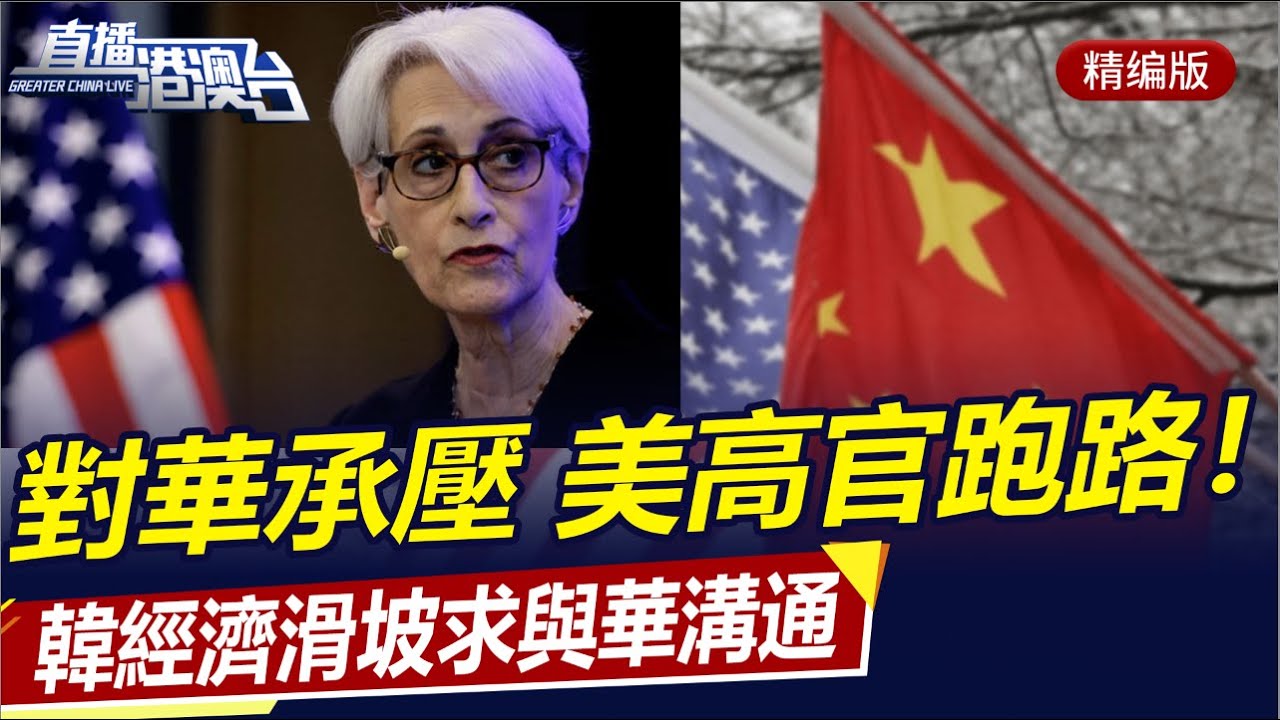
Critics point out that the departure of key figures like Deputy Secretary Wendy Sherman and Rick Waters reflects the “impossible task” of simultaneously suppressing China’s technological growth while maintaining a stable economic partnership. As these “implementers” of China policy exit, observers are watching closely to see if Washington will adopt a more hawkish or more pragmatic stance in the coming months.
💡 Digging Deeper
Q: Is the “China House” shakeup a sign of cooling hostility?
A: Not necessarily. It more likely reflects internal friction over how to manage the competition, rather than a retreat from the competitive strategy itself.
Q: What does “candid and professional” mean in diplomatic speak?
A: It usually indicates that both sides spoke very bluntly about their disagreements without the fluff of polite consensus, focusing strictly on business.
The Semiconductor Battlefield: Micron and the Allied Dilemma
The Logic of Technology Hegemony
Washington’s primary objective remains the maintenance of a “technological monopoly,” particularly in the realm of high-end semiconductors. By leveraging export controls and the “Chip and Science Act,” the U.S. aims to stifle Chinese advancements in AI and quantum computing. This policy has transformed the semiconductor industry from a globalized market into a geopolitical frontline where national security trumps economic efficiency.
China has begun to retaliate with its own legal and regulatory tools, most notably the recent ban on Micron Technology products following a security review.
This move is a direct message to Washington: China will not remain passive while its tech firms are blacklisted. By targeting Micron, Beijing is demonstrating that it can also leverage its massive domestic market to impose costs on American firms, creating a “tit-for-tat” cycle that threatens global supply chain stability.
The South Korean Squeeze
The Micron ban has placed South Korea in a devastating strategic bind. With Micron potentially losing billions in sales, U.S. lawmakers have explicitly warned Seoul that Korean companies like Samsung and SK Hynix should not fill the market vacancy left behind. This “economic coercion” from an ally forces South Korea to choose between its most important security partner and its largest export market.
The South Korean business community is increasingly vocal about the risks of this “binary choice” forced upon them by Washington.
If Korean firms are prevented from expanding their footprint in China, they risk losing their competitive edge to local Chinese firms that are rapidly catching up in quality and price. Consequently, South Korea’s trade deficit with China has reached alarming levels, marking a historic shift for an economy that once relied on a massive trade surplus with its neighbor.
Seoul’s Diplomatic Gamble and Domestic Backlash
The Fukushima Wastewater Controversy
President Yoon Suk-yeol’s administration is facing intense domestic scrutiny for its perceived “subservience” to Japanese interests. A recent 21-member South Korean delegation returned from inspecting the Fukushima nuclear power plant, but the mission was widely criticized by the opposition as a “three-five visit”—no sampling, no public verification, and no independent names.
Critics argue that the inspection was designed to provide political cover for Japan’s plan to release treated radioactive water into the sea.
The South Korean public remains deeply skeptical, with protesters in Seoul accusing the government of “passive lying flat” and abdicating its duty to protect national health. This issue has become a flashpoint for anti-government sentiment, complicating Yoon’s efforts to forge a “trilateral axis” with the U.S. and Japan.

Symbols of the Past
Adding fuel to the fire is the controversy surrounding the “Rising Sun” flag. Reports that a Japanese Maritime Self-Defense Force frigate may sail into Busan flying the flag—a symbol synonymous with Japanese militarism and the annexation of the Korean Peninsula—have reignited historical trauma. While the South Korean government cites “international practice” to justify the move, the emotional impact on the populace is profound.
This situation reflects a broader diplomatic dilemma: in its haste to align with the U.S.-led security framework, the Yoon administration may be moving faster than its public is willing to follow.
The Chinese Ambassador to South Korea, Xing Haiming, has spoken bluntly about the “risk of further deterioration” in bilateral relations. He warned that if South Korea continues to cross “red lines” regarding the Taiwan question and other core Chinese interests, the damage to the relationship could be subversive and irreversible.
Key Takeaways
The current state of U.S.-China relations is a paradox of high-level engagement and deep-seated structural conflict. While ministerial meetings offer a glimmer of hope for stability, the underlying battle for technological dominance—the “chip war”—continues to escalate. This competition is no longer contained to the two superpowers; it is dragging allies like Japan and South Korea into a zone of extreme economic and political risk.
South Korea, in particular, serves as a cautionary tale for the “choice of sides” dilemma. By pivoting heavily toward Washington and Tokyo, Seoul has seen its economic leverage with China wither, leading to record trade deficits and domestic unrest. The challenge for middle powers in the Asia-Pacific will be finding a way to maintain security alliances without sacrificing the economic foundations that have fueled their growth for decades.
Ultimately, the “thaw” in U.S.-China relations remains fragile. Unless both sides can move past a “one thing said, another thing done” approach, the global community should prepare for a long, complicated period of geopolitical turbulence. Genuine stability will require more than just “candid” talks; it will require a fundamental reassessment of how to coexist in a multipolar world.
Q&A
Q1: Why is the meeting between Wang Wentao and Gina Raimondo considered a “test case”?
A: It is the first cabinet-level face-to-face meeting on U.S. soil since Biden took office, occurring after the “balloon incident” freeze. It tests whether the two nations can separate economic management from broader military and political tensions.
Q2: What is the “China House” and why is it losing staff?
A: Formally the Office of Chinese Affairs Coordination, it was created by Secretary Blinken to centralize China policy. It is losing staff due to high-pressure workloads and internal friction over the conflicting goals of “competing” versus “communicating.”
Q3: How does the Micron ban affect the global semiconductor market?
A: It signals China’s willingness to use its market size as a defensive tool. It creates a gap in the memory chip market that U.S. allies (like South Korea) are being pressured not to fill, disrupting standard market dynamics.
Q4: Why is South Korea’s trade deficit with China so significant?
A: For 27 years, South Korea enjoyed a surplus. The current deficit reflects both a decline in chip exports and the fact that Chinese manufacturers are now producing high-quality cars, smartphones, and electronics that previously were imported from Korea.
Q5: What is the main criticism of the South Korean inspection of Fukushima?
A: The opposition claims it was a “formality” because the team did not take its own water samples and appeared to rely on data provided by Japan and the IAEA, leading to fears that the mission was an “exoneration” for Japan’s discharge plans.
Q6: What “red line” did Ambassador Xing Haiming warn South Korea about?
A: He specifically highlighted the Taiwan question. He warned that any “provocation” or “collision” regarding China’s core national interests would have a subversive impact on China-South Korea relations.
Q7: Is the U.S.-China “thaw” likely to lead to a major policy change?
A: Experts suggest it is unlikely. The Biden administration seeks to maintain a “competitive advantage” while managing risks, a contradictory goal that ensures the relationship will remain complex and strained despite increased dialogue.