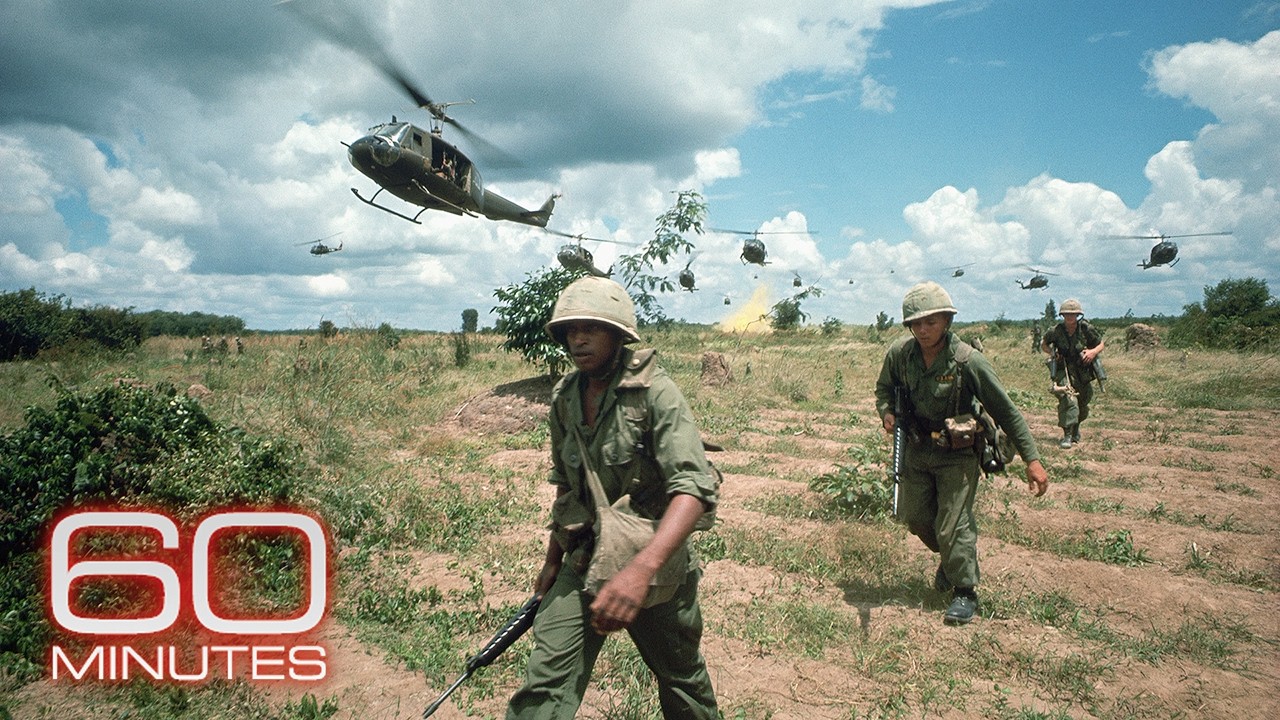
📺 Today’s recommended deep-dive video: https://www.youtube.com/watch?v=_KAO9gjQhX8
Echoes of the Rice Paddies: The Unfinished Business of Vietnam
Decades after the fall of Saigon, the legacy of the Vietnam War remains a complex web of diplomatic healing, systemic betrayal, and psychological trauma. From the redemption of a former prisoner turned ambassador to the suppressed truth behind the Gulf of Tonkin, the conflict continues to shape the American identity and its relationship with the truth.
Core Question: How has the legacy of the Vietnam War evolved through the lenses of political reconciliation, institutional accountability, and the long-term struggle for veteran recognition?
Highlights
- The transformation of Pete Peterson from a POW in the “Hanoi Hilton” to the first U.S. Ambassador to Vietnam.
- The exposure of the “Lost Commandos” and the CIA’s decade-long abandonment of South Vietnamese agents.
- A forensic look at the Gulf of Tonkin incident, revealing the internal doubts that led to a massive military escalation.
- The grassroots efforts of veterans to find MIAs on both sides to find closure for families and themselves.
⏱️ Reading time: approx. 35 minutes · Saves you about 256 minutes vs. watching.
Want to take notes while watching? Click the image below and let AI Notebook capture the key points for you 👇

The Ambassador and the Infantry: Faces of Reconciliation
From the “Hanoi Hilton” to the Embassy
Captain Douglas “Pete” Peterson’s story is one of the most improbable arcs in American diplomatic history, moving from a prisoner of war to the first American ambassador in Hanoi. Shot down during his 67th mission in 1966, he survived horrific fractures and six and a half years of torture in the infamous Hanoi Hilton, only to return decades later to represent the nation that once held him captive. Peterson famously remarked that he “left his hate at the door,” choosing to focus on constructive diplomacy rather than the “time scars” left by his captors.
Peterson’s return was not just a personal victory but a strategic pivot for a United States eager to normalize relations while still grappling with the unresolved accounting of missing soldiers.
His journey represented a symbolic closing of the circle, where a man who was once bit by a militia man in a rice paddy could later be welcomed by that same man as a “brother.” This reconciliation was controversial among veterans, yet Peterson maintained that the war was over and the only path forward was through engagement and transparency.

💡 Digging Deeper
Q: Why did Peterson’s co-pilot believe Peterson was dead?
A: Lieutenant Bunny Tally tried to carry a severely injured Peterson through the brush, but Peterson’s screams of pain were so intense that he ordered Tally to leave him behind and escape, leading Tally to assume he wouldn’t survive the night.
Q: How did the Vietnamese villagers react to Peterson’s return?
A: The former militia men who captured him expressed a desire to welcome him like a brother, showing that the sentiment for peace was mutual among those who had fought on the ground.
Q: What was the “Hanoi Hilton” actually like for Peterson?
A: It was a site of extreme physical pain and interrogations where prisoners were often manacled to boards for weeks, yet it was also a place where prisoners developed a dark sense of humor to survive.
Deception and Desertion: The Institutional Failures
The Lies of the Gulf of Tonkin
The Vietnam War’s massive escalation was predicated on the Gulf of Tonkin incident on August 4, 1964, an event that Senate investigators later concluded likely never happened as described. While a conflict did occur on August 2nd, the subsequent reports of torpedoes on the 4th were plagued by “freak weather effects” and “overeager sonar men,” according to the task force commander’s own cables. Despite these internal doubts, the Johnson administration presented the attack as a certainty to Congress to secure the Tonkin Gulf Resolution.
The resolution gave the President nearly unlimited power to wage war without a formal declaration, a move that former Senator Wayne Morse called a “deliberate aggressive act” to justify a pre-planned conflict.
Patrick Park, the man in charge of the Maddox’s guns, testified that there was absolutely nothing to shoot at that night and that the radar targets were likely just their own sister ship, the Turner Joy. This revelation highlights a terrifying reality: the U.S. entered its longest conflict based on misinterpreted radar blips and political opportunism.

💡 Digging Deeper
Q: What was the “Black Box” on the Maddox?
A: It was a sophisticated electronic interception unit used to monitor North Vietnamese communications and, according to some reports, stimulate their radar to pinpoint installations.
Q: Did the U.S. admit to being the aggressor first?
A: The Maddox fired “warning shots” on August 2nd, but the U.S. maintained this was self-defense, while the North Vietnamese viewed the ship’s proximity to their islands as an invasion.
Q: How did Secretary McNamara handle the conflicting reports?
A: He reportedly told subordinates to “make damn sure” there was an attack while simultaneously pushing for the resolution in Washington, glossing over the cables that expressed extreme doubt.
The Invisible Battlefield: Agent Orange and the Psyche
The Legacy of Chemical Warfare and PTSD
Agent Orange was a defoliant used to strip away the jungle canopy, but its byproduct, dioxin, proved to be a toxic legacy that continues to poison the soil and the human genome. Thousands of American veterans and millions of Vietnamese civilians have suffered from cancers, spinabifida, and other birth defects linked directly to this chemical. Despite 25 years of petitions, the U.S. government only recently began compensating veterans for a limited number of associated illnesses, leaving many Vietnamese victims without aid.
The war also left deep psychological scars, with over a million veterans suffering from Post-Traumatic Stress Disorder (PTSD), characterized by violent flashbacks and social isolation.
For years, the Veterans Administration was accused of being “lacadasical” in recognizing the disorder, often treating veterans as “nuts” rather than victims of trauma. The creation of “Vet Centers”—storefront counseling sites—provided a lifeline, but these programs faced constant threats of closure from an institution that preferred traditional, less effective hospital settings.

💡 Digging Deeper
Q: What are “Tunnel Rats”?
A: They were a specialized, all-volunteer unit of soldiers who entered the narrow, booby-trapped Vietcong tunnels head-first to root out the enemy and destroy underground command centers.
Q: How did the Vietnamese deal with gas in the tunnels?
A: They used ingenious homemade gas masks filled with charcoal or even gauze soaked in urine to filter out the CS gas pumped in by American forces.
Q: Is dioxin still a threat in Vietnam today?
A: Yes, Canadian researchers have found dioxin levels in human blood and breast milk near former U.S. bases that are 40 to 70 times higher than normal, suggesting it is still moving through the food chain.
The Battle for Memory: Monuments and Exiles
The Wall and the Rescues
The construction of the Vietnam Veterans Memorial in Washington D.C. served as a final battlefield for the war’s differing perceptions. Maya Lin, a 21-year-old Yale student, designed a minimalist black granite wall that was initially attacked as a “black ditch” and a “wall of shame” by conservative critics. They argued that a memorial without a flag or heroic statues was an insult to those who served, leading to a forced compromise where a statue and flag were added to satisfy political demands.
While the memorial honored the dead, others worked to save the living, such as John Rearen, a banker who returned to a collapsing Saigon to rescue 105 employees.
By falsifying adoption papers and claiming dozens of adults and children as his own family, Rearen managed to get his staff onto some of the last departing U.S. military cargo planes. His story stands as a rare beacon of individual heroism amidst the institutional failure of the official U.S. evacuation, which famously abandoned thousands of loyal South Vietnamese collaborators to their fate.
💡 Digging Deeper
Q: Why was the evacuation of Saigon considered a botch?
A: High-ranking officials, including Ambassador Graham Martin, delayed the evacuation to avoid showing “panic,” which resulted in the abandonment of thousands of high-risk Vietnamese who worked for the CIA.
Q: Who were the “Lost Commandos”?
A: They were South Vietnamese agents trained by the CIA and dropped into the North; when captured, the U.S. declared them dead to stop paying their families, even though they knew many were alive in prison.
Q: Why did Maya Lin’s design face so much opposition?
A: Critics felt it was too “passive” and lacked traditional patriotic symbols, reflecting the ongoing struggle to define the war as either a “noble cause” or a tragic mistake.
Key Takeaways
The Vietnam War was defined by a profound disconnect between the reality on the ground and the narratives projected by Washington. Whether it was the imaginary torpedoes in the Gulf of Tonkin or the false “blood bath” stories used to manipulate press coverage, the institutional instinct was often to “stretch the facts to fit the case.” This culture of misinformation not only led to the squandering of lives but also created a lasting rift in the public’s trust in government authority.
Recovery from the war has been a grassroots effort led by the soldiers themselves, rather than the bureaucracies that sent them. Veterans returning to Vietnam to help former enemies find their dead, or therapists setting up storefront centers to treat PTSD, represent the true path to healing. The war ended on paper in 1973, but for those living with the effects of Agent Orange, the trauma of the tunnels, or the guilt of abandoned allies, the conflict remains an ongoing struggle for recognition and peace.
Ultimately, the story of Vietnam is one of resilience and the human capacity to transcend even the most brutal betrayals. From John Rearen’s “cockamania” rescue plan to Pete Peterson’s diplomatic mission, individuals have consistently stepped into the gaps left by institutional failure. These acts of grace and accountability provide the only legitimate Requiem for a war that refuses to be forgotten.
Q&A
Q1: Who was Hugh Thompson and why was he considered a hero at My Lai?
A: Hugh Thompson was a helicopter pilot who saw U.S. soldiers murdering civilians at My Lai. He landed his chopper between the soldiers and the villagers, ordered his gunner to fire on American troops if they continued the massacre, and successfully airlifted survivors to safety.
Q2: What did Frank Snepp reveal about the CIA’s role in the final days of Saigon?
A: Snepp, a former CIA analyst, revealed that the agency botched the evacuation by ignoring intelligence that a negotiated settlement was impossible, leading to the abandonment of thousands of loyal Vietnamese agents and the loss of top-secret files.
Q3: How did the U.S. government treat the “Lost Commandos”?
A: The U.S. military wrote off hundreds of South Vietnamese commandos as dead to remove them from the payroll, despite knowing they were in North Vietnamese prisons. They were left behind for up to 20 years after the American POWs returned.
Q4: What is the primary symptom of PTSD discussed in the veterans’ groups?
A: The primary symptoms mentioned include “hyper-vigilance” (constantly scanning environments for threats), violent outbursts, flashbacks to specific traumatic events, and a profound sense of isolation from society.
Q5: Why did the Vietnam Veterans of America start a “veteran-to-veteran” exchange?
A: They realized that many American veterans held “war trophies” (diaries, photos, helmets) that could help Vietnamese families identify their 300,000 missing soldiers, hoping that this cooperation would lead to better accounting for the 1,600 missing Americans.
Q6: What was the debate over “amnesty” for draft resistors in Canada?
A: The debate was split between those who viewed the resistors as “criminals” who should face the music and those who saw them as “refugees” who made a moral choice against an unjust war. Many exiles refused to be “forgiven” by a government they deemed the true criminal.
Q7: What happened to the “Hanoi Hilton” building after the war?
A: While the facade of the prison remains as a historical site, the area where the cells once stood has been transformed into a luxury high-rise featuring a hotel, shopping mall, and convention center.