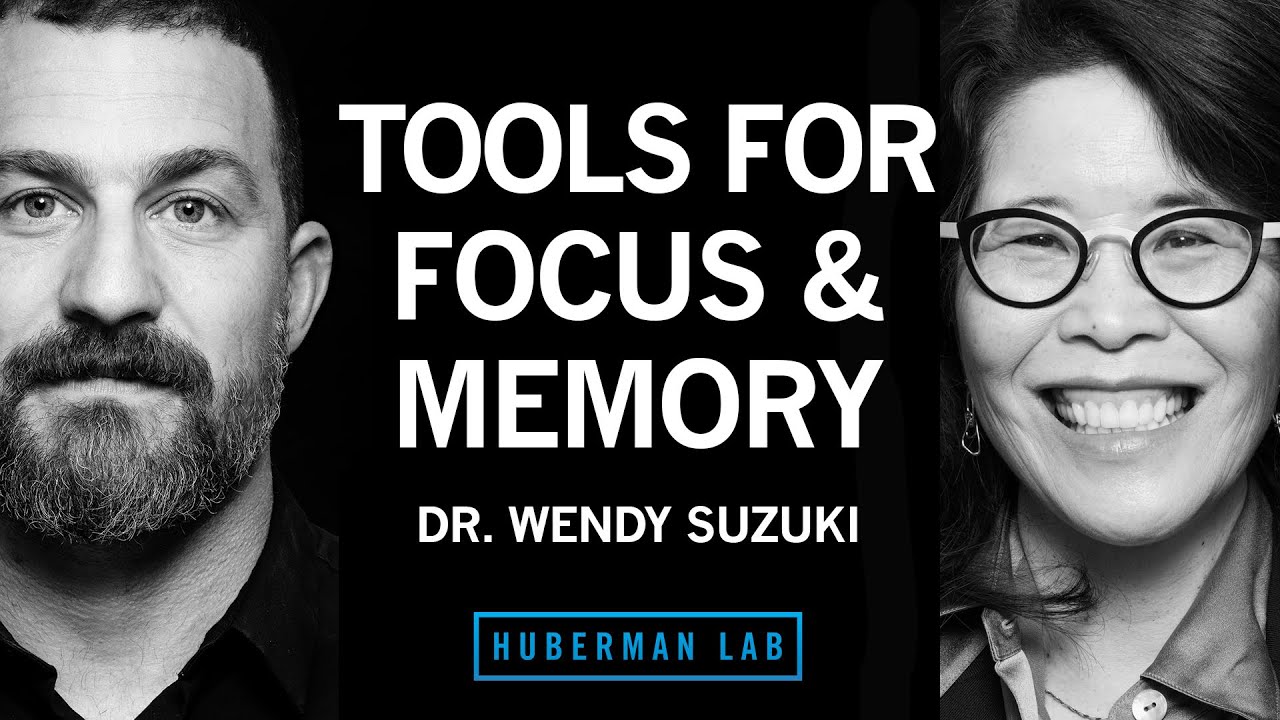
📺 Today’s recommended deep-dive video: https://m.youtube.com/watch?v=099hgtRoUZw
Build a Better Brain: The Neuroscience of Exercise, Memory, and Mindfulness
Dr. Wendy Suzuki reveals how a “neurochemical bubble bath” can literally reshape your hippocampus and shield your brain against aging. By leveraging simple behavioral tools like morning cardio, cold exposure, and targeted meditation, you can supercharge your daily focus and improve long-term cognitive health.
Core Question: How do physical movement and mindfulness practices physiologically enhance our capacity to learn, remember, and imagine?
Highlights
- The four pillars of memory: novelty, repetition, association, and emotional resonance.
- How aerobic exercise triggers BDNF to grow new neurons in the adult hippocampus.
- The synergy between muscle-derived myokines and liver-derived ketones in crossing the blood-brain barrier.
- A practical 10-minute protocol for meditation and daily cardio to combat modern “chatter” and anxiety.
⏱️ Reading time: approx. 7 minutes · Saves you about 100 minutes vs. watching.
Want to take notes while watching? Click the image below and let AI Notebook capture the key points for you 👇

The Anatomy of Remembering
The Hippocampus and Beyond
Memory is not just a recording of the past; it is the fundamental architecture of our personal identity.
Dr. Suzuki explains that the hippocampus, a seahorse-shaped structure deep in the temporal lobe, acts as the primary engine for encoding facts and events. Without it, as seen in the famous case of patient HM, we lose the ability to form new long-term memories while retaining only fragments of the distant past. This structure is visually beautiful, featuring intertwining subregions that have fascinated anatomists for centuries.
Beyond just storage, modern neuroscience views the hippocampus as a tool for imagination and future-planning. By associating disparate pieces of information—where, when, and what—the brain constructs simulations of things that haven’t happened yet. This “time domain” functionality means that a healthy hippocampus is just as necessary for dreaming up a new business plan as it is for remembering where you parked your car this morning.

💡 Digging Deeper
Q: Why do we remember negative events so much more clearly than positive ones?
A: This is a survival mechanism involving the amygdala. Threatening situations trigger an emotional resonance that “stamps” the memory into the hippocampus with one-trial learning to ensure future avoidance of danger.
Q: Is the hippocampus the permanent storage site for all memories?
A: It is more of an intermediate storage area. While it is essential for encoding, long-term memories eventually migrate to the neocortex for permanent storage, though the exact timeline of this transition remains a subject of intense debate.
Q: Can the hippocampus be physically seen in a standard MRI?
A: Yes, and its volume is often used as a marker for brain health. Shrinkage is typically associated with chronic stress or early-stage dementia.
The Exercise “Bubble Bath”
From Muscles to Mind
When you engage in aerobic exercise, your body begins a complex cross-talk with your brain through the bloodstream.
Two specific pathways—one originating in the muscles and the other in the liver—shuttle essential proteins and ketones across the blood-brain barrier to stimulate the release of Brain-Derived Neurotrophic Factor (BDNF). This process acts like a fertilizer for the brain, promoting the growth of brand-new neurons in the dentate gyrus.
Dr. Suzuki’s research suggests that even those who are already “mid-fit” can see incremental gains by increasing their exercise frequency. Every “drop of sweat” counts toward building a larger, more resilient hippocampus that can better withstand the natural cognitive decline associated with aging. By consistently raising your heart rate for 30 to 45 minutes, you are essentially giving your neural circuits a protective, regenerative soak that lasts for hours after the workout ends.

💡 Digging Deeper
Q: Does the type of exercise matter for these brain benefits?
A: Current data strongly favors cardiovascular/aerobic exercise because it consistently elevates heart rate and triggers the specific myokine and ketone pathways needed for BDNF production.
Q: How long does the cognitive boost from a single workout last?
A: Studies show that improvements in focus, reaction time, and mood persist for at least two hours following a 30-to-45-minute session of moderate exercise.
Q: What is the minimum effective dose for a mood boost?
A: Just 10 minutes of walking has been shown to significantly shift mood and decrease levels of hostility and anxiety.
Mindfulness and the Power of Presence
Countering Modern Anxiety
In an era of constant digital distraction, our attention is often fractured between a worrisome future and a regretted past.
Dr. Suzuki’s studies show that a mere 10 to 12 minutes of daily guided meditation can significantly lower stress and improve performance on focus-heavy tasks. Unlike medication, this behavioral tool trains the prefrontal cortex to anchor itself in the present moment, which is the only place where true cognitive efficiency exists. By practicing a simple body scan, subjects in her lab demonstrated a higher resilience to unexpected stressors and a marked decrease in baseline hostility.
Combining these mental breaks with physical activity creates a synergistic effect that Suzuki calls a “non-negotiable” routine. When you combine the adrenaline of a cold shower with the dopamine of exercise and the clarity of meditation, you set a physiological tone that favors high-level cognitive work.

💡 Digging Deeper
Q: What is a “body scan” meditation exactly?
A: It is a process of mentally scanning from your toes to your head, focusing on the sensations in each part of the body, which pulls your attention away from external “chatter” and into interoceptive awareness.
Q: Can meditation replace the need for exercise?
A: No, they serve different functions. Exercise builds the “hardware” (new neurons and blood flow), while meditation optimizes the “software” (attention and stress regulation).
Q: Why is the “present moment” so important for the brain?
A: The brain spends massive amounts of energy on “predictive coding”—guessing what will happen next. Focusing on the present reduces this metabolic load and lowers cortisol.
The Suzuki Protocol
Practical Tools for Daily Life
Implementing these changes doesn’t require a marathoner’s schedule; a simple 10-minute walk can immediately shift your mood and neurotransmitter balance.
The key is consistency and timing, as exercising right before you need to perform high-level mental work maximizes the two-hour window of peak cognitive enhancement. Shifting your exercise to the morning also aligns with your natural circadian rhythm, helping to spike cortisol when it is most beneficial for alertness rather than right before bed.
Sleep remains the foundational pillar, requiring seven to eight hours to allow the brain’s waste-clearance and memory-consolidation systems to function.
Finally, the use of positive affirmations—yelling or declaring one’s strengths during movement—can reshape the “chatter” of the inner mind. While it may feel awkward initially, this practice forces the brain to interrupt negative feedback loops and replace them with a self-image of capability. When layered onto the physiological benefits of cardio, these psychological shifts provide a comprehensive toolkit for anyone looking to optimize their brain for the long haul.

💡 Digging Deeper
Q: Is there such a thing as “too much” exercise for the brain?
A: Extremely intense, prolonged exercise can cause excessive cortisol spikes that may actually impair memory in the short term, but for most people, the danger is doing too little.
Q: How does a cold shower help with memory?
A: The cold stimulus triggers a significant and long-lasting release of dopamine and norepinephrine, which enhances alertness and primes the brain for learning.
Q: Should affirmations be done in silence?
A: Dr. Suzuki recommends saying them out loud. Using your own voice to declare positive statements has a more powerful effect on self-perception than mere silent thought.
Key Takeaways
The human brain is not a static organ; it is a dynamic system that requires specific biological signals to maintain its health and plasticity. Dr. Suzuki’s journey from a “workaholic” with a fading memory to a “gym rat” dean at NYU serves as a powerful case study for the transformative power of aerobic movement. By releasing BDNF through exercise, we aren’t just getting fit; we are actively growing the neural infrastructure required for memory and imagination.
Consistency is the most important variable in this equation. Whether it is a 10-minute walk, a 12-minute meditation, or an extra hour of sleep, these small, daily “tiny habits” accumulate into a massive cognitive reserve. This reserve acts as a buffer against the natural decline of aging, potentially delaying the onset of dementia and allowing for a higher quality of life well into our 80s and 90s.
Ultimately, the synergy of movement, mindfulness, and mindset allows us to take control of our neurobiology. By viewing our daily routine as a series of “neurochemical bubble baths,” we can move away from a reactive state of anxiety and into a proactive state of cognitive excellence.
Q&A
Q1: What are the four main things that make a specific event memorable?
A: Novelty (newness), Repetition (seeing it often), Association (linking it to known things), and Emotional Resonance (intense feelings).
Q2: What is BDNF and why is it called “brain fertilizer”?
A: Brain-Derived Neurotrophic Factor is a protein that promotes the survival of existing neurons and encourages the growth of new neurons and synapses in the hippocampus.
Q3: How does the liver contribute to brain health during exercise?
A: During exercise, the liver releases a ketone called beta-hydroxybutyrate, which crosses the blood-brain barrier and stimulates the production of BDNF.
Q4: What was the primary finding of the “Swedish Women” study?
A: Women who were highly fit in their 40s gained an average of nine additional years of “good cognition” compared to their low-fit peers when tracked into their 80s.
Q5: Can I get the benefits of meditation in just 10 minutes?
A: Yes. Dr. Suzuki’s research found that 10–12 minutes of daily meditation significantly improved focus and stress resilience after just eight weeks.
Q6: Why is morning exercise specifically recommended?
A: Because exercise provides a two-hour window of peak cognitive performance, it is best to do it right before you need to use your brain for your most important daily tasks.
Q7: Does exercise help with “hostility” and mood?
A: Yes, aerobic exercise has been shown to decrease scores in anxiety, depression, and hostility, while simultaneously increasing reported feelings of energy.