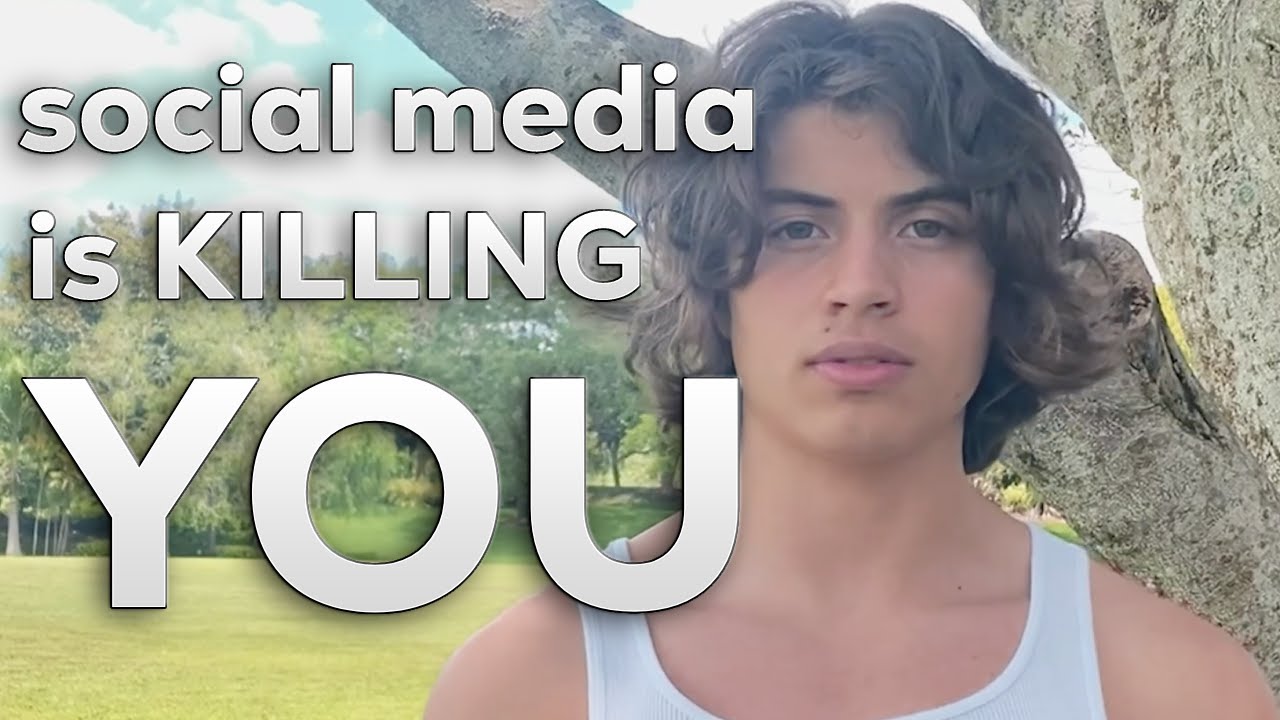
📺 Today’s recommended deep-dive video: https://www.youtube.com/watch?v=qso39oQc5-g
Beyond the Blue Ghost: Why I Quit Snapchat to Find Real Connection
For many teenagers, Snapchat isn’t just an app; it’s a primary social lifeline that ironically leaves them feeling more isolated than ever. This exploration dives into the psychological trap of digital validation, the “Loneliness Experiment,” and why cutting the cord might be the most “social” thing you ever do for your mental health.
Core Question: How does removing the facade of constant digital connectivity lead to deeper friendships and the focus required to achieve massive dreams?
Highlights
- The “Loneliness Paradox”: Why having 15 people texting you can still leave you feeling completely isolated.
- The “Experiment”: Announcing a departure from social media to reveal who your true friends actually are.
- Reclaiming the Social Battery: How quitting apps leads to higher charisma and more energy in real-world interactions.
- The 1% Rule: Using the “distraction-free” blueprint of historical masterminds like Mozart to chase modern success.
⏱️ Reading time: approx. 6 minutes · Saves you about 20 minutes vs. watching.
Want to take notes while watching? Click the image below and let AI Notebook capture the key points for you 👇

The Illusion of Digital Popularity
The Private Story Trap
Having 15 people texting you on Snapchat feels like popularity, but it’s often a house of cards built on dopamine rather than genuine love.
The author describes a specific, “pathetic” tactic common among users: creating duplicate private stories just to bait a specific person into swiping up. It highlights the extreme lengths we go to for validation, performing for an audience that might not even care, all while feeling a “punch in the gut” when we see others out having fun without us. We trade our peace of mind for a blue “delivered” mark, obsessing over why someone hasn’t replied for eight hours despite being active on the app.
This cycle of posting and waiting creates a thirsty environment for external validation. It makes us feel like we aren’t good enough if a specific person doesn’t engage with our curated life.

💡 Digging Deeper
Q: Why is Snapchat uniquely lonely compared to other apps?
A: Because it mimics communication without the depth of connection, leading to anxiety over response times and “seen” receipts.
Q: What is the “Private Story” trap?
A: It is the act of curating content for a specific subset of people (or even one person) to manipulate them into starting a conversation.
Q: How does the “blue checkmark” affect mental health?
A: It creates a sense of rejection; knowing someone saw your message and chose not to answer for hours triggers feelings of unworthiness.
The Loneliness Experiment
Testing the Strength of Your Circle
When the author announced he was leaving Snapchat and posted his phone number, the results were startlingly clear. Out of the 15+ people he communicated with daily, only two or three actually made the effort to reach out via text.
The realization was a “hard pill to swallow,” but it shifted his focus from the 12 people who didn’t care to the three people who genuinely did. Cherishing those few friendships and growing them deep is far more valuable than maintaining a hundred shallow digital streaks that offer nothing but empty numbers and ceiling photos. If you can’t count your real friends on one hand, you don’t actually have as many friends as the algorithm wants you to believe.
We are often addicted to the feeling of being messaged rather than the person sending the message. You are just a source of dopamine for them, and they are the same for you.

💡 Digging Deeper
Q: What happened when the author left Snapchat the first few times?
A: He felt lonely, returned to the app for a dopamine rush, and then realized the friends weren’t real, creating a toxic cycle.
Q: Is it “weird” to not have Snapchat in high school?
A: While others may call you a weirdo, you are often doing better mentally than those addicted to the app.
Q: What defines a “real friend” in this context?
A: Someone who texts your actual phone number to check on you, or someone you feel comfortable crying to in real life.
Reclaiming the Social Battery
Being Social Without Social Media
Contrary to popular belief, quitting social media doesn’t make you a hermit; it actually recharges your social battery for real-life interactions. When you don’t spend all day giving away your social energy to an app, you find you can hang out with friends for entire days without feeling drained or wanting to retreat into your phone.
There is a unique joy in seeing a friend and actually having things to talk about because you haven’t been watching their every move on a 24-hour story. The “mystery” of not knowing someone’s constant thoughts creates a healthy space for genuine curiosity and excitement when you finally reunite in person. You stop being a “foe” to your own mental health and start becoming a charismatic, present person who smiles at strangers and participates in life.
Social media provides a “fake dose” of socialness that leaves you empty. Without it, your natural hunger for connection drives you to be more engaging and outgoing when you are actually in public.

💡 Digging Deeper
Q: How does quitting affect small talk?
A: It improves it; you become more likely to engage with strangers or participate in class because you aren’t “socially full” from your phone.
Q: Why is “missing” your friends important?
A: It creates value in the relationship; constant connectivity removes the excitement of seeing someone after a period of absence.
Q: What is the “Social Dilemma” mentioned?
A: It refers to a documentary explaining how algorithms are designed by coders to keep users hooked for profit.
The Mozart Method for Success
The Path to the 1%
Success is often defined by doing what the other 99% are unwilling to do, which in the modern age means putting down the phone. If two people have the same dream—like becoming a professional pianist—the one spending four hours a day practicing their craft will always outpace the one scrolling through TikTok memes.
Historical greats like Mozart and Beethoven didn’t have their brainpower hijacked by algorithms designed to keep them scrolling; their only “distraction” was their own creative muse. By removing the digital noise, you allow your brain to return to its natural state of deep focus, where you can analyze, create, and master a skill without constant interruptions.
We need to be the people who are actually chasing dreams, not just performing a “cool” version of ourselves for a story.

💡 Digging Deeper
Q: How does the “Piano Analogy” work?
A: It compares two versions of yourself: one who practices for 3.5 hours and one who scrolls for 3.5 hours. The non-scroller always wins.
Q: What is the “Walter White” rule of social media?
A: “Do not smoke your own supply”—meaning, you can use social media for business or as a portfolio, but don’t get addicted to using it yourself.
Q: Is social media entirely useless?
A: No, it can be a tool for business or a portfolio, provided you delete the app after posting and avoid the “likes/comments” dopamine trap.
Key Takeaways
Quitting Snapchat and other addictive social media platforms is not about becoming a loner; it is about auditing your life to see who actually belongs in your inner circle. By removing the constant noise of shallow interactions, you free up massive amounts of mental energy and time. This “stolen” time can then be reinvested into deep work, allowing you to chase ambitious dreams that most people are too distracted to ever achieve.
Ultimately, real connection doesn’t happen through a screen showing a picture of someone’s forehead or ceiling. It happens through shared experiences, vulnerability, and the genuine excitement of seeing someone after they’ve been missed. Choosing to be the “weirdo” without the app is often the first step toward becoming the version of yourself that is actually capable of love, success, and lasting happiness.
Q&A
Q1: How do I tell my friends I’m leaving without being annoying?
A1: Don’t make a big deal out of it. Simply post your phone number, say you’re taking a break, and then move on. If they want to talk, they will text you.
Q2: Won’t I miss out on important social events?
A2: You might miss some surface-level noise, but your real friends will make sure you are invited to the things that actually matter.
Q3: What should I do with the extra 3-4 hours I gain each day?
A3: Devote it to a craft or a dream. Whether it’s music, coding, or fitness, those hours are what separate the top 1% from everyone else.
Q4: Is it okay to keep Instagram for my business or hobby?
A4: Yes, but treat it like a tool. Post your content and then delete the app or turn off notifications to avoid falling back into the scrolling trap.
Q5: What if I feel lonely immediately after quitting?
A5: That feeling is normal; it’s a “hard pill to swallow” that your social circle is smaller than you thought. Cherish the 2-3 people who remain.
Q6: How does this affect my “social battery”?
A6: You will find you have much more energy for real-life hanging out because you aren’t wasting your social capacity on non-productive digital chats.
Q7: Is this change permanent?
A7: It takes a lot of trial and error. You might quit and come back several times before you finally realize that your life is genuinely better without the constant distraction.