📺 Today’s recommended deep-dive video: https://www.youtube.com/watch?v=cVLpdzhcU0g
Standing on the Shoulders of Giants: Why Old Books Matter in a New World
In an age of instant information and endless digital updates, the value of a 2,000-year-old text can seem questionable at best. Jeff Brenzel, Yale’s Dean of Undergraduate Admissions, argues that engaging with “outdated” classics is actually the most practical thing a student can do to build intellectual muscle and wisdom. By choosing the strenuous climb of a Great Book over the easy path of a summary, you transform your perspective and your very self.
Core Question: Why should we prioritize reading difficult, ancient classics over modern works when our time for learning is so limited?
Highlights
- The “Principle of Necessity” dictates that since we can only read 0.001% of all books, we must choose those with the highest “interest rate” on our time.
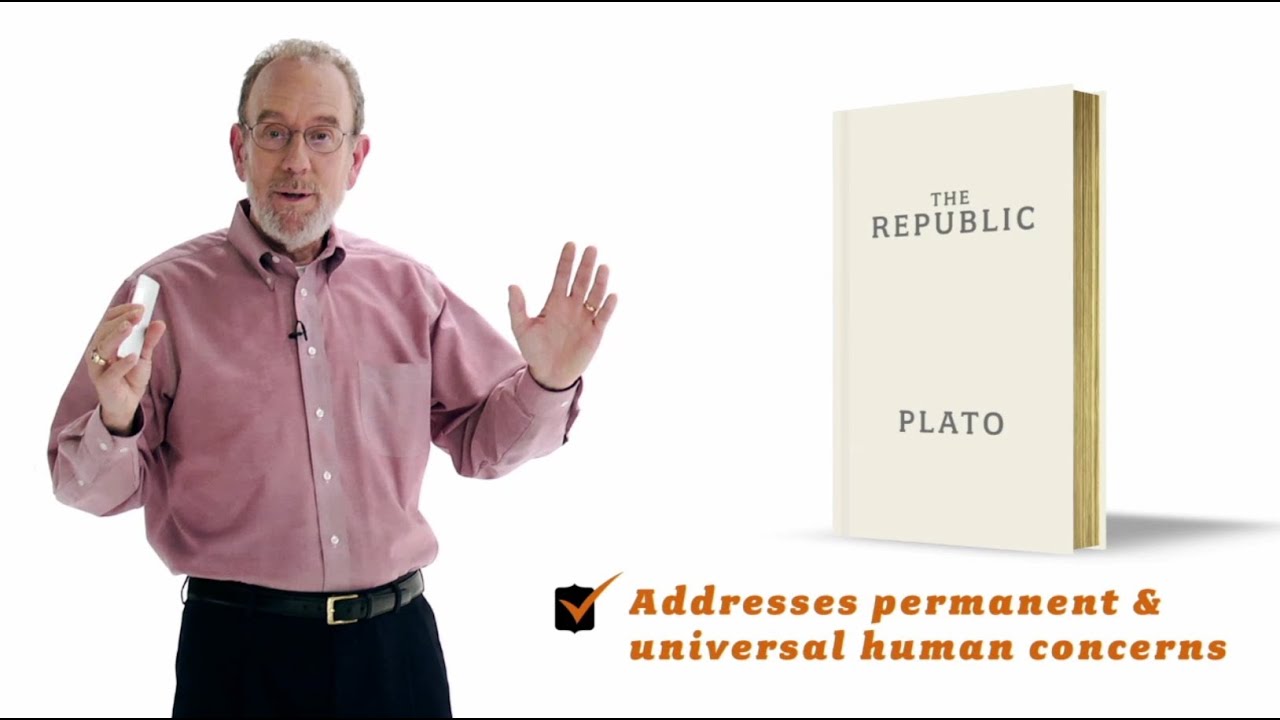
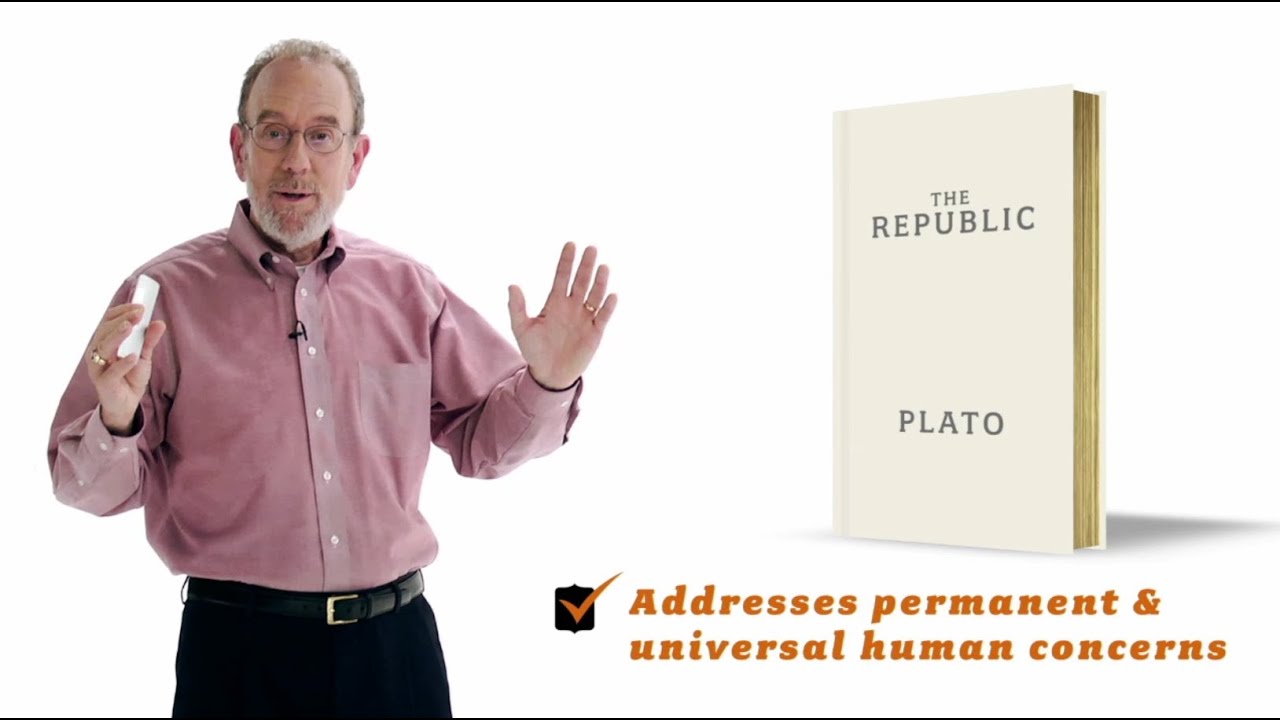
- A classic is defined by five criteria: addressing permanent human concerns, being a historical game-changer, influencing other great works, surviving expert criticism, and rewarding strenuous effort.
- Many modern beliefs—including religious doctrines and psychological theories—are actually “living” versions of arguments started by Socrates, Plato, and Aristotle.
- Reading the original source is irreplaceable because the struggle of the journey is what produces the “view” of radical new perspective.
⏱️ Reading time: approx. 10 minutes · Saves you about 49 minutes vs. watching.
Want to take notes while watching? Click the image below and let AI Notebook capture the key points for you 👇

The Principle of Necessity and the Five Marks
Filtering the Library of Congress
The Library of Congress houses over 20 million volumes, yet a prolific reader might only finish 2,000 books in their entire adult life.
This creates an urgent “principle of necessity” where every hour spent on a mediocre book is an hour stolen from a masterpiece. Brenzel notes that we are forced to be extremely picky, as our time is dwindling while the mountain of available information continues to explode.
A classic isn’t just a book that is old; it is a work that addresses the permanent, universal questions of the human condition across centuries. Whether it is a philosophical treatise on justice or a literary fable like Moby Dick, these works deal with the “whale lines” of life—the ever-present perils and mysteries of our existence that modern data cannot solve.

💡 Digging Deeper
Q: Is a book a classic just because it’s hard to read?
A: No. Many difficult books are simply poorly written or irrelevant. A true classic is “instructive” because it rewards every level of effort to the maximum possible degree.
Q: Can a modern bestseller be a classic?
A: It might become one, but it hasn’t yet stood the test of generations or proven its influence on the “Great Conversation” of history.
Q: Why not just read a “cat breeding” classic?
A: While specialized knowledge is useful, it fails the first criterion: it does not address the universal concerns of how a human being should live or what a society should look like.
The Genealogy of Your Own Mind
Footnotes to Plato
Alfred North Whitehead famously claimed that all of Western thought is merely a series of footnotes to Plato.
If you are a Christian, a skeptic, or a citizen of a democracy, your core assumptions were likely forged in the “marriage of Jerusalem and Athens.” The concepts of the soul, the nature of God, and the structure of justice were debated by Socrates and Plato long before they reached the modern ear.
Socrates’ challenge to Thrasymachus—who argued that “might makes right”—remains the foundational debate of every political system today. When you read the Republic, you aren’t looking at a dead museum piece; you are watching the birth of the arguments you use in your own dormitory or office.

💡 Digging Deeper
Q: Does the Catholic Church really rely on Greek philosophers?
A: Yes. St. Thomas Aquinas synthesized Aristotle with Christian doctrine in 1250, creating a framework that remains central to Catholic theology to this day.
Q: Is our image of Satan actually in the Bible?
A: Surprisingly little of the “rebel angel” narrative is in scripture. Much of what we imagine comes from St. Augustine’s 4th-century theories and John Milton’s 1667 epic, Paradise Lost.
Q: Why does “strangeness” matter in an old book?
A: Like traveling to a foreign country, encountering a mind that doesn’t share your assumptions (like Jane Austen or Confucius) makes your own “invisible” cultural assumptions visible for the first time.
The View from the Peak
Intellectual Muscle and the Wilderness
Brenzel uses the analogy of a 16-year-old Boy Scout on a wilderness expedition to explain why the “takeaway” isn’t the point.
The scout wonders why he should carry a heavy pack and purify water when he could just watch the Discovery Channel. The answer is that the “view” from the mountain peak is only meaningful because of the arduous climb that transformed the climber’s body and mind along the way.
Reading Shakespeare or Kant builds “intellectual muscle power” that simple books cannot provide. You don’t become a world-class wrestler by beating up the neighborhood kids; you must grapple with geniuses who are smarter than you to expand your own capacities.

💡 Digging Deeper
Q: Can I be happy without reading these books?
A: Of course, but the question is whether your life could be better by inviting these giants into it to challenge your perspective.
Q: Why do these books “change” when you read them again at age 40?
A: The text stays the same, but you have changed. Great books are inexhaustible; they offer new provocations as your own life experience expands.
Q: What is the most practical benefit of this education?
A: It provides a “standard of gold” that allows you to immediately detect “trash” in modern writing, business, and politics without needing an expert to tell you what to think.
Key Takeaways
Reading the classics is not an act of academic nostalgia; it is a vital exercise in self-construction. By engaging with the “Great Conversation,” you move beyond the “low ground” of mere information into the high-altitude terrain of wisdom. This journey provides five distinct values: the discovery of forgotten but relevant ideas, the ability to see connections between ancient and modern problems, the “creative strangeness” of differing perspectives, increased mental stamina, and a refined sense of judgment.
The ultimate reward is “the view.” Just as a mountain climber sees the entire path they have traveled only once they reach the summit, a student of the classics gains a radical perspective on their own culture and their own soul. You stop being a passive recipient of ideas and start standing on the shoulders of giants, seeing further than they ever could.
Q&A
Q1: Why should I read the original book instead of a summary?
A: A summary gives you the “what” (knowledge) but denies you the “how” (wisdom). The transformative power lies in following the author’s complex logic and being “confused” into deeper thinking.
Q2: How does Brenzel define a “game-changer”?
A: It is a work that creates a profound shift in perspective not just for its first readers, but for all readers who follow, often spawning entirely new genres or schools of thought.
Q3: What did Alfred North Whitehead mean by “footnotes to Plato”?
A: He meant that the fundamental questions about reality, ethics, and society were so thoroughly framed by Plato that subsequent thinkers are essentially just responding to his original ideas.
Q4: Is it true that our modern idea of the Devil is a literary invention?
A: Largely, yes. While rooted in tradition, the vivid character of the rebel archangel Lucifer was significantly shaped by St. Augustine and later fully dramatized by John Milton in Paradise Lost.
Q5: What is the “Value of Strangeness”?
A: It is the insight gained from encountering a mind (like Emily Dickinson or Confucius) that operates on entirely different cultural or moral assumptions, which helps you recognize your own hidden biases.
Q6: Why is college the best time to start this journey?
A: These “mountainous” texts require coaching and guidance. College provides the “guides” (professors) and the supportive environment needed to navigate game-changing ideas before you face the distractions of a full-time career.
Q7: Does Aristotle have anything to say about modern psychology?
A: Yes. His “virtue ethics” suggests that happiness is not a fleeting emotion but the result of pursuing excellence and virtue, a concept currently being rediscovered by modern positive psychologists.