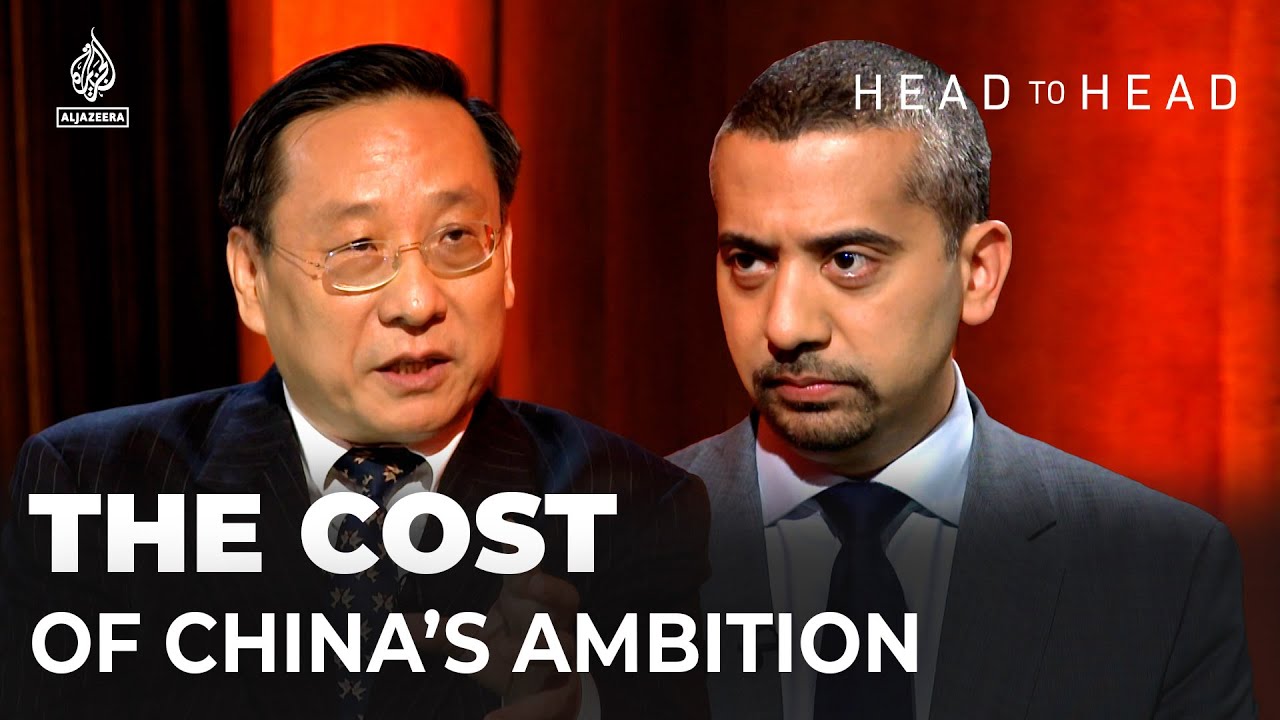
📺 Today’s recommended deep-dive video: https://www.youtube.com/watch?v=kmYdpHtOv_E
The Red Line: Defending the Rise of Xi Jinping’s China
In a rare and combative exchange, Victor Gao, a former interpreter for Deng Xiaoping and current vice president of the Center for China and Globalization, defends the CCP’s tightening grip on power. From the militarization of the South China Sea to the mass detention of Uighurs, Gao presents the “official” Beijing narrative against fierce interrogation.
Core Question: Can China’s vision of “peaceful reunification” and autocratic stability ever be reconciled with global standards of human rights and self-determination?
Highlights
- China views its military expansion as defensive, despite alarm from neighbors like India, Japan, and the Philippines.
- The “One China” policy is non-negotiable, with Gao suggesting a “loyalty test” for Taiwanese citizens of Japanese descent.
- Detention in Xinjiang is framed as a necessary measure against separatism rather than a violation of human rights.
- The disappearance of high-ranking ministers is described as a “merciless” but necessary feature of the anti-corruption struggle.
⏱️ Reading time: approx. 8 minutes · Saves you about 39 minutes vs. watching.
Want to take notes while watching? Click the image below and let AI Notebook capture the key points for you 👇

The Fortress Mentality: Military Ambitions and Taiwan
A Defensive Expansion?
China’s military budget has seen 29 consecutive years of growth, resulting in the world’s largest navy and a rapidly expanding nuclear arsenal. Victor Gao argues that this buildup is purely defensive, necessitated by China’s 14 land neighbors and a “difficult geopolitical situation.” He asserts that China has not fought a war since 1979, contrasting this with Western military interventions during the same period.
However, this “defensive” posture looks very different to the rest of Asia.
Japan, India, and the Philippines have all expressed grave concerns regarding Chinese incursions and territorial claims. The Philippine president has labeled China a “worrisome threat,” and tensions on the Indian border remain at a boiling point. Gao dismisses these concerns by framing them through the lens of history, particularly citing Japan’s 1945 surrender and British colonial legacies in India, rather than addressing current maritime disputes.

The Taiwan “Loyalty Test”
The most contentious point of Chinese foreign policy remains Taiwan. Gao maintains that the status of the island is merely “unfinished business” from the 1949 Civil War. He warns that any attempt by “separatists” to push for independence will be met with overwhelming force, echoing the Chinese Defense Minister’s rhetoric that independence seekers will be “crushed to pieces.”
When pressed on the fact that only 12% of Taiwanese people favor reunification, Gao’s response is chillingly pragmatic.
He suggests that after “reunification,” a mandatory pledge of loyalty to the “One China” policy would be required. Those of Japanese descent or those who refuse to acknowledge Beijing’s sovereignty would be forced to leave. This rhetoric, described by critics as a blueprint for ethnic cleansing, underscores the CCP’s refusal to grant the Taiwanese people the right to self-determination.
💡 Digging Deeper
Q: Why is China so obsessed with Taiwan given its own massive size?
A: Gao argues that no inch of territory is negotiable and that China is the only permanent UN Security Council member that has not yet achieved “complete reunification.”
Q: Is a military invasion of Taiwan imminent?
A: While Beijing prefers “peaceful reunification,” Gao emphasizes that the military is prepared to act if “separatists” and their foreign proxies (the US) push too far.
The Xinjiang Crisis: “Brothers” or Prisoners?
The Narrative of Stability
The situation in Xinjiang remains one of the most criticized aspects of modern Chinese governance, with reports of up to a million Uighurs detained in “re-education” camps. Victor Gao refers to the Uighurs as his “brothers and sisters” but simultaneously defends the mass detentions. He claims the numbers cited by the UN and Human Rights Watch are “discredited” and “falsehoods,” though he notably fails to provide a specific official number of detainees himself.
The CCP frames its actions in Xinjiang as a strike against religious extremism and separatism.
Gao insists that the region is now a place of “great peace and stability.” He argues that the majority of Uighurs are happy and that only a “small minority” of criminals are dealt with by the law. Yet, when offered the chance to allow an independent journalist to visit the region without government minders, Gao’s willingness to “escort” the visit quickly turns into a bureaucratic refusal to guarantee unfettered access.

The Case of Akbar Asat
The human cost of these policies is personified by the story of Akbar Asat, a Uighur tech entrepreneur who disappeared in 2016. His sister, Rayhan Asat, points out that Akbar was a model citizen, not a separatist, yet he was sentenced to 15 years for “inciting ethnic discrimination.” Gao’s defense is that the law must take its course, despite acknowledging that he has no specific knowledge of the case.
This highlights a fundamental disconnect in the Chinese legal system: the assumption of guilt for anyone labeled a “separatist.”
Even an 82-year-old mother who is denied phone contact with her son in the UK is viewed through the lens of national security. Gao’s ultimatum is clear: if you want to speak to your family, you must first vocally support the “One China” policy. For the Uighur diaspora, this is not a legal system; it is a system of psychological and familial leverage.
The Architecture of Power: Xi Jinping and the “Disappeared”
The 100% President
Xi Jinping has centralized power to a degree not seen since Mao Zedong, abolishing term limits and enshrining “Xi Jinping Thought” into the national constitution. Gao rejects the label of “dictator,” arguing that a country of 1.4 billion people cannot be ruled by one man. Instead, he describes a “teamwork” model within the 100-million-member Communist Party.
However, the numbers tell a different story.
When Xi was re-elected by the National People’s Congress, the vote was 2,952 to zero. Gao sees this as a sign of total unity; critics see it as the death of dissent. He contrasts this “stability” with the UK’s recent history of having six Prime Ministers in eight years, arguing that the Chinese system produces results and economic growth that Western democracies cannot match.

The Price of Corruption
The internal fragility of this system is exposed by the sudden disappearance of high-ranking officials. Former Foreign Minister Qin Gang and Defense Minister Li Shangfu both vanished from public view before being stripped of their titles. Gao justifies these disappearances as a sign of a “merciless” anti-corruption campaign.
To the outside world, these “disappearances” represent a black hole in the rule of law.
Gao admits he doesn’t know where his “good friend” Qin Gang is, only that he is “somewhere in China” being dealt with by the process. This admission reveals a system where even the highest-ranking officials can be erased from public life overnight without a public trial or transparent charges.
💡 Digging Deeper
Q: Why are six-year-olds taught “Xi Jinping Thought”?
A: Gao claims it is to “orient the country in one direction,” comparing the nation to a vehicle where all four wheels must point the same way to move forward.
Q: Is there any room for criticism of the government?
A: Only “constructive” criticism is allowed. Gao defines this as offering advice on policy (like the aging population) rather than attacking the leadership or the system itself.
Key Takeaways
The debate illustrates the profound ideological chasm between the West’s emphasis on individual liberty and the CCP’s emphasis on collective stability and territorial integrity. For Beijing, the “One China” principle is a religious-like dogma that justifies everything from military threats against Taiwan to the suppression of Uighur culture. Gao’s rhetoric suggests that China is no longer seeking to explain itself to the West, but rather demanding that the world accept its rise on its own terms.
Ultimately, the Chinese model is presented as a high-stakes trade-off. Citizens are offered economic prosperity and national strength in exchange for total political compliance. As long as the “wheels” of the car are aligned, the system moves forward, but those who point in a different direction—whether they are Uighur entrepreneurs, Hong Kong activists, or even Cabinet ministers—face being left behind or forcibly removed from the vehicle.
Q&A
Q1: Is China planning to invade Taiwan?
A: China prefers peaceful reunification but maintains that military force is a legal option to prevent secession, viewing the issue as an unfinished civil war.
Q2: Why won’t China allow independent UN investigators into Xinjiang?
A: Gao claims investigators are welcome but usually insists on government-led “escorts,” arguing that international organizations are biased and disseminate “falsehoods.”
Q3: Can a Chinese citizen publicly criticize President Xi Jinping?
A: No. Gao admits that criticizing the top leadership is met with swift action, stating that only “positive” and “constructive” feedback on policy is permissible.
Q4: How does China justify the disappearance of its own ministers?
A: These disappearances are framed as part of an uncompromising anti-corruption drive, emphasizing that no one, regardless of rank, is above the party’s disciplinary measures.
Q5: What is the “loyalty test” for Taiwan?
A: Gao suggests that after reunification, residents must pledge allegiance to “One China.” Those who do not—particularly those of Japanese ancestry—may be forced to leave the island.
Q6: Does China recognize the self-determination of people in Tibet?
A: No. China views Tibet as an integral part of its territory since the Yuan Dynasty and considers any advocacy for independence a crime against the state.
Q7: Is China creating a “debt trap” for African nations?
A: Gao denies this, arguing that infrastructure debt is a necessary part of development and that Western institutions hold a larger portion of African debt than China does.