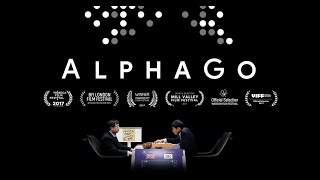
📺 Today’s recommended deep-dive video: https://www.youtube.com/watch?v=WXuK6gekU1Y
The Divine Move: How AlphaGo Redefined the Limits of Intelligence
For over two millennia, the ancient game of Go was considered the final frontier for artificial intelligence, a game of such vast complexity that it required “human intuition” to master. This article explores the dramatic journey of DeepMind’s AlphaGo, from its secret origins in a London lab to its world-shaking showdown with legendary champion Lee Sedol. It is a story not just of code and silicon, but of what happens when human creativity meets its digital mirror.
Core Question: How did a machine manage to master the world’s most complex game and what does that reveal about the future of human-AI collaboration?
Highlights
- The technical leap from “brute force” computing to deep neural networks that mimic human intuition.
- The emotional journey of Fan Hui and Lee Sedol as they faced an “inhuman” opponent.
- Analysis of Move 37 and Move 78—moments where both machine and man touched the “divine.”
- The shift in perspective from AI as a competitor to AI as a tool for expanding human potential.
⏱️ Reading time: approx. 7 minutes · Saves you about 83 minutes vs. watching.
Want to take notes while watching? Click the image below and let AI Notebook capture the key points for you 👇

The Quest for the Holy Grail of AI
Why Go Defied Computers for Decades
Go is often described as the most complex game ever devised by humanity, possessing more possible board configurations than there are atoms in the observable universe. For decades, traditional AI programs could beat grandmasters at Chess by calculating every possible move, but this “brute force” approach was useless against the 10^170 variations found on a Go board.
Beating a professional Go player was long considered the “Holy Grail” of computer science research.
DeepMind, a London-based AI company led by Demis Hassabis, approached the problem differently by building a system that could learn for itself. They didn’t program AlphaGo with specific rules or strategies; instead, they fed it thousands of human games and let it play against versions of itself millions of times to find the optimal path to victory.
💡 Digging Deeper
Q: Why is Go harder for AI than Chess?
A: In Chess, a computer can look ~20 moves ahead to find a clear advantage. In Go, there are 200 possible moves per turn, making it impossible to calculate every outcome.
Q: Who was the first professional to lose to AlphaGo?
A: Fan Hui, the three-time European Champion, lost 5-0 to AlphaGo in a closed-door match in late 2015, a result that shocked the AI community.
Q: What is “reinforcement learning”?
A: It is a training method where the AI plays against itself, receiving a “reward” for winning, which allows it to discover strategies humans have never even considered.
How Machines Learn Intuition
Policy and Value Networks
AlphaGo functions through two primary “brains” known as deep neural networks that work in tandem to navigate the game’s complexity. The “Policy Network” looks at the board and narrows down the search to only the most promising moves, effectively mimicking the “gut feeling” a human master uses to decide where to focus their attention.
The “Value Network” then evaluates those moves, predicting which one leads to a higher probability of winning.
This combination allows the machine to ignore trillions of useless variations and focus only on the paths that matter. It represents a fundamental shift in AI development: moving away from a machine that “knows” what we tell it, toward a machine that “understands” through experience.

💡 Digging Deeper
Q: Does AlphaGo try to win by a lot of points?
A: No. AlphaGo only cares about the probability of winning; it will often make “slack moves” that lose points if those moves guarantee a 100% chance of a tiny victory.
Q: How much did AlphaGo improve between Fan Hui and Lee Sedol?
A: The team developed several new versions, moving from version 13 to version 18, which was significantly stronger and more creative in its playstyle.
Q: Is AlphaGo “conscious”?
A: No. It is a highly specialized algorithm—a “smart washing machine” for Go—that lacks any general awareness or emotion outside of the 19×19 grid.
The Seoul Showdown: Man vs. Machine
Move 37: The Inhuman Creative
The world held its breath when AlphaGo faced Lee Sedol, the 18-time world champion, in South Korea. In Game 2, AlphaGo played Move 37—a “shoulder hit” on the fifth line—that left professional commentators speechless. No human would ever play that move because it felt intuitively “bad” and unconventional.
It was at that moment the world realized AlphaGo wasn’t just imitating humans; it was innovating.
The move wasn’t a mistake; it was a long-term strategic placement that eventually won the game. This shattered the confidence of the Go world, as the machine demonstrated a level of “creativity” that many thought was reserved solely for the human soul.

💡 Digging Deeper
Q: How did Lee Sedol react to losing the first three games?
A: He was visibly devastated and felt a heavy burden for “humanity,” yet he remained incredibly graceful and determined to find a flaw in the machine.
Q: What was “Move 78”?
A: Often called the “God’s Move,” it was a brilliant wedge played by Lee Sedol in Game 4 that AlphaGo failed to predict, causing the machine to malfunction and lose the game.
Q: Why did AlphaGo “go crazy” in Game 4?
A: Lee’s Move 78 had a 1-in-10,000 probability. Because the AI didn’t expect it, its internal evaluation became “delusional,” leading it to make nonsensical moves until it eventually resigned.
Key Takeaways
The AlphaGo story is a landmark in human history, marking the first time a machine outperformed the highest level of human intuition in a task of profound complexity. While the match was framed as a battle between man and machine, the ultimate conclusion was one of synergy. Lee Sedol noted that playing AlphaGo allowed him to see the world differently and discover new depths in a game he had played his entire life.
In the end, AlphaGo is a testament to human ingenuity. The machine didn’t build itself; it was crafted by human researchers using human-generated data to solve a human problem. As we move forward, the “AlphaGo model” of AI—systems that learn and discover new patterns—will likely be applied to science, medicine, and climate change, helping us find “Move 37” solutions to the world’s most pressing challenges.
Q&A
Q1: Did Lee Sedol win the match?
A1: No, AlphaGo won the overall match 4-1, but Lee Sedol’s single victory in Game 4 remains the only time a human has beaten the full-strength version of the program.
Q2: What happened to Fan Hui after his loss?
A2: Instead of being discouraged, he joined the DeepMind team as an advisor, using his experience to help the engineers understand the “human” side of the game.
Q3: Is AlphaGo still playing today?
A3: DeepMind retired AlphaGo shortly after its final match against world #1 Ke Jie, but they released a “teaching tool” based on its data to help players around the world.
Q4: Can this AI be used for things other than Go?
A4: Yes. The underlying technology evolved into AlphaFold, which has successfully predicted the shapes of nearly every protein known to science, a massive breakthrough for biology.
Q5: Why did the Korean public support Lee Sedol so strongly?
A5: Go is deeply rooted in Korean culture; Lee Sedol was seen as a national hero defending a 2,500-year-old intellectual tradition against an alien, “cold” opponent.
Q6: What is the “Terminator” fear mentioned in the documentary?
A6: It refers to the tendency to anthropomorphize AI as a physical threat, when in reality, current AI is just a powerful mathematical tool with no desires or malice.
Q7: How did AlphaGo “resign”?
A7: When its internal probability of winning dropped below a certain threshold (usually 20%), a message appeared on the screen saying “AlphaGo resigns,” and the human operator placed the stones to signify defeat.