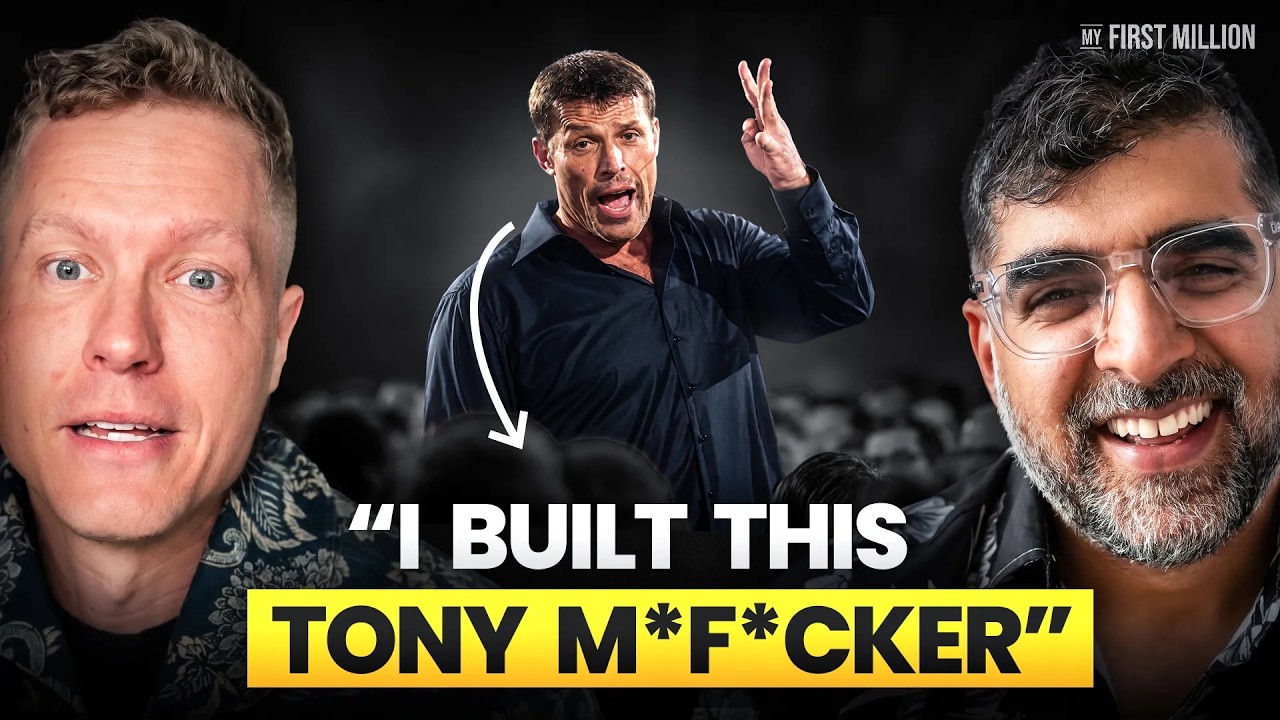
📺 Today’s recommended deep-dive video: https://www.youtube.com/watch?v=P0ju8XGsYwA
The $80 Million Sourdough Strategy: Escapism, Reinvention, and the Art of “Anti-Mimetic” Living
Most brands focus on features, but the most successful modern empires sell a total escape from reality. Whether it’s a ballerina-turned-farmer or a 35-year-old dad training for the World Cup, the secret lies in the radical decision to reinvent your identity publicly and sell the “aesthetic” of your life.
Core Question: How can entrepreneurs leverage lifestyle escapism and personal reinvention to turn commodity products into high-margin content empires?
Highlights
- Ballerina Farms generates $70M+ by selling a “Tradwife” aesthetic rather than just milk and meat.
- Public reinvention—like Tony Robbins or “World Cup Dad”—is a powerful marketing tool that builds an accountability loop.
- True financial independence is “freedom from” making decisions based on money, not just having the “freedom to” buy things.
- Long-term success requires being “anti-mimetic,” choosing desires based on internal values rather than copying the crowd.
⏱️ Reading time: approx. 6 minutes · Saves you about 49 minutes vs. watching.
Want to take notes while watching? Click the image below and let AI Notebook capture the key points for you 👇

The Business of Aesthetic Escapism
Turning Commodities into Stories
You can sell the same commodity product as everyone else, but if you position it as part of an “escape aesthetic,” you create an untouchable brand.
Look at Ballerina Farms: Hannah Neilman isn’t just selling sourdough mix or grass-fed beef; she is selling a warmly lit, barefoot-in-the-grass fantasy that resonates with 20 million followers who crave a simpler, pre-industrial life. By showcasing her nine children and rural Utah farm, she transforms a basic grocery business into a $70 million revenue machine powered by pure aspiration and a curated aesthetic that feels like a Hallmark movie come to life.
This strategy works because it taps into deep-seated human desires for specific “vibes,” whether that’s the Roman Empire for men or the Swiss Alps for women.
Traditional retail focuses on the “what,” but lifestyle brands focus on the “where” you go when you use the product. If you create a supplement brand that looks like it belongs on a 19th-century farm rather than a laboratory, you aren’t just selling vitamins; you are selling a departure from modern chaos.

💡 Digging Deeper
Q: Is the “Tradwife” movement just a political statement?
A: While it has political baggage, from a business perspective, it is a “lifestyle escape” similar to how people watch Bridgerton to fantasize about Regency England.
Q: Can this work for “unsexy” categories like dental care or finance?
A: Absolutely. By wrapping these services in a specific aesthetic—like a “craftsman” or “explorer” vibe—you differentiate through identity rather than price.
Q: Does the founder need to be the face of the brand?
A: For this specific “Man on a Mission” or lifestyle model, yes; the content is the process of the founder living the life the audience wants.
The Power of Public Reinvention
From “Man on a Mission” to Content Machine
Tony Robbins didn’t just wake up with his booming voice and mountain-shaking discipline; he literally decided who he needed to be and then engineered that persona into existence.
This is what we call “Man on a Mission” content, a framework where the process of becoming is the product itself. A prime example is Zack Duke, a 35-year-old dad who went viral by training for the 2026 World Cup despite never playing soccer before. His “dad bod” and lack of experience provided a visual hook that made his transformation more compelling than a professional athlete’s highlight reel.
Most people wait until they have the results to claim an identity, but the most effective path to success is to label yourself today and let your public actions catch up to your words. By announcing your transformation to an audience, you create an accountability loop that forces you to perform, eventually turning what started as “cosplay” into a genuine, life-altering reality that commands both attention and respect.
Words act as “spells” or “wands” that define your destiny; saying “I am an athlete” changes your behavior more than saying “I am trying to lose weight.”

💡 Digging Deeper
Q: What if I look stupid starting something new?
A: Looking “dumb” at the start is actually a better story arc; the “zero-to-hero” journey is the most viral content format in existence.
Q: How do you maintain the persona long-term?
A: You don’t “maintain” it; you evolve into it until the persona becomes your actual lifestyle, like the hedge fund guys who bought a mine and now actually live the blue-collar life.
Escaping the “Game of More”
Choosing the Anti-Mimetic Path
When money stops being a constraint, the real game begins: deciding what you actually want more of instead of just copying the desires of your peers.
Warren Buffett is the ultimate example of the “anti-mimetic” life, famously refusing to participate in the tech bubble or change his modest Omaha lifestyle because his internal values mattered more than fleeting trends. He didn’t buy a $500 Japanese hoodie because he didn’t want one, and he didn’t invest in tech because he didn’t understand it, showing a rare immunity to social pressure.
The “leisure class” often finds that Michelin-star meals and VIP tours offer diminishing returns, leading to a sense of aimless wandering that feels more like a funeral than a celebration. Real happiness usually comes from finding a quest that lights you up—whether that’s hosting cocktail parties or building defense tech—independent of whether that path is currently popular or status-approved in your social circle.
If you don’t define your own “Game of More,” you will default to playing the game of validation, status, and prestige defined by your Instagram feed.

💡 Digging Deeper
Q: What is the “Game of More”?
A: It is the realization that everyone is chasing “more” of something (leisure, impact, status); the key is being conscious about which “more” you are pursuing.
Q: Why is “freedom from” better than “freedom to”?
A: “Freedom to” is just the ability to buy things; “freedom from” means your decisions are no longer tethered to financial outcomes or social expectations.
Key Takeaways
The most successful modern brands and individuals are those who realize that identity is a choice, not a static birthright. Whether it is a “tradwife” influencer building a $70 million farm brand or a billionaire like Tony Robbins engineering his own charisma, the common thread is a refusal to accept the roles society forces upon them. By creating an “escape aesthetic,” you move your business from a price-sensitive commodity to a high-margin identity play.
Living well requires a transition from mimetic desires—wanting what others want—to anti-mimetic clarity. This involves removing environmental barriers, like unfollowing status-obsessed accounts, and surrounding yourself with a peer group that reflects the person you want to become. Success isn’t just about the money landing; it’s about knowing exactly which “Game of More” you are playing before the wealth even arrives.
Q&A
Q1: What is Ballerina Farms?
A: It is a massive social media brand run by Hannah Neilman, a Juilliard-trained ballerina who moved to a Utah farm. She has 20 million followers and sells sourdough, meat, and lifestyle products, generating an estimated $70-80 million in annual revenue.
Q2: How does Tony Robbins explain his success?
A: He claims he “created” the Tony Robbins persona. He wasn’t born with his discipline or voice; he decided who he needed to be to achieve his goals and then built that identity through sheer will.
Q3: What did Julie Zhuo observe about people who get rich overnight?
A: She identified three groups: the “Fish” who leave tech to find their true calling, the “Leisure Class” who chase luxury but often feel unfulfilled, and those who keep “climbing” to find a higher high.
Q4: What is the significance of the “World Cup Dad”?
A: Zack Duke, a 35-year-old with no soccer experience, went viral by documenting his journey to try and make the 2026 World Cup. It’s a perfect example of “Man on a Mission” content where the journey itself is the draw.
Q5: What is the “Japanese Trash Bag” story from the World Cup?
A: Japanese fans use blue trash bags as cheering props (flags), then use those same bags to clean up the entire stadium section after the game. It illustrates an “authentic” cultural value that has increased Japan’s global “brand status.”
Q6: How does MrBeast handle peer groups and fitness?
A: When he decided to get fit, he hired a trainer to live with him and told his friends they had to get fit too, or he wouldn’t hang out with them as much because their “pizza-eating” habits would undermine his discipline.
Q7: Why is defining terms important in business meetings?
A: As seen with CEOs like Emmett Shear (Twitch), if a team uses vague words like “editorial,” they often have unclear thinking. Defining terms ensures everyone is operating from the same reality and forces clarity.