📺 Today’s recommended deep-dive video: https://www.youtube.com/watch?v=4rVD1EOaAX4
Decoding the Black Box: A Masterclass in Explainable Machine Learning
For years, deep learning has operated as a “black box” where data goes in and answers come out, but the internal logic remains a mystery. As AI moves into critical fields like medicine, law, and autonomous driving, we need more than just accuracy—we need reasons.
Core Question: How can we transform powerful but opaque machine learning models into transparent systems that provide human-understandable justifications for their decisions?
Highlights
- The “God Horse Hans” effect: Why high accuracy can mask a model that hasn’t actually learned the task.
- Local vs. Global explanations: Analyzing specific inputs versus general model behavior.
- Visualization techniques: Using saliency maps, occlusion, and Smooth Grad to pinpoint what a model “sees.”
- Probing the hidden layers: Using auxiliary classifiers and speech synthesis to hear and see what deep networks are thinking.
⏱️ Reading time: approx. 8 minutes · Saves you about 42 minutes vs. watching.
Want to take notes while watching? Click the image below and let AI Notebook capture the key points for you 👇

The Necessity of Explanation
Beyond the Black Box
We are no longer satisfied with machines that simply provide the right answer; we demand the logic behind the output.
Consider the famous case of “God Horse Hans,” a creature believed to be a mathematical genius in the early 20th century. Hans appeared to solve arithmetic by stomping his hooves, but investigators eventually realized he wasn’t doing math at all; he was merely reacting to the subtle, subconscious physical cues of the human spectators who knew the answer.
Today’s AI models face a similar risk of “shortcut learning,” where they achieve high accuracy on a dataset by identifying irrelevant patterns—like a specific background color or a watermark—rather than understanding the actual object of interest. In sectors like banking or medicine, this lack of transparency isn’t just a technical flaw; it’s a liability that could lead to discriminatory lending practices or incorrect medical diagnoses that no one can justify.
Moving the Streetlight
There is a common misconception that we should only use simple, inherently interpretable models like linear regressions or small decision trees.
This approach is like a drunk person searching for their keys under a streetlight because “that’s where the light is,” even if they lost the keys in the dark. Instead of limiting ourselves to weak models, we should aim to “move the streetlight” by developing tools that make powerful deep learning architectures explainable. We should not have to sacrifice performance for the sake of transparency when we can build tools to peer inside the neural network’s complex layers.

💡 Digging Deeper
Q: Is there a formal definition for a “good” explanation in AI?
A: In practice, a good explanation is often one that makes the human user—whether a client, a boss, or a developer—happy and confident in the decision. It is as much a psychological requirement as a technical one.
Q: What is the difference between “Explainable” and “Interpretable”?
A: “Interpretable” usually refers to models that are transparent by design (like a small decision tree), while “Explainable” refers to techniques applied to a black box to extract its logic after it has been trained.
Local Explanation: Why Is This Image a Cat?
The Power of Occlusion and Saliency
Local explanation focuses on a single instance: Why did the model classify this specific photo as a Pomeranian?
One of the simplest ways to test this is through “occlusion.” By sliding a gray square over different parts of an image and observing how the model’s confidence drops, we can map out which areas are critical for the classification. If the model’s confidence only plummets when the dog’s face is covered, we can be reasonably sure it is looking at the right features. However, if covering the background causes a drop, we have a problem.
A more advanced mathematical approach involves “Saliency Maps.” These maps use the gradient of the loss function with respect to each pixel to determine which parts of the image have the most influence on the final result.

The Pitfalls of Bias in Data
Explainable AI often reveals embarrassing shortcuts taken by the machine during training.
In one experiment, a classifier achieved nearly 99% accuracy in distinguishing Pokémons from Digimons. A saliency map revealed the truth: Pokémons were often stored as transparent PNGs (which the computer read as black backgrounds), while Digimons were JPEGs. The machine wasn’t learning animal features; it was simply detecting file formats and background noise. Similarly, a model trained to recognize horses was found to be looking exclusively for a specific copyright watermark in the corner of the images rather than the horse itself.
💡 Digging Deeper
Q: Why do saliency maps sometimes look “noisy” or hard to read?
A: Gradients can fluctuate wildly at a pixel level. Techniques like “Smooth Grad” solve this by adding random noise to the image multiple times and averaging the resulting saliency maps to produce a clearer, more human-readable result.
Q: Does a zero gradient always mean a feature is unimportant?
A: Not necessarily. If a feature (like the length of an elephant’s nose) is already “long enough,” increasing it further might not change the probability score, resulting in a zero gradient even though the feature is vital.
Global Explanation: Peering into the Mind of the Machine
Visualizing Hidden Transformations
Global explanation attempts to understand what a model knows generally, without looking at a specific input.
We can analyze the outputs of hidden neurons to see how they transform data as it moves through the network. In voice recognition, raw acoustic features from different speakers saying the same sentence initially look very different. However, as the data passes through deeper layers, the network learns to align these signals, eventually grouping them by content while stripping away individual speaker identities. By reducing these high-dimensional vectors to a 2D plane, we can literally see the machine “abstracting” the concept of language from the noise of the human voice.

Probing and Synthesis
“Probing” is a technique where we attach a small, simple classifier to a specific layer of a pre-trained model like BERT.
If this tiny “probe” can accurately predict the part of speech of a word based solely on that layer’s output, we know that the layer has successfully captured linguistic structure. Another fascinating method involves using Text-to-Speech (TTS) models to “listen” to what a speech recognition network hears. By feeding hidden layer embeddings into a synthesizer, researchers have found that early layers retain the speaker’s tone, while deeper layers eventually filter out everything except the literal words, effectively “de-noising” the audio in real-time.
Key Takeaways
Explainable Machine Learning is the bridge between high-performance AI and human trust. We have moved beyond the era where we simply accept a model’s output as gospel; today, we have the tools to verify if a model is truly “smart” or just a “God Horse Hans” exploiting dataset flaws. Whether through local methods like saliency maps or global methods like probing, transparency allows us to debug, improve, and safely deploy AI in the real world.
Ultimately, explanation serves the human element of technology. It satisfies legal requirements in finance, provides safety assurances in autonomous vehicles, and gives developers the insights needed to refine complex neural architectures. As we continue to expand the “streetlights” of explainability, the black box of deep learning will increasingly become a glass box.
Q&A
Q1: Why is explainability so important for self-driving cars?
A1: If a car stops suddenly, we need to know if it stopped because it saw a pedestrian (correct behavior) or because it experienced a software glitch (dangerous behavior). Knowing the “why” allows engineers to fix specific logic errors.
Q2: Can we just use decision trees to avoid the black box problem?
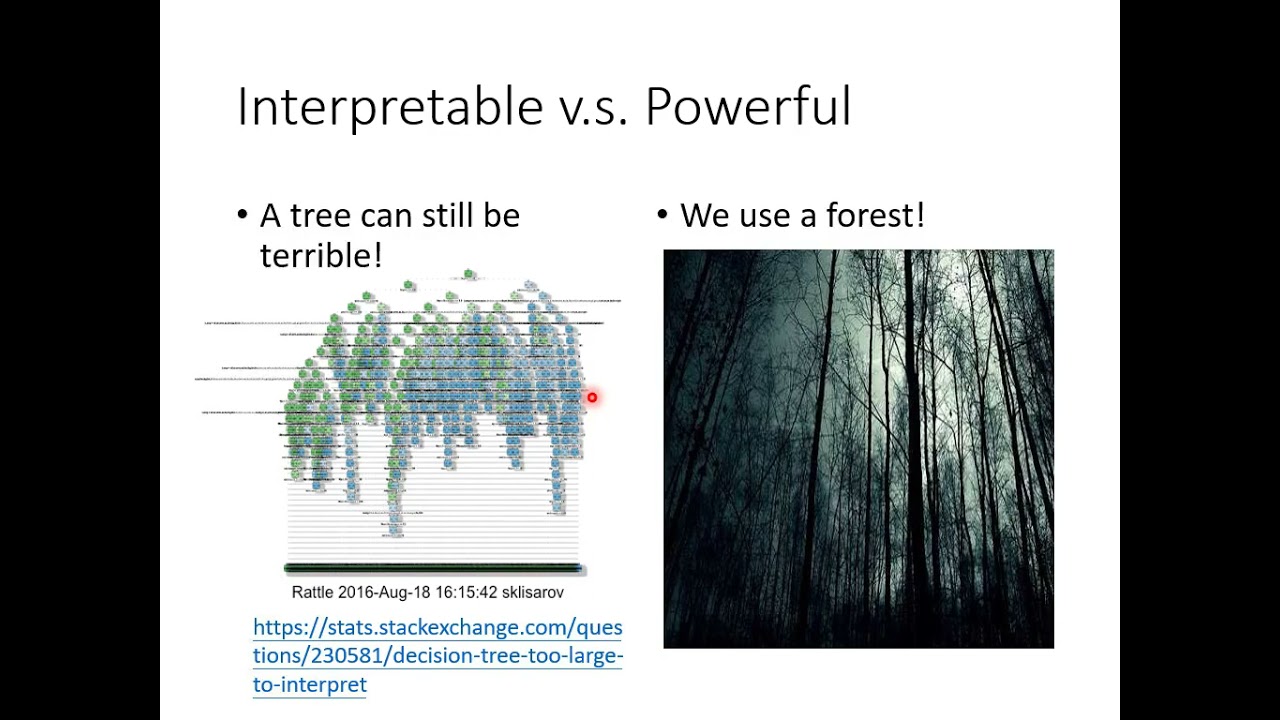
A2: While a single decision tree is interpretable, practical applications often use “Random Forests” containing hundreds of trees. Once you have a forest, it becomes just as difficult for a human to track the logic as it is with a neural network.
Q3: How does the “Smooth Grad” technique improve saliency maps?
A3: It adds random noise to the original image and averages the gradients across multiple versions. This filters out visual “static” and highlights the most robust features the model is focusing on.
Q4: What did the voice recognition experiment reveal about deep layers?
A4: It showed that as audio moves through a network, the model deliberately erases individual speaker characteristics (pitch, tone) to focus purely on the phonetic content of the speech.
Q5: What is a “probe” in the context of BERT or other NLP models?
A5: A probe is a simple, secondary classifier used to test if a specific layer of a large model contains specific information, like grammar or sentiment, even if the model wasn’t explicitly trained to find it.
Q6: Why is the gradient-based explanation sometimes misleading?
A6: Because of the “saturation” problem—if a feature is already providing a maximum contribution to the result, the gradient might drop to zero, making a very important feature look irrelevant on a saliency map.