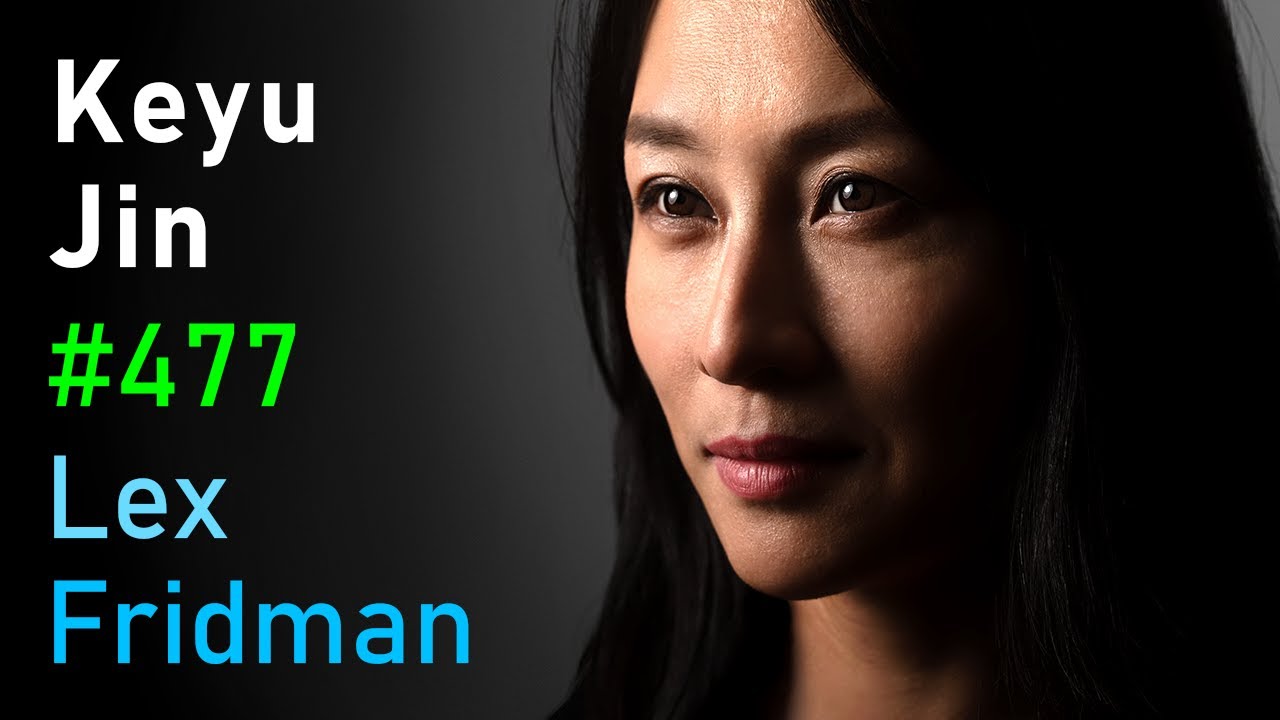
📺 Today’s recommended deep-dive video: https://www.youtube.com/watch?v=y3yAVZk3tyA
The New China Playbook: Unmasking the World’s Most Misunderstood Economy
Most Westerners view China as a monolithic entity controlled by a single hand, yet the reality is a fiercely competitive, decentralized “Mayor Economy.” In this deep dive, economist Keyu Jin explains how China blends brutal market capitalism with a socialist safety net to drive world-leading speed and scale.
Core Question: How does China’s unique blend of political centralization and economic decentralization drive its innovation, and what are the true stakes of its rivalry with the West?
Highlights
- The “Mayor Economy” creates a competitive landscape where local officials act like CEOs of their cities.
- China excels at “1 to N” innovation, focusing on scale, speed, and cost-cutting rather than just “0 to 1” breakthroughs.
- US export controls have unintentionally sparked a “crisis innovation” wave, accelerating China’s domestic semiconductor progress.
- The “Tallest Tree” philosophy: In China, entrepreneurs are encouraged to make money but must stay out of the political spotlight.
⏱️ Reading time: approx. 8 minutes · Saves you about 101 minutes vs. watching.
Want to take notes while watching? Click the image below and let AI Notebook capture the key points for you 👇

The Myth of the Monolith
The Decentralized “Mayor Economy”
The biggest misunderstanding about modern China is the belief that a handful of people in Beijing pull every economic lever.
In reality, Keyu Jin describes a “Mayor Economy” where local provincial governors and mayors compete ferociously for GDP growth, acting more like venture capitalists or CEOs than bureaucratic puppets. This decentralization allows for localized experimentation; if a reform works in one fishing village, it is scaled across the nation, fueling a competitive drive that often exceeds the market intensity seen in the United States.
This system thrives on a unique social contract: citizens grant the state deference and stability in exchange for the promise of continued prosperity and personal security.

💡 Digging Deeper
Q: Is the relationship with authority in China one of blind submission?
A: No, it is a nuanced contract based on paternalism. Deference is given in exchange for security and prosperity, but radical entrepreneurism proves that a sense of “self” and individual drive remains vital.
Q: How does competition in China differ from the West?
A: It is often “replicative.” If a coffee shop succeeds, everyone opens a coffee shop. This creates a ruthless environment where only the most efficient survive the race to the bottom.
Q: Why is meritocracy eroding?
A: While standardized testing (the Gaokao) remains fair for education, job placement is increasingly reliant on connections (Guanxi), a trend that worries economists regarding future social mobility.
Innovation Through the Prism of Crisis
The “1 to N” Advantage
China’s approach to innovation prioritizes practical solutions and diffusion over radical, “blue-sky” invention.
While Silicon Valley excels at the “0 to 1” journey of radical discovery, Chinese entrepreneurs are the masters of “1 to N”—turning complex products into affordable, mass-market realities through sheer speed and manufacturing prowess. This “Short, Flat, Fast” mindset encourages rapid iteration and ruthless cost-cutting, as seen in the sudden emergence of DeepSeek as a viable competitor to Western AI models despite lower compute costs.
Interestingly, Western export controls on semiconductors have unintentionally sparked a “crisis innovation” wave, forcing China to ramp up domestic capacity far faster than it would have under a regime of comfortable imports.

💡 Digging Deeper
Q: Why did the US chip sanctions backfire?
A: When China could easily import chips, domestic R&D stalled. Once cut off, the state and private sector entered a “war footing,” mobilizing massive resources to achieve self-sufficiency.
Q: Does China respect Intellectual Property?
A: Culturally, the sense of property rights is different; copying is seen as a legitimate path to success. However, as China becomes a primary innovator, it is beginning to implement stricter IP protections to safeguard its own tech.
Q: What is the significance of DeepSeek?
A: It proves that the “compute gap” can be bypassed through algorithmic efficiency and scale, signaling that China is much closer to the AI frontier than Western experts estimated.
The Cultural Engine and the Social Fabric
Confucian Values and “Six Wallets”
Confucianism remains the invisible hand guiding Chinese economic behavior through its emphasis on education, frugality, and social harmony.
This moral philosophy demands that individuals contribute to the collective good, which manifests today as an obsession with high-pressure education and a high national savings rate. Even as the country embraces ruthless market competition, the social fabric remains deeply communal; families often pool resources through “six wallets”—parents, grandparents, and the couple—to afford housing and education for the next generation.
The resulting blend creates a society that is economically hyper-capitalist in its ambition yet socially socialist in its expectations of state-guaranteed order and harmony.

💡 Digging Deeper
Q: What was the unintended consequence of the One-Child Policy for women?
A: It created a “Golden Age” for daughters. Without male siblings to compete with, parents invested all their resources into their daughters, leading to a surge of women in high-level CEO and civil service roles.
Q: Why is the real estate crisis so damaging to the average citizen?
A: Unlike Americans who invest in the stock market, the Chinese have the vast majority of their wealth tied up in property. When prices fall, they feel significantly poorer and stop consuming.
Q: Is China’s aging population an economic death sentence?
A: Not necessarily. Post-1990 data suggests that aging economies often become richer by rapidly adopting automation and AI to replace shrinking labor forces.
Navigating the Geopolitical Tightrope
Red Lines and Respect
Geopolitics today is less about finding a clear winner and more about managing a series of complex, interdependent choke points.
Tariffs are often a blunt and ineffective tool that punishes domestic consumers more than foreign rivals, yet they remain a primary weapon in the US-China trade war. Keyu Jin argues that respect and “face-saving” are essential for successful diplomacy; China will not yield on “red lines” like Taiwan or its core political structure under the threat of public humiliation or bullying.
The saga of Jack Ma serves as a cautionary tale for the capitalist class: you can be incredibly successful, but you must never attempt to outshine the political leadership or challenge the party’s influence over capital.

💡 Digging Deeper
Q: Will China invade Taiwan for TSMC?
A: Unlikely. China prioritizes “strategic patience.” A military conflict would destroy the very chips China needs and would be devastating for the “One-Child” generation of soldiers.
Q: What is the “Tallest Tree” proverb?
A: “The tallest tree gets the most wind.” In China, if you become too colorful, outspoken, or politically influential as a businessman, you invite state intervention.
Q: What does a “successful” deal with Trump look like for China?
A: A realistic deal focused on opening services and financial markets, provided it is framed as mutual commerce rather than a political concession.
Key Takeaways
China’s economic miracle was not the result of a monolithic command structure, but a hyper-competitive, decentralized system fueled by local incentives. By using GDP and innovation as a yardstick for political promotion, the central government turned mayors into entrepreneurs, leading to rapid urbanization and the world’s fastest manufacturing build-out. However, this model is shifting as the country moves from a focus on production to a need for domestic consumption.
The future of the global economy depends on moving past the “winner-takes-all” mentality. China’s strength in diffusion and cost-reduction complements the West’s strength in radical invention. Efforts to “blockade” China have largely served to accelerate their self-sufficiency, suggesting that deep engagement and mutual respect remain the only viable paths to avoiding a fragmented, “jungle-rule” global order.
Ultimately, understanding China requires looking beyond the “Three Ts” (Taiwan, Tibet, Tiananmen) to see a vibrant, social, and authentic population. The younger generation is no longer content with being the world’s factory; they are driving a new wave of localism, entertainment, and digital lifestyle that is reshaping the Chinese identity from the bottom up.
Q&A
Q1: Is China a capitalist or communist country?
It is a hybrid. The economy is fiercely capitalist and competitive, but the social fabric and financial pillars (state banks, land ownership) are socialist. Keyu Jin calls it “Socialism with Chinese characteristics.”
Q2: What is the single biggest misconception about the Chinese economy?
That it is run by one person or a small group. It is actually more decentralized than the US in many ways, with local mayors making critical economic and reform decisions.
Q3: Why did Jack Ma disappear from public life?
In China, capital must be reigned in by politics. Ma became “the tallest tree” by being too outspoken and influential. The state reasserted that the political class, not the billionaire class, holds ultimate authority.
Q4: How did the One-Child Policy affect the marriage market?
It created a massive scarcity of brides, which significantly increased the bargaining power of Chinese women. Today, many families actually prefer having a daughter because of their increased status and the high “dowry” costs associated with sons.
Q5: Can China surpass the US in the AI race?
China may not lead in “0 to 1” breakthroughs, but they are likely to lead in AI diffusion—applying AI to every industrial and service sector at scale, which may have a larger impact on total productivity.
Q6: What is the “Short, Flat, Fast” motto?
It’s a cultural philosophy of impatience in business. Investors want a “short” turnaround, a “flat” emotional commitment, and a “fast” exit. This drives the incredible speed of Chinese company growth.
Q7: Is a collapse of the Chinese economy imminent?
Unlikely. While the real estate sector is in a painful transition, the “fundamentals”—human capital, physical infrastructure, and macroeconomic stability—remain incredibly strong compared to other developing nations.