📺 Today’s recommended deep-dive video: https://www.youtube.com/watch?v=nv9KG_F65P4
A King’s Final Curtain: The Global Tribute to Michael Jackson
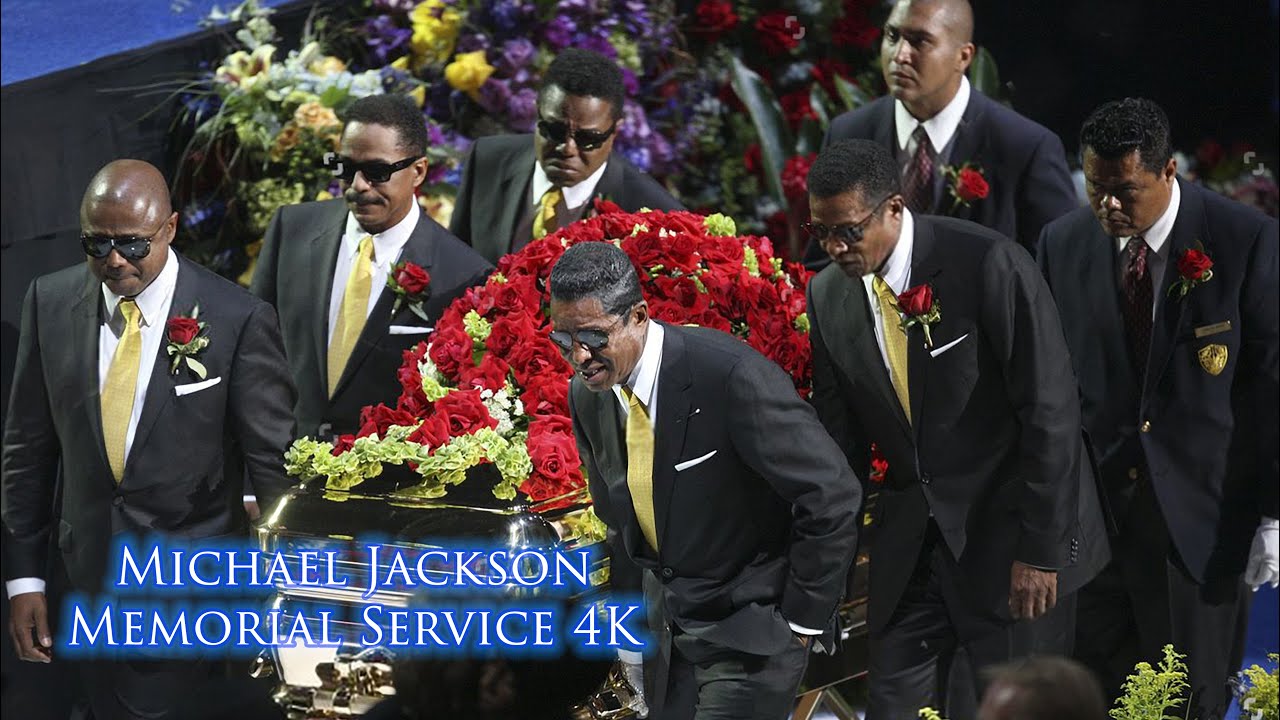
The Staples Center transformed into a sanctuary as the world gathered to bid a final, tearful farewell to the King of Pop. It was a day where legendary music, poetic tributes, and raw family emotion collided to honor a man who was both a global enigma and a beloved father.
Core Question: How did a kid from Gary, Indiana, reshape global culture while maintaining the fragile, humanitarian heart of a “Little Prince”?
Highlights
- Berry Gordy declares Michael Jackson the “greatest entertainer that ever lived.”
- Reverend Al Sharpton highlights Jackson’s role in breaking the racial “color curtain” in media.
- Brooke Shields shares intimate stories of Michael’s mischievous sense of humor and pure heart.
- Paris Jackson delivers a heartbreaking, spontaneous tribute to her father’s private love.
⏱️ Reading time: approx. 8 minutes · Saves you about 121 minutes vs. watching.
Want to take notes while watching? Click the image below and let AI Notebook capture the key points for you 👇

The Motown Legacy and Musical Tributes
From Gary to Global Superstardom
Michael’s arrival at Motown in 1968 changed the trajectory of American music forever, as Berry Gordy recalled a ten-year-old boy who sang with the soulful experience of a man who had lived the blues for a lifetime. Gordy noted that while the Jackson 5 was a powerhouse of talent, Michael possessed an “incredible knowingness” that allowed him to out-sing masters like Smokey Robinson even as a young child.
He was the consummate student who studied the greats to eventually surpass them, breaking the very bars he had previously raised for himself.
Performers like Stevie Wonder and Mariah Carey brought the audience to tears, reflecting a deep personal bond that spanned decades of collaboration and mutual respect within the music industry. Stevie Wonder’s soulful rendition of “Never Dreamed You’d Leave in Summer” captured the collective shock of a world losing a treasure far before his time, while Usher’s performance of “Gone Too Soon” served as a direct tribute to Michael’s own history of honoring the lost.

💡 Digging Deeper
Q: Why did Berry Gordy almost turn down the Jackson 5?
A: Gordy initially felt he had enough young talent with Stevie Wonder, but changed his mind instantly after seeing Michael’s performance on a videotape.
Q: What was Michael’s relationship with Lionel Richie?
A: They were long-time friends, starting from when the Commodores opened for the Jackson 5, eventually leading to their collaboration on “We Are the World.”
Q: How did Michael view his own success after ‘Thriller’?
A: He was incredibly driven and often felt disappointed if subsequent albums didn’t match the stratospheric sales of Thriller, despite their massive global success.
The Humanitarian and Cultural Icon
Breaking the Color Curtain
Reverend Al Sharpton emphasized that Michael’s journey was not about the “mess” of tabloids but rather a consistent, transformative message of global love and unity.
By breaking the “color curtain” on MTV and in magazines, Jackson paved a psychological path that allowed diverse global audiences to eventually become comfortable with leaders and icons of color in every sector of society. This cultural shift, Sharpton argued, created the comfort level necessary for later generations to embrace figures like Oprah Winfrey, Tiger Woods, and eventually a person of color as the President of the United States.
Congressman Sheila Jackson Lee presented a resolution to the House of Representatives, officially recognizing Jackson as an American legend, a musical icon, and a relentless world humanitarian. She recounted how Michael would quietly visit wounded soldiers at Walter Reed Hospital and build burn units for hospitals, proving that his “Good Samaritan” nature was a core pillar of his identity rather than a PR stunt.

💡 Digging Deeper
Q: Which record did Michael hold regarding charity?
A: He was in the Guinness Book of World Records for supporting the most charities of any pop star.
Q: What was the goal of the ‘Heal the World’ Foundation?
A: It was designed to disburse food and financial aid to underprivileged areas globally, a cause Michael treated with intense personal focus.
The Private Man and Final Farewell
The Little Prince and the Father
Brooke Shields painted a portrait of a “Little Prince,” a sensitive soul whose mischievous laugh and pure heart were often shielded from a world that viewed him only as a superstar. She spoke of their bond as two children who had to grow up in the spotlight, sharing stories of trying to sneak a peek at Elizabeth Taylor’s wedding dress and giggling like schoolmates when they were caught.
Marlon Jackson’s heartbreaking story of Michael shopping in a disguise—an afro and crooked teeth—only to be recognized by his shoes, highlighted the suffocating fame he endured while simply trying to experience the everyday life of a normal human being. This anecdote illustrated the duality of his life: the master showman who could command millions, yet a man who simply wanted to walk into a record store unnoticed.
The most poignant moment occurred when young Paris Jackson took the stage, tearfully declaring to the world that her daddy was the best father anyone could ever imagine.

💡 Digging Deeper
Q: What was Michael Jackson’s favorite song?
A: According to Brooke Shields, it was “Smile,” written by Charlie Chaplin for the movie ‘Modern Times.’
Q: How did Michael help other African American celebrities?
A: Magic Johnson noted that Michael opened doors for athletes to have their jerseys in homes worldwide by first breaking through as a global black icon.
Key Takeaways
Michael Jackson’s memorial was less a funeral and more a global acknowledgment of a cultural shift he initiated in 1968. From the soul-baring speeches of Berry Gordy and Al Sharpton to the intimate reflections of Brooke Shields, the event successfully separated the “personality” from the “person.” It reaffirmed that his musical genius was matched only by his humanitarian commitment, which saw him supporting a record-breaking number of charities while quietly funding hospital wings and orphanages.
The most enduring image from the service remains the humanization of a man who was often treated as an ethereal or controversial figure. The stories told by his brothers and children remind us that behind the sequins and the moonwalk was a man who loved Kentucky Fried Chicken, laughed at silly imitations, and was a dedicated father. His legacy, as articulated by the speakers, is one of breaking barriers—both musical and racial—and leaving the world more interconnected than he found it.
Q&A
Q1: Who performed “I’ll Be There” at the service?
A: Mariah Carey and Trey Lorenz performed the song, which was one of the Jackson 5’s first four number-one hits.
Q2: What did Maya Angelou contribute to the memorial?
A: Queen Latifah read a poem written specifically for the occasion by Dr. Maya Angelou, titled “We Had Him.”
Q3: Did Michael Jackson really eat Kentucky Fried Chicken?
A: Yes, Magic Johnson shared a humorous story about being surprised that his idol ate KFC during a dinner meeting at Michael’s house.
Q4: What was John Mayer’s contribution?
A: He performed a primarily instrumental version of “Human Nature” on the guitar, showcasing the musicality of the Thriller era.
Q5: Who was the young boy who sang “Who’s Loving You”?
A: Shaheen Jafargholi, a contestant from Britain’s Got Talent, who had been invited by Michael to perform in the “This Is It” London shows.
Q6: What did Marlon Jackson ask Michael to do in heaven?
A: In a deeply emotional moment, Marlon asked Michael to give their twin brother, Brandon (who died at birth), a hug.
Q7: How did the service conclude?
A: The service ended with a massive group performance of “We Are the World” and “Heal the World,” featuring the Jackson family and the performers from the planned London tour.