📺 Today’s recommended deep-dive video: https://www.youtube.com/watch?v=o7j-V3WLU9M
Breaking the Cycle: A Spiritual Strategy for Overcoming Temptation
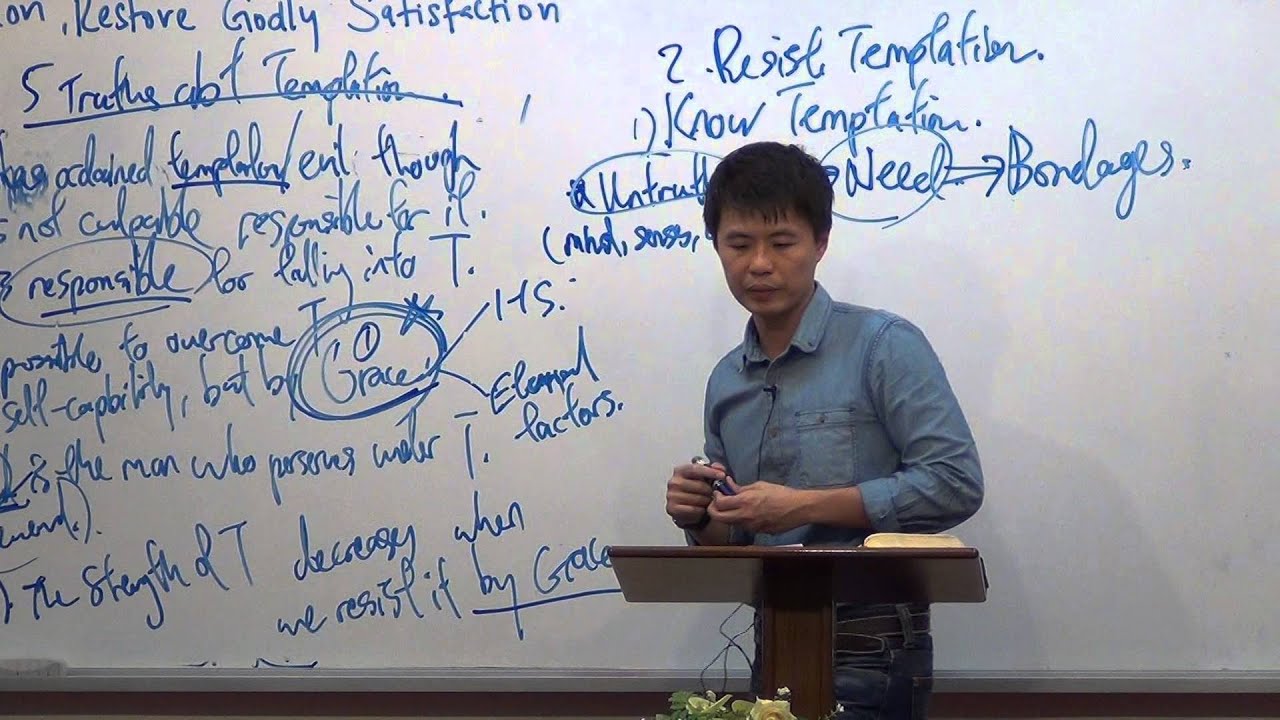
Most people view temptation as a grueling battle of willpower or a shameful moral failure, leading to a cycle of exhaustion and spiritual defeat. However, true victory is not found in human discipline, but in recognizing the spiritual mechanics of grace and the restoration of Godly satisfaction. By understanding how deception creates artificial needs, we can move from merely resisting sin to living in an empowerment that renders temptation powerless.
Core Question: How can a believer move beyond struggling against sin to living in the empowerment and satisfaction that renders temptation powerless?
Highlights
- Understanding that human morality is not a worthy opponent for temptation; we require a “God-provided way out.”
- Recognizing that temptation is rooted in “untruths” that create false needs and eventual spiritual bondage.
- The mystery of God’s sovereignty: He ordains the environment of trial but is never the source of evil.
- The strategy of “Flee and Pursue”: Victory requires filling the heart with Godly satisfaction, not just emptying it of sin.
⏱️ Reading time: approx. 7 minutes · Saves you about 66 minutes vs. watching.
Want to take notes while watching? Click the image below and let AI Notebook capture the key points for you 👇

The Reality of Human Fragility
A Common Struggle
No one is immune to the pull of temptation. It is a universal human experience, common to all, regardless of one’s background or level of religious devotion. Because our humanity is inherently limited—subject to ignorance, pain, and changing emotions—we are naturally susceptible to the lure of something “better” or “easier.”
It is vital to realize that our humanity is never a worthy opponent against temptation.
If you attempt to fight this battle using only your morality, your rationality, or your self-will, you have already lost. We are fragile beings prone to shifting preferences; a person may swear their devotion to a relationship or a goal one day and feel completely sick of it three months later. Because we are so susceptible to these internal shifts, God must be in the picture to provide a way out that we cannot construct for ourselves.
The Divine Safety Net
1 Corinthians 10:13 promises that God is faithful and will not let us be tempted beyond what we can bear. This is not a license for passivity, but a call to rely on a strength that is not our own. When we face trials, it is not a battle of our own making; it is God fighting through us by providing the promise of deliverance and the internal strength of the Holy Spirit.
Many Christians make the mistake of rationalizing their failures because “temptation is common,” but the Bible suggests that its commonality is exactly why we must be aware of the spiritual principles at play. There is a constant enemy working on our flesh, hoping to make us subjects to sin through any available channel. Awareness is the first step toward victory.

💡 Digging Deeper
Q: Is being tempted a sin in itself?
A: No. Even Jesus was tempted. Temptation becomes sin when desire is conceived and allowed to give birth to action.
Q: Why do I feel more tempted in specific areas?
A: While we all have unique wiring—such as a predisposition toward anger or lust—the enemy works on the “flesh” as a whole. Your specific weakness is an invitation to get your entire spirit right with God, not just one habit.
Q: Does “the way out” always mean the temptation disappears?
A: Not necessarily. It often means receiving the grace to endure it or the wisdom to see the deception behind the desire.
The Roots of Deception and Sovereignty
The Eden Blueprint
To understand why we struggle, we must look at where temptation first started. In the Garden of Eden, the Tree of Knowledge of Good and Evil served as a representation of God’s sovereignty. The challenge presented by the serpent was a challenge of “self-sovereignty” versus “God’s sovereignty.” Temptation, at its core, is the invitation to trust our own senses and our own definition of “good” over what God has declared to be true.
When Adam and Eve ate the fruit, they weren’t just eating a snack; they were declaring their own sovereign rights over God’s.
The Mechanics of “Untruth”
Temptation always begins with an untruth—a deception about what we need to be happy or secure. The strength of a temptation is actually the “need” that arises from these lies. When we believe a worldly value or a comparison with others, we develop a perceived need that eventually becomes a bondage. For instance, the need for money or the need for people’s approval can feel incredibly real, but if those needs spring from untruths, they will only lead to further insecurity and self-pity.
💡 Digging Deeper
Q: Why did God put the tree in the Garden if He knew they would fall?
A: For sovereignty to be meaningful, there must be a choice to submit to it. The tree provided the context for Adam and Eve to choose God’s goodness over their own perception.
Q: How do I distinguish between a “true need” and a “bondage”?
A: True needs (like love or provision) as defined by God lead to empowerment and liberation when satisfied. Deceptive needs (based on comparison or greed) lead to increased insecurity even when you get what you want.
Five Truths for the Spiritual Battle
The Paradox of Responsibility
We must hold two seemingly contradictory truths: God has ordained everything that happens, including the existence of temptation, yet He is not culpable for evil. He is not the source of the temptation, but He allows the environment of the trial so that we might turn to His goodness. Even when we fall, we are responsible for our choices, but we are also invited to be bold enough to bear the consequences, which is the hallmark of a repentant heart.
The Path to Decreasing Strength
It is possible to overcome, but never through self-capability. The strength of a temptation only decreases when we resist it by grace. If you try to overcome sin using your self-will, you will likely become judgmental toward others who fail, or you will eventually fall in a different, more subtle way. True resistance involves praying through the Word until the Holy Spirit changes the desires of your heart.

💡 Digging Deeper
Q: Does God use our failures for good?
A: Yes. In Christ, all is not lost. Falling into temptation can bring a person to a state of brokenness that finally allows them to realize the full measure of God’s grace, much like Peter after his denial of Jesus.
Q: How does the “strength” of a temptation actually go away?
A: When you stop giving into it and stop trying to white-knuckle it with your own will, and instead fill your heart with Godly satisfaction, the “need” for the sin begins to wither.
Restoring Godly Satisfaction
Fleeing and Pursuing
Victory requires a two-pronged approach: fleeing and pursuing. You cannot simply run away from an evil desire and leave your heart empty; the vacuum will eventually draw the temptation back in. You must pursue righteousness, faith, and peace alongside other believers. This means changing your environment, your influences, and your mental focus to things that provide genuine spiritual happiness.
The Power of Management
In Genesis 1:28, God gave man the mandate to be fruitful and to “rule over” or manage the earth. This principle applies to our internal lives as well. We are meant to manage our senses, our emotions, and our finances. When we fail to manage these things, they begin to manage us. True satisfaction comes from the “mind of blessedness”—the realization that everything we have is a gift from God, which eliminates the fear of loss and the greed for “more.”

Key Takeaways
Temptation is not a sign that you are a bad person; it is a sign of your humanity and the presence of a spiritual enemy. However, you are not meant to be a victim of your desires. By shifting your focus from “not sinning” to “being satisfied in God,” you change the battlefield entirely. When the heart is full of the fruits of the Spirit—love, joy, and peace—the “stolen water” of temptation loses its sweetness.
Remember that even if you have fallen, grace abounds. The pain of consequence is often the very thing that drives us back to a deeper reliance on God’s mercy. Don’t just fight the symptoms of your weakness; seek a total restoration of your spirit. As you manage your life according to God’s sovereignty and fill your mind with the truth of His provision, you will find that the bondages of the past slowly lose their grip, replaced by a lasting, Godly empowerment.
Q&A
Q1: Why does the Bible say temptation is “common to man”?
A: It highlights that temptation is a natural result of our fallen spiritual realm and limited humanity. It warns us not to be shocked by its presence but to rely on God’s faithful provision for a way out.
Q2: What is the relationship between “needs” and temptation?
A: Temptation often creates or exploits a perceived “need” based on untruths (like the need for more money to be secure). When we buy into the lie, the need becomes a bondage that controls our emotions and actions.
Q3: How should I respond if I have already fallen into temptation?
A: You should not lose heart. Accept the consequences with a repentant spirit, and turn to the grace of God which is sufficient to sustain you. Use the failure as a catalyst to realize your need for His overwhelming mercy.
Q4: Can I overcome temptation through sheer willpower?
A: No. Self-will often leads to a “solen face” or a judgmental attitude. True victory comes only through the Holy Spirit changing your heart’s desires so that you actually begin to love holiness and delight in God’s ways.
Q5: What does it mean to “flee and pursue”?
A: Fleeing means recognizing an evil desire and removing yourself from its influence. Pursuing means actively filling your life with the Word of God, the fellowship of believers, and spiritual goals so that your heart is not left empty.
Q6: How does the “mind of blessedness” help in this struggle?
A: When you believe you are already blessed and provided for by God, you lose the “lack” mindset that drives greed and envy. Security in God’s provision acts as a shield against the lure of forbidden things.
Q7: Why is “managing” our lives important for spiritual victory?
A: God designed us to rule over our senses and emotions. If we don’t manage them through the Spirit, they will manage us, leading to a state of frustration and spiritual stagnation.