📺 Today’s recommended deep-dive video: https://www.youtube.com/watch?v=id1BUAwrBMc
The Tech Titans Reckoning: Antitrust and the Future of the Digital Economy
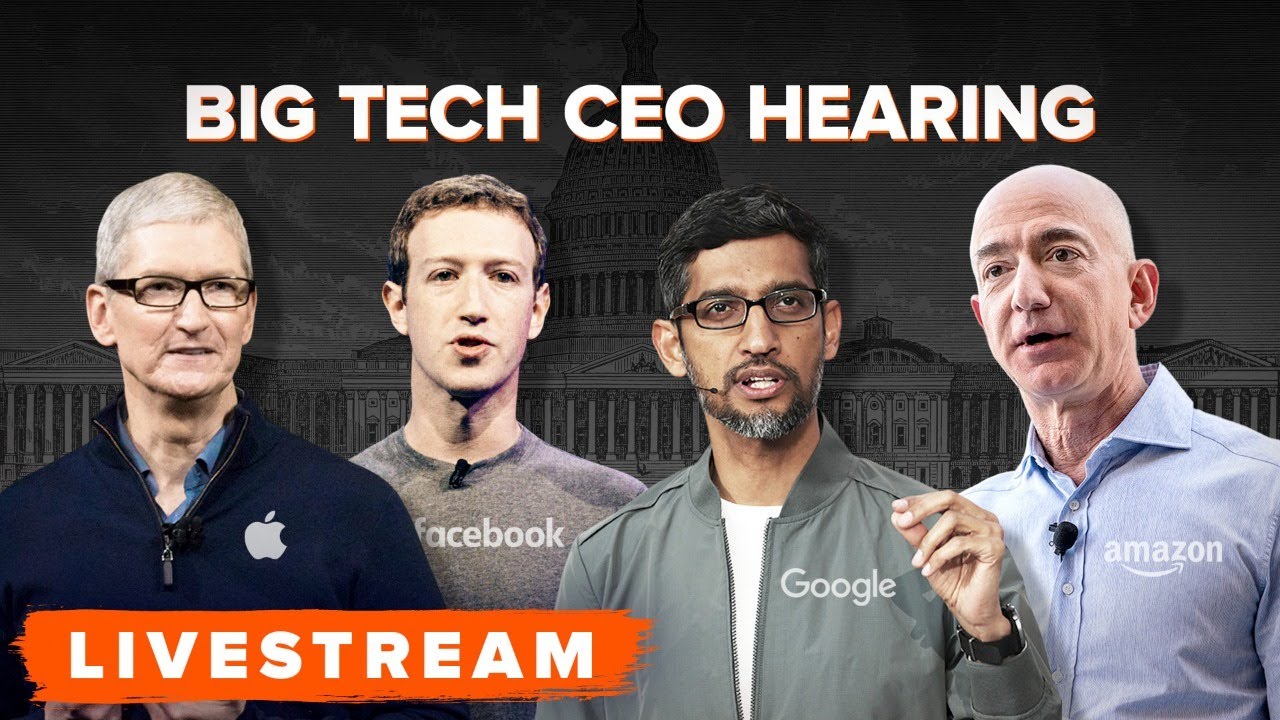
Four of the world’s most influential CEOs—Jeff Bezos, Sundar Pichai, Tim Cook, and Mark Zuckerberg—appeared before the House Judiciary Subcommittee to defend their empires against allegations of anti-competitive conduct. The hearing represents a historic climax to a year-long investigation into whether Big Tech has fundamentally broken the American dream of open competition.
Core Question: Do the dominant business practices of Amazon, Apple, Facebook, and Google constitute illegal monopoly power that stifles innovation and threatens democratic governance?
Highlights
- Evidence surfaced of Facebook’s “land grab” strategy to neutralize competitors like Instagram and WhatsApp through acquisition.
- Amazon faced intense scrutiny over its use of third-party seller data to launch competing private-label products.
- Google was accused of leveraging its search dominance to prioritize its own services while “stealing” content from smaller vertical sites.
- Apple defended its App Store commissions as an “economic miracle,” despite allegations of predatory behavior toward rival developers.
⏱️ Reading time: approx. 18 minutes · Saves you about 385 minutes vs. watching.
Want to take notes while watching? Click the image below and let AI Notebook capture the key points for you 👇

The Gateway to the Digital Economy
Platforms as Modern Bottlenecks
The subcommittee’s investigation suggests that the four tech giants have moved beyond mere service providers to become the essential infrastructure of the 21st century.
Because these companies serve as the primary arteries of commerce and communication, their internal decisions have an outsized impact on the broader economy. Chairman Cicilline argued that these platforms act as “bottlenecks,” controlling access to information and marketplaces in a manner reminiscent of the 19th-century railroad tycoons who once choked off competition to enrich themselves. This centralized control allows a handful of private individuals to pick winners and losers across almost every sector of American industry.
When a single company controls the gateway to the internet, independent businesses find themselves in a precarious position where they must either pay a “tech tax” or face total invisibility.

💡 Digging Deeper
Q: What is the “bottleneck” theory in this context?
A: It refers to a situation where a platform provides the only viable way for a business to reach its customers, allowing the platform to extract high fees or impose restrictive terms.
Q: How did the CEOs respond to the “Big is Bad” argument?
A: They argued that their size is a result of success in serving customers and that they face “fierce competition” from both domestic rivals and rising international powers like China.
Data Surveillance and Market Manipulation
The Double-Edged Sword of Platform Ownership
One of the most contentious segments of the hearing involved Amazon’s Jeff Bezos and Google’s Sundar Pichai regarding their use of proprietary data.
Chairman Cicilline and Representative Jayapal presented evidence that Amazon uses its “dual role” as both a marketplace operator and a retailer to surveil successful third-party sellers. By identifying which products are trending, Amazon can launch its own competing versions, undercutting the original creators on price and placement. While Bezos claimed a policy exists to prevent this, he could not guarantee that it was never violated, admitting the company is still investigating reports of such breaches.
Google, meanwhile, was accused of evolving from a “turnstyle” that sends traffic elsewhere into a “walled garden” that keeps users on Google-owned properties at all costs.
Internal memos suggested that Google staff viewed “vertical search” sites like Yelp or Expedia as threats to be neutralized. By “scraping” or stealing content from these sites to populate Google’s own results, the search giant effectively turns its partners into involuntary data providers for its own competing services. This dynamic forces smaller businesses to spend more on Google Ads just to maintain the traffic they once earned through organic relevance.

💡 Digging Deeper
Q: What is “self-preferencing”?
A: It is the practice of a platform giving its own products or services better placement in search results or marketplaces than those of its competitors.
Q: Did Bezos admit to using seller data?
A: He acknowledged that while they have a policy against using “individual” seller data, they do use “aggregate” data, which critics argue is a distinction without a difference in niche markets.
The “Copy, Acquire, Kill” Strategy
Facebook and the Erosion of Competition
Mark Zuckerberg was grilled on Facebook’s acquisition history, specifically the purchase of Instagram in 2012, which internal emails suggested was a move to “neutralize” a competitor.
Representative Nadler pointed to messages where Zuckerberg described Instagram as a “threat” that could “meaningfully hurt us.” The documents suggest that Facebook’s primary motivation for the $1 billion purchase was not innovation, but the fear that Instagram’s mobile-first approach would siphon away Facebook’s user base. Zuckerberg defended the move, stating the FTC cleared the deal at the time and that Instagram’s success was only possible through Facebook’s massive infrastructure investment.
However, the subcommittee countered that buying off a rival is the hallmark of an illegal monopoly.
The discussion then turned to “cloning”—the practice of copying a rival’s features to prevent them from gaining a foothold. Evidence showed that Facebook developed “Facebook Camera” as a weapon to pressure Instagram into a sale, a tactic reportedly repeated with Snapchat. This “copy, acquire, or kill” playbook allegedly creates a “kill zone” around the dominant platforms, where startups are either swallowed up or destroyed before they can reach a competitive scale.
💡 Digging Deeper
Q: What is a “Land Grab” in tech?
A: An internal Facebook term describing a strategy to rapidly acquire new categories of social interaction (like mobile photos or private messaging) to shore up market position.
Q: Why does the Instagram acquisition matter now?
A: Critics argue it was a “killer acquisition” that allowed Facebook to maintain its monopoly by removing its biggest potential rival from the market.
The Gatekeeper and the Censor
Apple’s App Store and Google’s Bias
The final major theme focused on Apple’s absolute control over iOS software and the broader concerns regarding political bias and content moderation.
Tim Cook defended the App Store’s 30% commission, describing it as a fair price for the massive audience and security Apple provides. However, Representative McBath raised instances where Apple removed “parental control” apps only after launching its own “Screen Time” feature. Cook denied any anti-competitive intent, citing child privacy concerns, but the timing of these removals suggested to the committee that Apple uses its “gatekeeper” status to privilege its own software over independent developers.
Simultaneously, Republican members focused on allegations that Google and Facebook are “out to get conservatives.”
Representative Jordan and others cited the “shadowbanning” of members of Congress and the demonetization of conservative news sites as evidence of a systemic bias. Sundar Pichai and Mark Zuckerberg both maintained that their platforms are neutral and that their content moderation policies are designed only to combat misinformation and harmful content, regardless of the political leaning of the poster.

Key Takeaways
The hearing established a clear divide between two visions of the American economy. The CEOs presented their companies as “American success stories” that provide immense value to consumers through free services, low prices, and global innovation. They argued that their dominance is not guaranteed and that they compete in a “street fight” for every user and every dollar.
The subcommittee, however, concluded that the “consumer welfare standard”—which looks primarily at whether prices are low—is insufficient for the digital age. They argued that by controlling the infrastructure, these firms have become “private governments” that can tax, surveil, and destroy competitors at will. The core issue is no longer just the price of a product, but the health of the entire ecosystem of innovation and the preservation of democratic choice.
Moving forward, the committee signaled that legislative changes to antitrust laws are likely, potentially including structural separations of platforms from their retail arms and stricter scrutiny of “killer acquisitions.”
Q&A
Q1: Will Amazon be forced to stop selling its own brands?
A: While no law was passed today, Chairman Cicilline explicitly stated that the “dual role” of being both the platform and the competitor is fundamentally anti-competitive, hinting at future “Glass-Steagall for the Internet” style regulations.
Q2: Did the CEOs agree that China steals IP?
A: Mark Zuckerberg was the only CEO to state clearly that it is “well-documented” that the Chinese government steals technology from American companies; the others were more guarded, citing a lack of firsthand knowledge.
Q3: Why was the 30% App Store fee such a big deal?
A: Critics argue that for many developers, there is no other way to reach iPhone users, making the 30% fee a mandatory “toll” rather than a competitive market rate.
Q4: How does Google respond to the charge of “scraping” content?
A: Sundar Pichai argued that Google aims to provide the most relevant information to users and that their “featured snippets” are designed to be helpful, though he did not directly refute claims that they threatened to delist sites like Yelp if they didn’t allow their data to be used.
Q5: What is the “Digital Land Grab”?
A: This refers to internal Facebook emails from 2014 where executives discussed spending a percentage of their market cap every year to acquire startups and “shore up” their position against any new competitive threats.
Q6: Is there proof of political bias in the algorithms?
A: The CEOs denied any bias, but Republican members pointed to specific instances of “glitches” that only seemed to affect conservative accounts, while Democrats argued that the platforms actually amplify right-wing disinformation because it drives high engagement.