📺 Today’s recommended deep-dive video: https://www.youtube.com/watch?v=TgS0nFeYul8
Decoding Intelligence: From Chessboards to the Frontiers of Science
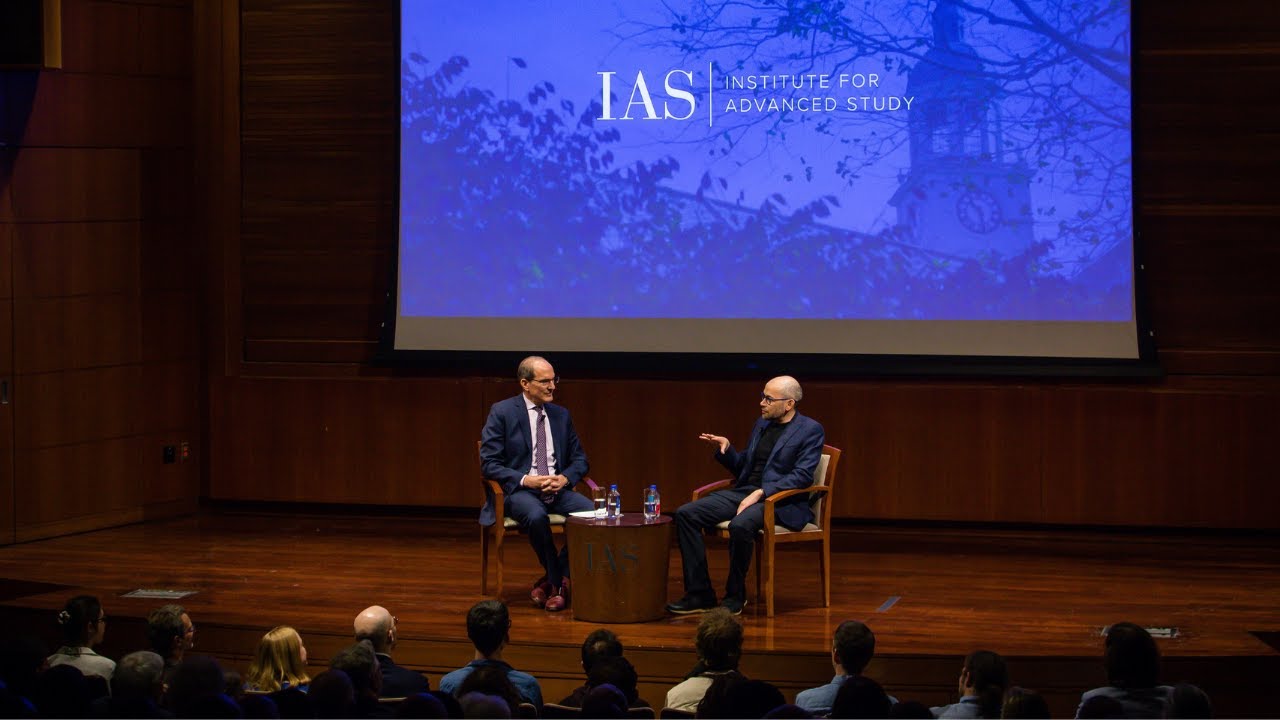
Sir Demis Hassabis, the Nobel Prize-winning CEO of Google DeepMind, explores his journey from a child chess prodigy to a pioneer of artificial intelligence. This dialogue, hosted at the Institute for Advanced Study, delves into how simulation games and neuroscience laid the foundation for solving 50-year-old biological mysteries.
Core Question: Can the distillation of intelligence into classical machines solve the most complex puzzles of the natural world, from protein folding to mathematical conjectures?
Highlights
- Games like Chess and Go serve as perfect microcosms for training general-purpose AI algorithms due to their clear metrics and synthetic data generation.
- AlphaFold’s success in predicting protein structures relied on 50 years of human experimental data combined with innovative synthetic “triaging” techniques.
- The Hassabis Conjecture posits that any pattern generated by nature can be efficiently modeled by classical learning algorithms, challenging the need for quantum computing in biology.
- The future of AI safety requires international cooperation and new institutions modeled after CERN or the IAEA to manage the risks of “bad actors” and autonomous agents.
⏱️ Reading time: approx. 9 minutes · Saves you about 49 minutes vs. watching.
Want to take notes while watching? Click the image below and let AI Notebook capture the key points for you 👇

The Gamification of Discovery
From Board Games to World Models
Demis Hassabis traces his obsession with intelligence back to a four-year-old’s fascination with the internal mechanics of chess strategy.
By the time he reached his teens, Hassabis realized that zero-sum games were not merely entertainment but were highly structured environments where intelligence could be isolated, measured, and eventually automated. These games provide a unique advantage: they offer clear win conditions and allow for the generation of infinite synthetic data through self-play, providing a perfect on-ramp for developing algorithms that can generalize to other, more “real-world” challenges like economics or physics.
The transition from the digital board to the physical world requires “multimodality,” where systems understand intuitive physics, such as knowing that a dropped glass will shatter.

💡 Digging Deeper
Q: Why are zero-sum games specifically useful for AI?
A: They provide clear metrics (win/loss) and a closed environment where an AI can play against itself to generate massive amounts of training data.
Q: Is a game like charades harder for AI than chess?
A: Yes, because it requires understanding visual context, human intent, and the physical laws of the world, whereas chess is purely logical.
Q: What was the significance of the game “Theme Park”?
A: It was an early attempt to create AI characters that adapted their behavior based on the individual player’s style, proving the power of adaptive simulation.
Scaling Scientific Breakthroughs
Cracking the Protein Code
The success of AlphaFold was not an accident; it was a deliberate choice to apply game-winning logic to a 50-year-old grand challenge in biology.
Proteins are the workhorses of life, yet their 3D structures are so complex that an average protein could theoretically fold into $10^{300}$ different shapes. To solve this, DeepMind combined the existing 150,000 human-solved structures from the Protein Data Bank with synthetic data generated by an earlier version of the model, essentially “bootstrapping” its way to a billion-structure library. This approach effectively turned a biological mystery into a massive combinatorial search problem.
We are now entering an era where AI doesn’t just predict what exists, but helps us design entirely new compounds for medicine.

💡 Digging Deeper
Q: Did AlphaFold rely entirely on human data?
A: No, the 150,000 known structures were insufficient; the team had to use “triaged” synthetic data to reach the scale necessary for high accuracy.
Q: How does AI help in drug discovery?
A: It allows scientists to search for compounds that bind to specific proteins while avoiding “off-target” binding, which causes toxicity.
Q: What is the next big goal in biology for DeepMind?
A: Moving beyond single proteins to modeling entire biological systems and complex cellular interactions.
The Foundations of Computation
P vs. NP and the Classical Brain
Hassabis expresses a profound interest in the P vs. NP problem, a fundamental question about whether problems that are easy to verify are also easy to solve.
The success of neural networks has surprised even the most skeptical scientists because it proves that classical computers can approximate solutions to problems that were previously thought to be computationally intractable. Hassabis suggests that because the human brain appears to operate on classical physical principles—rather than quantum ones—there is no inherent reason why a machine cannot eventually mimic the full breadth of human general intelligence.
If a pattern exists in nature, it is likely not random, which means it can be distilled into a model.

💡 Digging Deeper
Q: What is the “Hassabis Conjecture”?
A: The idea that any stable pattern in nature can be efficiently discovered and modeled by a classical learning algorithm given enough data.
Q: Does Hassabis believe the brain is a quantum computer?
A: No, he sides with the majority of neuroscientists who believe the brain operates as a classical system, making its functions computable.
Q: How does the imagination relate to AI?
A: Hassabis views imagination as a reconstructive process, similar to how AI models use internal “world models” to simulate and plan for future scenarios.
The Future of AGI and Global Safety
Managing the Intelligence Explosion
As we move toward Artificial General Intelligence (AGI), the shift from academic research to industrial labs has created a massive resource disparity driven by the need for compute power.
Hassabis acknowledges that while companies lead in engineering, academia must lead in benchmarking, ethics, and “AI neuroscience”—the study of what these models are actually doing under the hood. The risks are twofold: “bad actors” using AI for harmful biological or digital ends, and the “inherent risk” of autonomous agents acting in ways we cannot predict or control once they reach a certain level of agency.
We need a “Technical UN” to govern this transition, yet our current global institutions are struggling to keep pace with the speed of innovation.

💡 Digging Deeper
Q: Why has AI research moved from universities to companies?
A: The primary driver is “compute”—the massive hardware resources required to train modern foundation models, which currently only large tech firms can afford.
Q: What is “Project Astra”?
A: A prototype for a universal digital assistant that can see, hear, and remember the user’s environment in real-time.
Q: What model of international cooperation does Hassabis suggest?
A: He proposes something akin to CERN for research collaboration or the IAEA for monitoring dangerous or rogue AI projects.
Key Takeaways
Artificial Intelligence has transitioned from a specialized tool for games to a general-purpose engine for scientific discovery. The core philosophy driving this shift is the belief that complexity in nature—whether in protein folding or material science—often hides a discoverable structure that can be mapped by neural networks. By treating scientific mysteries as massive search spaces, AI can find “needles in haystacks” that would take humans billions of years to uncover.
However, the power of this technology necessitates a new approach to governance. The duality of AI means the same tools used to cure diseases could be repurposed for harm. Hassabis emphasizes that the path forward requires a balance between industrial engineering prowess and academic scrutiny. The ultimate goal is not just to build smarter machines, but to use those machines as telescopes for the mind, allowing humanity to see further into the nature of reality than ever before.
Q&A
Q1: Why did Hassabis choose to move from games to protein folding specifically?
A: He looked for problems with massive combinatorial spaces, clear metrics, and enough existing data to build a foundational model, which protein folding offered perfectly.
Q2: Is the data for AI for science becoming a bottleneck?
A: Yes. While the open web provides text, scientific breakthroughs often require high-quality experimental data, which is much scarcer and more expensive to produce.
Q3: What role does neuroscience play in modern AI design?
A: Hassabis used his PhD work on the hippocampus to inform how AI models use “imagination” and memory to simulate future possibilities and plan actions.
Q4: How does DeepMind ensure its AI doesn’t “hallucinate” in scientific contexts?
A: By using formal logic languages like “Lean” in mathematics and cross-referencing AI predictions with physical laws in biology to verify the accuracy of the outputs.
Q5: What are the biggest risks of AGI?
A: Hassabis cites two: the misuse by bad actors (rogue states or individuals) and the inherent difficulty of controlling highly autonomous, agentic systems.
Q6: Can academia still compete with big tech in AI?
A: Not in raw compute power, but academia is essential for “orthogonal” work like philosophy, safety benchmarking, and interpreting how models function.
Q7: Will AI eventually solve the P vs. NP problem?
A: It is a personal goal of Hassabis to use AI to make progress on this fundamental mathematical question, potentially during a future sabbatical at the Institute for Advanced Study.