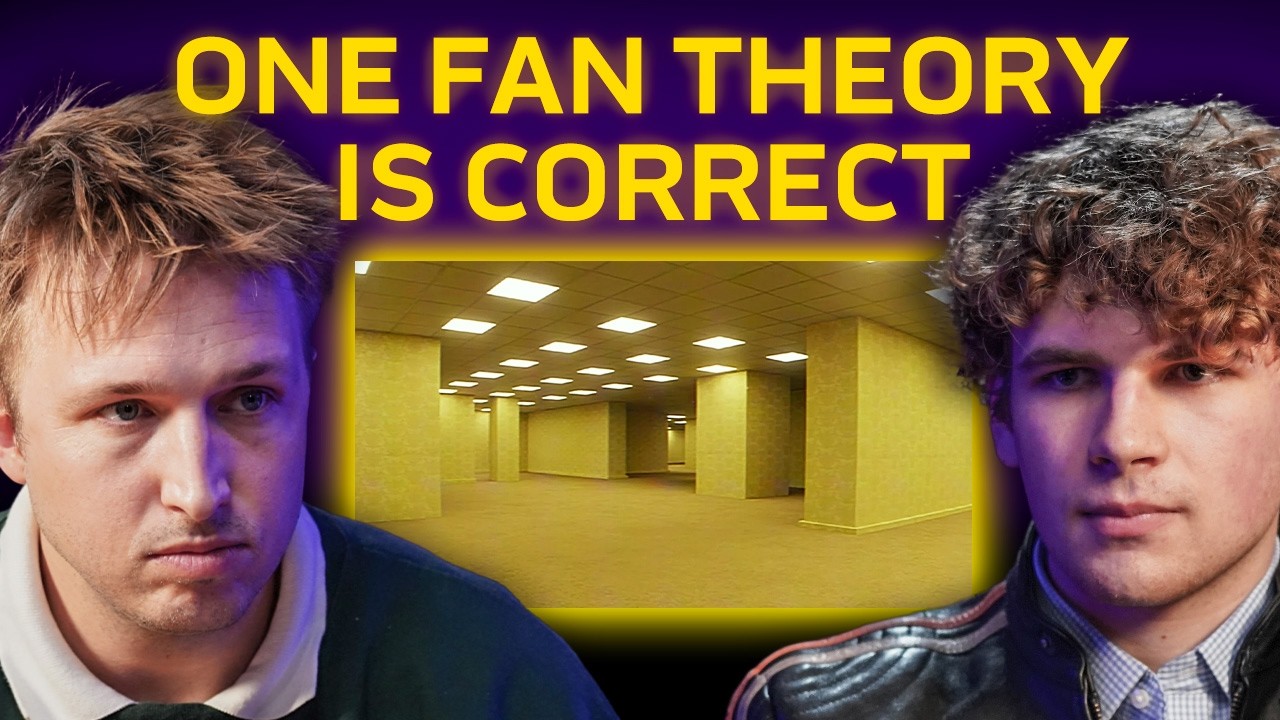
📺 Today’s recommended deep-dive video: https://www.youtube.com/watch?v=7u8HyrWa8KA
Beyond the Yellow Walls: Kane Parsons on Lore, A24, and the Science of No-Clipping
Kane Parsons was just 16 when his “Back Rooms” video redefined internet horror. Now, as he partners with A24 to bring the liminal nightmare to the big screen, he reveals that every shadow and flickering light is part of a 71-page master plan.
Core Question: How does a teenage creator turn a viral creepypasta into a multi-million dollar cinematic universe while maintaining total creative control?
Highlights
- One random YouTube commenter with only two likes actually solved the entire lore.
- Kane maintains a 71-page internal Wikipedia to ensure every mystery has a definitive answer.
- The upcoming A24 film will not stop Kane from continuing his YouTube series.
- The realism in “The Oldest View” was so intense that Facebook conspiracy theorists mistook it for real-world trafficking tunnels.
⏱️ Reading time: approx. 4 minutes · Saves you about 28 minutes vs. watching.
Want to take notes while watching? Click the image below and let AI Notebook capture the key points for you 👇

The Geometry of a Viral Nightmare
From 4chan to A24
Kane Parsons didn’t just stumble into success; he engineered a specific atmosphere that resonated with millions of people globally.
The back rooms concept originated from a combination of two separate 4chan posts—an image of a Wisconsin furniture store and a caption about “no-clipping” out of reality. Kane took this skeletal idea and, using the software Blender, transformed it into a tangible, found-footage experience that feels like a simulation glitching under the weight of its own urban decay.
Now 19, he is working with A24 to translate this YouTube phenomenon into a feature film. Despite the jump to Hollywood, Parsons insists that the studio is surprisingly hands-off, allowing him to maintain the singular vision that made the original shorts so haunting. He views the project as a natural evolution rather than a departure from his digital roots.
His success is a testament to the power of modern accessible technology, which allows a single teenager to create professional-grade visual effects that rival major studio productions.

💡 Digging Deeper
Q: What exactly is “no-clipping” in this context?
A: It’s a video game term for moving through solid objects, used here as a metaphor for falling out of our physical reality and into a “glitched” sub-dimension.
Q: How does Kane feel about being the “Back Rooms guy”?
A: He is grateful but doesn’t want it to be his only life project; he is constantly moving toward better versions of his work.
Q: Will the A24 film follow the YouTube timeline?
A: Yes, Kane has a specific timeline that all media, including the film, abides by.
The 71-Page Bible
Solving the Unsolvable
Fans have spent years dissecting every frame of Kane’s work, but the truth remains hidden in a massive 71-page document Parsons keeps for himself.
Interestingly, while mega-theorists like MatPat have taken their swings at the lore, Kane reveals that only one anonymous commenter has ever truly “gotten it” right. This person, whose comment garnered a mere two likes, managed to piece together the specific narrative beats that everyone else missed.
This commitment to a pre-planned ending is what separates Parsons from many other internet creators who make it up as they go along. He refuses to set up a mystery without knowing the answer first, a philosophy that provides his work with a sense of weight and intention that viewers can intuitively feel, even if they don’t see the full picture yet.
The 71-page document serves as a “personal Wikipedia” for the story, detailing characters, timelines, and the legal entities involved in the fictional world. It’s a dense, character-driven roadmap that prevents him from ever having to retcon his own history.

💡 Digging Deeper
Q: Are the fan theories generally accurate?
A: Most are off-base, especially the “Film Theory” interpretation, though some specific elements have been correctly identified by the community.
Q: Does Kane work with a large team?
A: Currently, no. He prefers a personal approach and finds it difficult to part with creative control, though he is open to technical help in the future.
Q: Does he ever run out of ideas?
A: He says if he runs out of “creative mileage” on the Back Rooms, he will simply start another series, as he did with “The Oldest View.”
The Mechanics of Liminal Horror
Faking Reality
Kane’s approach to horror isn’t about jump scares or monsters, though life forms do occasionally appear in his work to satisfy the “found footage” trope.
The realism of his “Oldest View” series reached such a peak that conspiracy theorists on Facebook began circulating clips as evidence of real-world government trafficking tunnels. This reaction is the “crowning achievement” for Kane, as his goal is often to “fake reality” so convincingly that the audience questions what they are seeing.
Instead of drawing from horror cinema, he focuses on the rhythm of real-world footage, drawing inspiration from body-cam videos and urban exploration. By mimicking the technical imperfections of reality, he creates a sense of dread that feels disturbingly plausible to the average viewer.
This “found footage” aesthetic is bolstered by Kane’s background in music composition. He creates a daily song as a form of relaxation, often using these soundscapes to heighten the existential anxiety that permeates his visual work, grounding the supernatural in a layer of deep, sonic unease.
![Comparison Table: Classic Horror vs. Kane Pixels Horror. Columns: Focus, Main Threat, Aesthetic. Rows: [Jump scares vs. Existential dread], [Monsters vs. The Unknown Space], [Cinematic vs. Body Cam/Found Footage Reality].](images/section3.png "The Backrooms Creator Kane Pixels on His A24 Movie & Lore 10")
💡 Digging Deeper
Q: What is the “Async” group in the videos?
A: A fictional organization studying the back rooms, modeled after mundane government agencies or a “dentist’s office” rather than a typical evil corporation.
Q: Is the music in the videos original?
A: Yes, Kane composes all the music himself and is considering doing the score for the A24 film as well.
Q: What is his biggest fear?
A: Not a bus hitting him, but the existential dread of non-existence and the loss of awareness.
Key Takeaways
Kane Parsons has successfully bridged the gap between niche internet subcultures and mainstream Hollywood by treating “liminal horror” with the seriousness of a high-concept sci-fi epic. His insistence on a “closed” mystery—where every question has a pre-determined answer—provides a level of narrative depth that keeps audiences engaged far longer than a standard jump-scare video.
Ultimately, his work thrives on the “unknown” and the uncanny valley of digital spaces. By utilizing tools like Blender to recreate real-world locations and mimicking the grainy imperfections of amateur videography, he forces the viewer to confront the terrifying possibility that the world we see is only a thin veil over something much larger and more indifferent.
Q&A
Q1: How old is Kane Parsons now?
A1: He is 19 years old, though he went viral when he was 16.
Q2: Will fan-made Back Rooms projects be taken down because of the movie?
A2: No, Kane states there is no interest in pursuing fan projects, as the concept originated in the public domain.
Q3: Is there food in the Back Rooms universe?
A3: Kane believes there would be food, but it would be rare, possibly rotted, and difficult to find.
Q4: Did the “Oldest View” mall actually exist?
A4: Yes, the mall and the giant depicted in that series were based on real places and entities that existed at one point in time.
Q5: What is Kane’s advice for aspiring creators?
A5: He strongly recommends trying Blender, noting that student licenses make it easier than ever to start.
Q6: Does Kane struggle with mental health due to his dark content?
A6: He describes himself as having “chronic stress” but primarily uses his work to explore existential questions about death and awareness.
Q7: What is the deal with the “dog on the table” conversation?
A7: It was a philosophical tangent about the difference between living organisms and inanimate objects within the Back Rooms’ “pseudo-science” logic.