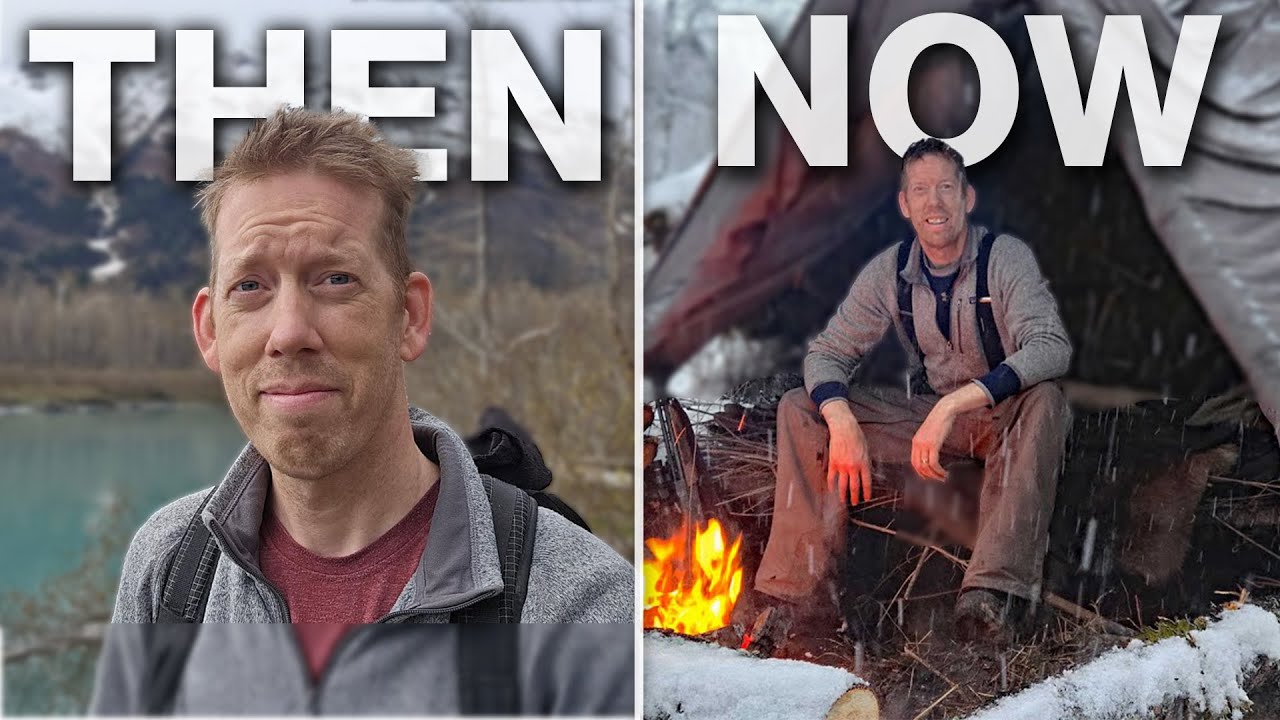
📺 Today’s recommended deep-dive video: https://www.youtube.com/watch?v=e-lYLoz9uIk
Beyond Outdoor Boys: Luke Nichols on Fame, Retirement, and Why He Broke His Silence
In a rare and candid interview, Luke Nichols discusses his sudden departure from YouTube and his unexpected return to help a fellow creator in crisis. It is a revealing look at the personal cost of digital celebrity and the philosophy of “enough” in an era of infinite growth.
Core Question: Why did the internet’s favorite survivalist walk away from millions of views, and what brought him back for one final night in the Alaskan woods?
Highlights
- Luke explains that his retirement was driven by family security concerns and the unsustainable pressure of 100-hour work weeks.
- A massive collaborative effort helped the “My Life Outdoors” channel double its subscribers during a severe family health crisis.
- Nichols reveals his “Sweet and Bitter Poison” theory on why he refuses to enable YouTube comments for the sake of his mental health.
- Technical gear insights focus on why Luke utilizes ultralight tents and packs primarily to offset the weight of camera batteries and lights.
⏱️ Reading time: approx. 7 minutes · Saves you about 46 minutes vs. watching.
Want to take notes while watching? Click the image below and let AI Notebook capture the key points for you 👇

The Return and the Catalyst for Change
A Collaboration Born of Empathy
Luke Nichols didn’t return to the screen for money or views; he reached out via cold email after seeing a fellow creator struggling through a wife’s cancer diagnosis.
The intense schedule of running a top-tier YouTube channel generates a level of pressure that is nearly impossible to communicate to those outside the industry, leading to a deep, shared empathy among high-level creators. When Luke saw the video regarding thyroid and breast cancer treatments, he realized his retirement provided a unique opportunity to finally be useful to society by helping someone in a genuinely rough spot without the pressure of producing his own content.
For the host of My Life Outdoors, the collaboration was a life-changing event that occurred at a moment of maximum vulnerability. While he expected a simple update video to garner maybe one hundred thousand views, the resulting partnership eventually drove the channel past the million-subscriber milestone in a single week.

💡 Digging Deeper
Q: How did Luke and the host first meet?
A: They had never met or spoken prior to Luke sending a “cold email” offering to help after seeing the host’s update on his wife’s health.
Q: What was the specific impact on the “My Life Outdoors” channel?
A: The channel grew from 586,000 subscribers to over 1,060,000 subscribers in roughly one week following the collaboration.
Q: Why did Luke feel he could help?
A: Being retired meant he finally had the time to be “useful to society” by using his influence to support someone else’s family during a dark time.
The Philosophy of Retirement
Fame and the Razor Clam Metaphor
Retirement wasn’t a snap decision, but rather a calculated exit from a lifestyle that Luke compared to being a professional athlete, where growing old in the career is rare. He had been contemplating the move for years, eventually realizing that the constant exposure was becoming an unhealthy distraction for his young family.
Fame is like digging razor clams: if you don’t know when you have enough, you end up spending your whole life processing more than you could ever actually consume.
The shift from occasional recognition to being recognized everywhere created significant security concerns that Nichols was no longer willing to tolerate for the sake of a growing brand. He wanted the ability to attend his children’s school events or enjoy a simple dinner with his wife without the distraction of a celebrity lifestyle, leading him to choose a normal life over the possibility of doubling his channel size in the coming years.

💡 Digging Deeper
Q: What was the main reason for the “Outdoor Boys” retirement?
A: A combination of safety concerns for his children, the desire for privacy, and the exhaustion of working 80-100 hour weeks.
Q: Does Luke have “phantom camera syndrome”?
A: Yes, he admits to reaching for non-existent cameras during family trips because he was so conditioned to film every moment for eleven years.
The Danger of the Comment Section
Sweet and Bitter Poisons
One of the most distinctive aspects of the Outdoor Boys channel was the total absence of a comment section, a choice Luke defends as a necessity for maintaining human health and authenticity. He describes public feedback as a mixture of sweet and bitter poisons, where praise can be just as damaging as criticism because it lures creators into making decisions based on fan expectations rather than their own creative vision or the needs of a general audience.
By isolating himself from the noise, Nichols believes he preserved the wholesome, authentic quality that his fans loved, preventing his personality from being tarnished by the digital wallow.
The decision also serves a protective function for his children, who are now old enough to read and process the things strangers might say online. Protecting them from a “weird digital situation” allows them to mature naturally without the weight of public opinion affecting their growth or their perception of their father’s work.

💡 Digging Deeper
Q: Why does Luke avoid even positive comments?
A: He believes praise is a “sweet poison” that makes creators pander to fans, which eventually ruins the authentic quality of the content.
Q: How do comments affect the editing of a video?
A: Luke notes that creators often waste time in videos “rebutting” one or two negative comments, which ruins the flow for the other 99% of the audience.
Technical Gear and Alaskan Survival
The Weight of the Enigma
Even when trying to be ultralight, Luke remains an enigma, carrying heavy Civil War-era antique forks and wooden plates alongside his high-tech Zpacks tents and Hyperlite packs.
Winter camping in Alaska requires a specific systematic approach, where wood must be gathered and processed before the sun sets at four in the afternoon. Nichols emphasizes that even headlamps struggle to differentiate between live and dead wood in the pitch black, making the “math” of firewood pile management a critical survival skill for long nights.
For gear enthusiasts, the discussion highlighted the durability of the Hyperlite Porter for heavy loads, even though it lacks the “magic” stabilizing straps found on more traditional trekking packs. Luke admits that he uses ultralight gear not for the sake of weight savings alone, but to offset the massive weight of batteries, lights, and camera equipment required to film high-quality content in seventeen hours of winter darkness.

💡 Digging Deeper
Q: Why does Luke use ultralight gear if he carries a heavy wooden plate?
A: The ultralight gear is a “necessity” because his camera gear and batteries weigh so much; he needs to save weight wherever else he can.
Q: What happened to Luke’s new Zpacks tent?
A: A black bear bit a hole in it, not because of food, but because bears are like “toddlers” who bite things just because they are curious or like the color.
Key Takeaways
The transition from a high-output creator to a retired individual requires a profound understanding of personal limits. Luke Nichols emphasizes that the pursuit of “more”—more views, more subscribers, more fame—eventually reaches a point of diminishing returns where the cost to family and mental health outweighs the benefits of professional success.
This collaboration serves as a powerful reminder of the human element within the digital economy. While the metrics are impressive, the core of the story is two men navigating life’s hardest challenges—cancer and burnout—and finding that community support is the most valuable resource an outdoor enthusiast can carry.
Q&A
Q1: Is Outdoor Boys officially coming back?
A: No. Luke stated he has no plan to return full-time and is currently “comfy” in retirement, though he might finish a homestead project by the end of 2026.
Q2: What is “Akutaq”?
A: Also known as “Eskimo ice cream,” it is a traditional Inuit meal. Luke enjoyed a version made with cooked whitefish, though he initially mistakenly thought it was raw.
Q3: Why does Luke prefer the Hyperlite Porter backpack?
A: He finds it more durable for his “gear-trashing” style and better suited for hauling 60–70 lbs compared to other ultralight brands.
Q4: How does Luke handle calorie intake in the cold?
A: He needs over 3,000 calories a day when active in winter. He finds 400-calorie dehydrated meals “depressing” and prefers making fresh fried bread and steak.
Q5: What was the “Phantom Camera Syndrome” Luke described?
A: It is the reflexive urge to film transitional shots or hit a “record” button during daily life, a habit ingrained from over a decade of content creation.
Q6: Did Luke read the comments on his guest video?
A: He was aware of the excitement but generally avoids reading them to protect his mental health and maintain his creative independence.
Q7: What is Luke’s advice for professional success?
A: He quotes his father, saying the key to success is “knowing which clients (or fans) not to take” and focusing only on the audience you actually want.