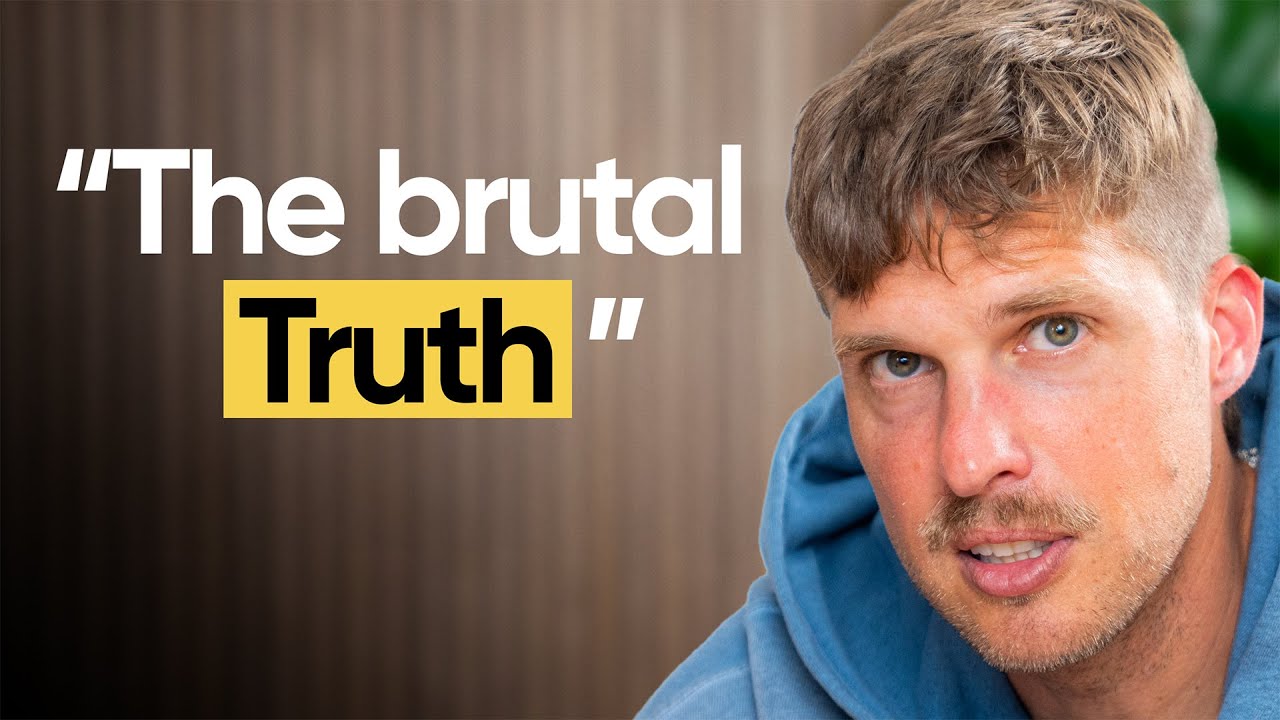
📺 Today’s recommended deep-dive video: https://www.youtube.com/watch?v=C32zkK5tD48
Beyond the Feed: Orin John’s Blueprint for Scalable Brand Storytelling
In an era of AI-generated noise and dwindling attention spans, building a brand requires more than just high-production videos; it demands a fusion of raw value and cinematic entertainment. Creative director Orin John breaks down why the most successful brands of 2025 operate less like advertisers and more like television networks.
Core Question: How can brands and creators move past “one-hit wonders” to build a scalable, multi-layered “brand world” that commands attention and loyalty?
Highlights
- The “Barometer of Value”: Why content must be either functional or as entertaining as a Netflix series.
- Building a “Brand World”: Treating your team, founders, and locations as recurring characters in a larger narrative.
- The “Moat” Strategy: Why video remains the hardest format to replicate and the safest bet for protecting your brand.
- The High-Volume Playbook: Why testing every organic post as a paid ad is the ultimate growth hack for modern CPG and fashion brands.
⏱️ Reading time: approx. 8 minutes · Saves you about 88 minutes vs. watching.
Want to take notes while watching? Click the image below and let AI Notebook capture the key points for you 👇

The Barometer of Value and Entertainment
Winning the Fight for Attention
Content is only successful if it provides high-level utility or high-quality distraction. There is no middle ground for mediocre posts that neither teach nor entertain, as these are quickly buried by algorithms.
Orin emphasizes that every piece of media must hit a specific barometer: it either needs to be “savable” value content that improves the viewer’s life or entertainment that matches the quality of a streaming service. Brands are no longer competing against other brands; they are competing against Netflix, top-tier YouTubers, and the sheer volume of high-quality organic content in the feed. This means your “skit” to unveil a clothing line must be as tight and engaging as a professional comedy pilot.
Using TikToker Nara Smith as an example, Orin illustrates how the highest ceiling is reached when you combine utility—like a complex recipe—with a signature, aspirational style. This hybrid approach ensures the content is both functional for the brain and aesthetically satisfying.

💡 Digging Deeper
Q: Can a brand succeed with only one side of the barometer?
A: Yes, you can survive on pure value or pure entertainment, but you will never go truly viral or build a massive “vortex” audience until you combine them with personality.
Q: Is high production quality mandatory?
A: No, the “creative idea” outweighs the gear. A $4,000 Sony FX3 can compete with a $60,000 cinema camera if the shot composition and storytelling are compelling.
World Building: The Brand as a TV Show
Creating a Narrative Ecosystem
Many brands view their social presence as a series of linear posts, but the most innovative strategists argue for a holistic “world-building” perspective. By mapping out characters, locations, and even enemies, a brand transforms from a storefront into a multi-season narrative that followers can inhabit.
A brand world is essentially an ecosystem where influencers, founders, and physical spaces all interact to tell a recurring story. Orin suggests identifying your “characters”—whether it is the CEO, a charismatic head of partnerships, or recurring creators—and placing them in consistent “sets,” like a specific office corner or a signature retail store.
Take “Dutes,” for example, a streetwear brand that uses a cast of recurring characters across multiple regional accounts. This approach creates a “crossover episode” effect that deepens the community’s emotional investment. When the audience begins to recognize the sets and people, they stop being passive viewers and become fans of the narrative, making the eventual transaction a byproduct of the story.

💡 Digging Deeper
Q: When should a brand start world building?
A: Solve “Product-Market Fit” and “Content-Market Fit” first. Don’t worry about color-coding your narrative until you know people actually want to buy your product.
Q: Who is a good example of an “Enemy” in branding?
A: Bio-hacker Bryan Johnson positions himself against “Death,” while Liquid Death positions itself against “Thirst” and corporate “boringness.” Having a clear antagonist sharpens your brand identity.
The Creative Moat and the Volume Game
Protecting Your Brand from Replication
If you aren’t posting at least two “flops” a week, you aren’t experimenting enough to find your next winner. Constant fishing for new formats is the only way to stay relevant.
The “moat theory” suggests that creators must lean into things that are difficult to replicate, such as high-effort travelogues or deeply unique perspectives. While carousels are currently popular due to low friction, their lack of a moat makes them easily replaceable by AI. Video, conversely, captures the charisma and nuance of a personality, creating a barrier to entry that generic accounts simply cannot scale.
For brands, the smartest move is to treat every organic post as a performance marketing test. By running every piece of content that resonates as a Meta or TikTok ad, companies can drastically reduce their creative costs while identifying “outsized winners” that offer massive returns on ad spend.
Successful fashion brands like “Represent” don’t just guess which ads will work; they post lifestyle carousels and reels organically first, then put budget behind the proven winners. This creates a feedback loop where organic content fuels paid growth, and paid growth provides the data to refine organic content.

Key Takeaways
Modern brand building is a volume game centered on “Inspo-maxing” and workflow optimization. Orin John highlights that the “cost per asset” is a metric every creator should understand; investing in a videographer or a specialized editor is not an expense, but an investment in “enablement” that allows a brand to stay top-of-mind.
To survive the next shift in social media, brands must transition into media companies. This involves creating “shot lists” for behind-the-scenes content and ensuring that every event—from a pop-up to a photo shoot—yields dozens of assets rather than a single recap video.
Ultimately, the goal is to create a “vortex” where the audience feels they are part of a community. Whether through “building in public” or hosting real-world meetups, the transition from a one-way broadcast to a two-way conversation is what separates a dying brand from a cultural force.
Q&A
Q1: How should brands approach AI-generated content?
AI is just another tool in the “slop layer.” While it raises the quality of generic content, it forces human creators to work harder to provide genuine connection and unique, unreplicable experiences.
Q2: What is the biggest mistake brands make with “Behind-the-Scenes” (BTS) content?
They fail to plan. BTS needs a shot list just as much as the main production; without a plan for “before and after” hooks or specific sizzle reel transitions, you just end up with 300GB of useless footage.
Q3: Is TikTok Shop a viable long-term strategy?
Yes, because it offers “quantifiable” value. It is one of the few places where a brand can see exactly how much revenue a single post generates, which is why TikTok is doubling down on it as a market.
Q4: How does Orin manage his content ideas?
He uses a massive Notion database to “catalog and bookmark” everything. By embedding TikToks and Reels directly into the database, he can see the visual references without clicking away, making his workflow much faster.
Q5: Should creators sign with management?
If you have high inbound interest, yes. Management handles the “dirty work” of invoicing and negotiation, allowing the creator to focus entirely on the creative “vortex” and content strategy.
Q6: Why are “strong takes” effective on TikTok?
Because everyone else has become “neutered” by the fear of offending. Speaking in absolutes creates a visceral reaction that forces the viewer to either agree or disagree, which drives engagement.
Q7: How do “moats” apply to luxury brands?
Luxury brands must maintain a high bar of storytelling. Even if they use an iPhone, the “lens” or perspective must be unique. If a brand’s content can be easily copied with a basic template, it has no moat.