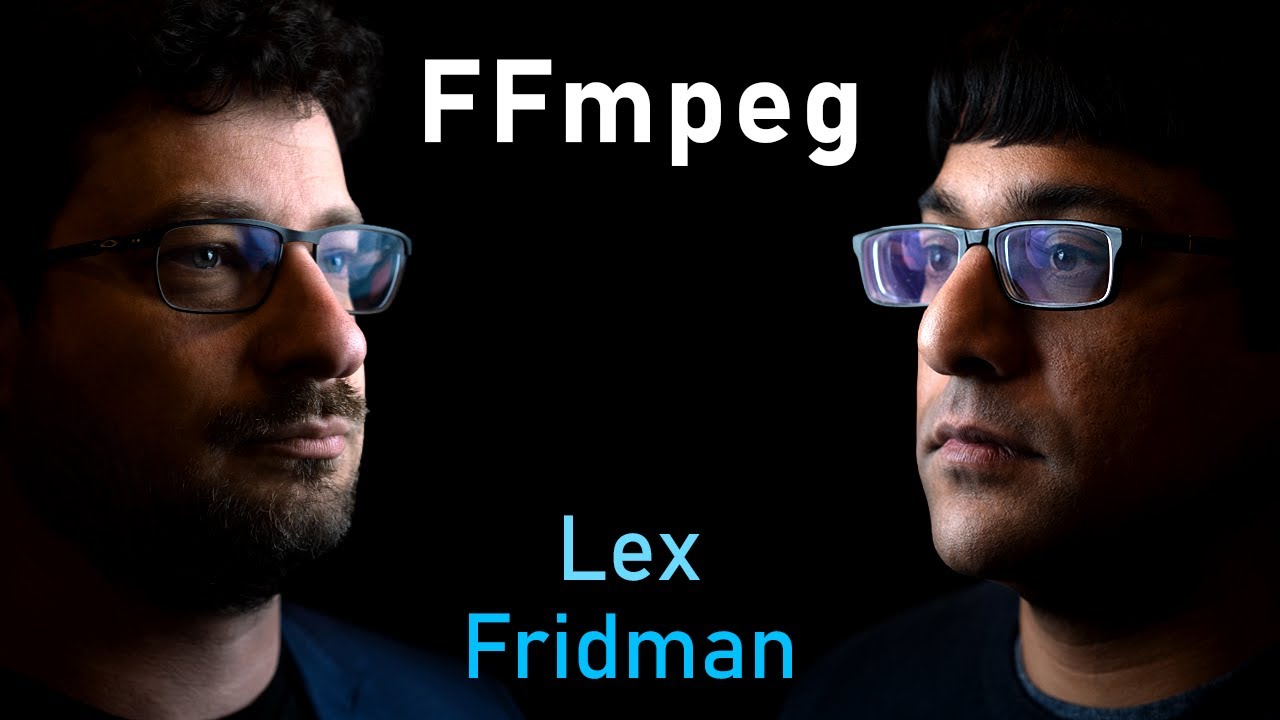
📺 Today’s recommended deep-dive video: https://www.youtube.com/watch?v=nepKKz-MzFM
Summary
Every Cycle Matters: The Invisible Engineering of FFmpeg and VLC
Most internet users consume hours of video daily without ever hearing of the software that makes it possible. Behind every Netflix stream, YouTube upload, and Discord call lies a sprawling architecture of open-source libraries maintained by a handful of uncompromising volunteers.
Core Question: How does a small, global community of volunteer engineers build and protect the low-level infrastructure that powers nearly all digital media on Earth?
Highlights
- The “Binary Star” relationship between VLC and FFmpeg and how they democratized video.
- Why handwritten assembly language outperforms modern C compilers by orders of magnitude.
- The ethical struggle of refusing millions in advertising revenue to keep software free and private.
- How the “XZ Fiasco” and Google’s AI security reports are straining the limits of volunteer maintainers.
⏱️ Reading time: approx. 12 minutes · Saves you about 246 minutes vs. watching.

The Anatomy of a Digital Stream
From Bytes to Pixels
When you press play on a video, you are initiating a sequence of events so complex it has inspired thousands of textbooks. The journey begins with a URL, which the operating system translates into a stream of raw data bytes. From there, a “demuxer” must cut this stream into distinct tracks for video, audio, and subtitles, often working with containers like MP4 or MKV that act as digital envelopes for the content inside.
Modern video is an exercise in extreme mathematical deception.
Because raw video data is too massive to transmit, we rely on codecs like H.264 or AV1 to compress the signal by a factor of 100 or even 1,000. This is achieved by removing spatial and temporal redundancy—essentially, the computer only records what changes between frames, like a moving bird against a static sky. To rebuild the image, the decoder uses “intra-prediction” to guess what the pixels should look like based on their neighbors.
It is a miracle of logic that these predictions remain bit-exact across billions of different devices.

💡 Digging Deeper
Q: Is a container the same thing as a codec?
A: No. A container (like .MP4) is the file format that holds the data, while the codec (like H.264) is the method used to compress the actual video and audio inside that file.
Q: Why does VLC play files that other players can’t?
A: VLC was designed for unstable networks in the 1990s. It is engineered to “not trust its inputs,” meaning it tries to interpret and repair broken or incomplete data rather than simply crashing.
Q: What is “bit-exactness” in decoding?
A: It is the requirement that every implementation of a codec produces the exact same pixel values from a given compressed file, ensuring consistent quality across all hardware.
The Ethics of the Open Source Social Contract
The Legend of the Traffic Cone
The VLC media player began as a student project at École Centrale Paris, where students were forced to manage their own campus network to play early video games like Doom. To stream satellite TV to their dorms, they built a client-server architecture that eventually became VideoLAN. This history is why VLC is not owned by a corporation, but by a non-profit community that views the software’s license as a sacred social contract.
Lead developer Jean-Baptiste Kempf famously turned down tens of millions of dollars to keep the player ad-free.
Most of the offers came from “shady” companies wanting to bundle spyware or toolbars with the installer. For the maintainers, the decision to refuse the money was a matter of basic morality; they wanted to sleep at night knowing they hadn’t betrayed the billions of people who trust the orange traffic cone logo. They believe that winning money should be done ethically, not through the sneaky exploitation of user data or privacy.

💡 Digging Deeper
Q: Why did VLC move from the GPL to the LGPL license?
A: The move allowed other developers to integrate the VLC engine into their own apps (like games) without being forced to open-source their entire project, while still requiring them to contribute fixes back to VLC itself.
Q: How hard is it to change an open-source license?
A: It requires contacting every person who ever contributed code. For VLC, this involved tracking down over 350 people, including the parents of developers who had passed away.
Every Cycle Matters: The Power of Assembly
Why C Compilers Still Fail
There is a common myth in software engineering that modern compilers are so smart they can always optimize code better than a human. The FFmpeg and VideoLAN communities have proven this wrong by orders of magnitude through the use of handwritten assembly language. In the dav1d project (an AV1 decoder), the team wrote 240,000 lines of assembly to ensure the video could play smoothly on old hardware where C-based decoders would stutter.
Handwritten assembly can be 60 times faster than standard C code.
This level of optimization is necessary because we are reaching the end of Moore’s Law. We can no longer wait for faster CPUs to solve our problems; instead, we must “abuse” the hardware, using instructions in ways the designers never intended. By writing SIMD (Single Instruction, Multiple Data) code, engineers can process 16 pixels at once with a single CPU heartbeat, squeezing every ounce of performance out of a processor.
It is a “lost art” passed down like blacksmithing from one master to the next.

💡 Digging Deeper
Q: What is SIMD?
A: It stands for Single Instruction, Multiple Data. It allows a processor to perform the same mathematical operation on a whole vector of numbers simultaneously, which is perfect for processing grids of pixels.
Q: Why don’t the maintainers use the Rust language instead?
A: While Rust is great for security, handwritten assembly is still required for peak performance. Furthermore, mixing Rust with existing low-level assembly often breaks the very memory safety Rust is designed to provide.
Archiving for the Next Millennium
The Rosetta Stone of Media
As digital formats evolve, we face the terrifying prospect of “digital decay,” where the history of the 20th and 21st centuries becomes unreadable. FFmpeg acts as a Rosetta Stone for this era, containing decoders for obscure formats like 1990s game codecs and forgotten satellite signals. Archiving communities now use FFmpeg’s lossless formats to ensure that film heritage is preserved without the artifacts or “blurring” introduced by commercial compression.
If it exists as a video, FFmpeg can likely open it.
The future of this technology lies in ultra-low latency. New projects like Kyber are pushing “glass-to-glass” latency down to four milliseconds, enabling the remote control of surgery robots and drones across the planet. By treating every sense—including haptics and even smell—as just another “stream” in a demuxer, these engineers are building the framework for the next century of human experience.
Distance is being made to disappear through the sheer force of elegant code.

Key Takeaways
The digital world is far more fragile than it appears. We rely on “stewardship” rather than just technology; without a few dozen people willing to maintain ancient codebases for free, our access to history and modern communication would collapse under the weight of patent royalties and corporate silos.
Open source is the ultimate meritocracy. It doesn’t matter who you are or where you come from—it only matters if your code is excellent. This philosophy has allowed teenagers to write some of the most critical instructions running on billions of devices, outperforming the engineers at trillion-dollar tech giants.
Finally, we must recognize that the “efficiency” of our modern life is bought with the sanity of volunteer maintainers. When we demand high-priority fixes from people working in their basements for the “greater good,” we risk burning out the very individuals who keep the internet’s invisible backbone from snapping.
Q&A
Q1: Why is the VLC logo a traffic cone?
A: It started as a joke at the university. The students had a collection of traffic cones they had “liberated” from the streets of Paris, and when it came time to pick an icon, the cone was the only thing they all agreed on.
Q2: Does FFmpeg really run on Mars?
A: Yes. NASA used FFmpeg on the Mars 2020 rover to process and compress images, proving that open-source software is literally multi-planetary.
Q3: What was the “XZ Fiasco” mentioned in the talk?
A: It was a social engineering attack where hackers spent years gaining the trust of a lone, burnt-out maintainer to plant a backdoor in a critical library. It highlighted the danger of the world’s total reliance on unpaid volunteers.
Q4: Can VLC play a video inside a pancake?
A: No. Despite the internet memes suggesting VLC can play anything, the team actually tested putting a pancake in a drive. It did not work.
Q5: What is “intra-refresh” in video streaming?
A: Instead of sending a massive “Key Frame” (I-frame) every few seconds, which can cause lag, the encoder gradually refreshes small parts of the image over time so that the stream remains smooth and low-latency.
Q6: Why are patents such a big problem for video?
A: Many companies patent basic mathematical ideas like “using rectangles instead of squares.” This creates a “minefield” where companies must pay hundreds of millions in royalties just to play a video unless they use royalty-free codecs like AV1.
Q7: How does the team handle death threats?
A: When Jean-Baptiste decided to stop supporting old PowerPC Macs, he received a letter containing a suspicious white powder. He now maintains a “Zen” attitude by focusing on the worst-case scenario and realizing that if he isn’t dead, the problem is solvable.