Summary
The Architect of Intelligence
Greg Brockman, co-founder of OpenAI, shares the inside story of the lab’s evolution from an “impossible” 2015 startup to the center of a global AI revolution. He discusses technical breakthroughs, the logic behind their pivot to for-profit, and the high-stakes human drama of the 2023 board crisis.
Core Question: How did OpenAI transform from a risky research experiment into the architect of a compute-powered global economy?
Highlights
- The “Napa Plan” that defined OpenAI’s technical strategy for a decade.
- Why scaling “simple” algorithms proved more powerful than inventing complex ones.
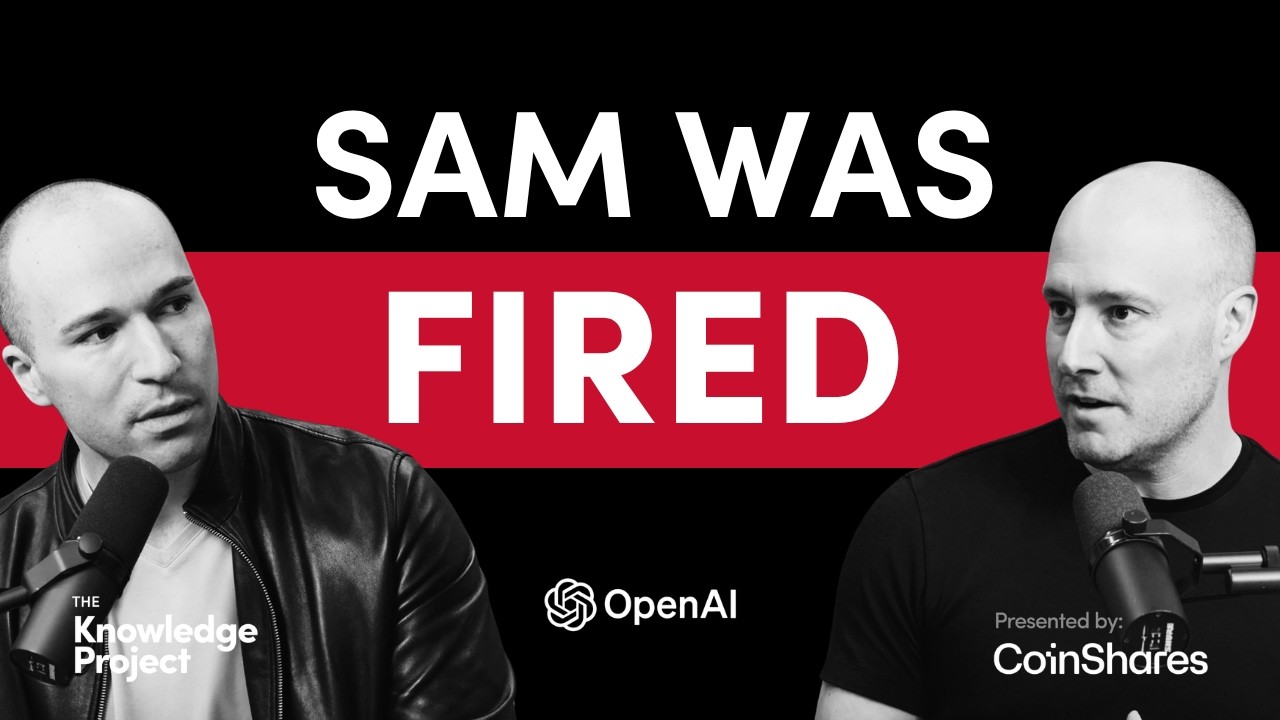
- Behind the scenes of the Sam Altman firing and the subsequent employee rebellion.
- A future vision of 8 billion personal AGIs empowering every human on Earth.
⏱️ Reading time: approx. 9 minutes · Saves you about 45 minutes vs. watching.

Architecting Intelligence
The Technical Foundation
Greg Brockman felt a deep pull toward AI during his tenure at Stripe. He sought a mission where he could dedicate his life to a singular, impactful problem. A conversation with Sam Altman confirmed his path: he had already decided to build an AI lab. This alignment birthed OpenAI.
In 2015, the landscape was dominated by Google DeepMind’s massive resources. Skeptics argued it was too late for a new lab to attract top researchers. However, Brockman and Altman saw no theoretical reason it was impossible. They decided to leap into the unknown, driven by mission-level conviction.
During a pivotal Napa offsite, the core team drafted a 10-year strategy. They focused on reinforcement learning, unsupervised learning, and scaling. This “Napa Plan” remains the foundation of their work today. They prioritized solving hard problems over publishing academic papers to gain citations.
Success in Dota 2 proved that simple algorithms plus massive compute could outperform humans. This “insect brain” moment hinted at the potential of human-scale architectures. It reinforced the belief that scaling existing methods was the fastest path to achieving general intelligence.

💡 Digging Deeper
Q: Why was the sentiment neuron paper significant?
A: It proved that training a model to predict the next character allowed it to learn high-level semantics, like sentiment, automatically.
Q: What did the Dota 2 project reveal about algorithms?
A: It showed that massive scale could make “flawed” algorithms like PPO perform at superhuman levels in messy, unpredictable environments.
Q: How did Brockman convince researchers to join a nonexistent lab?
A: He focused on a vision of human-level AI that would be distributed broadly, rather than being locked within a single corporation.
The Pivot and the Crisis
Governance under Fire
By 2017, the team realized nonprofit fundraising could not sustain their massive compute needs. Building AGI required billions of dollars for specialized hardware and data centers. They recognized that the only way to achieve the mission was to create a for-profit entity to attract necessary capital.
The 2023 firing of Sam Altman was a moment of extreme instability. Brockman resigned immediately in protest, followed by a massive internal rebellion. Microsoft quickly offered to back a new endeavor, demonstrating the deep loyalty the founders had inspired within the team.
The crisis resolved when Ilya Sutskever signed the employee petition and called for the company to reunite. Brockman describes this as a “diamond moment,” where immense pressure forged unbreakable bonds. Not a single employee accepted a competing offer during that chaotic weekend.
Brockman reflects on the experience as a lesson in personal resilience. He emphasizes the importance of making hard decisions quickly rather than dragging one’s feet. Leading through uncertainty requires a steady hand and a willingness to encounter the “hard truth” of reality.

The Road to 8 Billion AGIs
The Compute-Powered Economy
AI is now accelerating its own development through a “parabolic” feedback loop. Engineers use coding tools like Codex and ChatGPT to build models faster. We are entering a phase where AI will generate and test its own research ideas independently.
Brockman envisions a future where every human has a personal AGI. This is not just a tool, but a proactive agent that understands your long-term goals. It will operate 24/7 on your behalf, managing everything from health advice to complex project execution.
The global economy is shifting toward a “compute-powered” model. Digital work will transition from humans using computers to computers performing tasks for us. This requires an astronomical increase in GPU fleets and energy-efficient data centers to ensure broad access.
Agency and vision will become the most vital skills for the future. As technical barriers to entry fall, the ability to imagine and direct projects becomes the primary differentiator. The goal is to raise the floor of human potential for everyone on the planet.

Key Takeaways
Building AGI is as much about managing human factors as it is about engineering. Greg Brockman highlights that technical breakthroughs often come from “leaning into the suffering”—facing the hard truths about capital, compute, and organizational friction rather than ignoring them.
The transition from a research lab to a global provider requires “iterative deployment.” By releasing intermediate models, society can adapt to risks like medical spam or bias in real-time. This creates a safer, more resilient integration of technology into daily human life.
In the coming years, the distinction between consumer and entrepreneur will blur. With AI agents handling the “writing” of code and execution of tasks, human agency becomes the ultimate leverage. Success will be defined by ensuring these powerful systems benefit all of humanity.
Q&A
Q1: Why did you leave Stripe to start OpenAI?
A: Stripe was successful, but the problem wasn’t “mine.” I wanted a mission I’d work on for the rest of my life. AI was the only thing at the top of that list.
Q2: Was DeepMind considered an insurmountable competitor in 2015?
A: Yes, they were the “10,000-pound gorilla” with all the talent and capital. We just couldn’t find a reason why starting something new was actually impossible.
Q3: How do you view the relationship between prediction and reasoning?
A: They are deeply connected. If you can perfectly predict the next word out of Einstein’s mouth, you are effectively as smart as Einstein. Reasoning is a structure of prediction.
Q4: What is the purpose of “iterative deployment”?
A: It prevents a “big bang” deployment of a powerful system we’ve never tested in reality. It allows the world to adapt and reconfigure as the technology grows.
Q5: Is AI currently writing most of the world’s code?
A: A vanishingly small fraction of code is now written without AI assistance. While humans still design the high-level architecture, the actual writing is essentially all AI now.
Q6: What is the biggest bottleneck for AI development right now?
A: Compute. We are heading into a compute-constrained world where society will have to prioritize which problems—like curing cancer—are worthy of our limited hardware resources.
Q7: What skills should young people focus on today?
A: Leaning into AI technology and developing “agency.” You need to learn how to manage agents and have a clear vision of what you want to build.